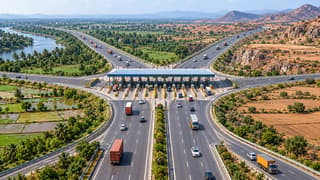
The National Highways Authority of India (NHAI) has issued guidelines for upgrading, maintaining and digitally monitoring public toilets and designated parking areas at toll plazas on National Highways, according to a 23 October 2026 Ministry of Road Transport and Highways statement reported by Amar Ujala and IANS. For drivers, the update points to safer, more usable stops with accessible toilets, better lighting and drainage, and alerts for water, sewage or equipment failures. It is a facilities and maintenance update, not a new toll-fee notification.
Key takeaways
- Existing toll-plaza toilet blocks are to be technically assessed before rehabilitation and repairs.
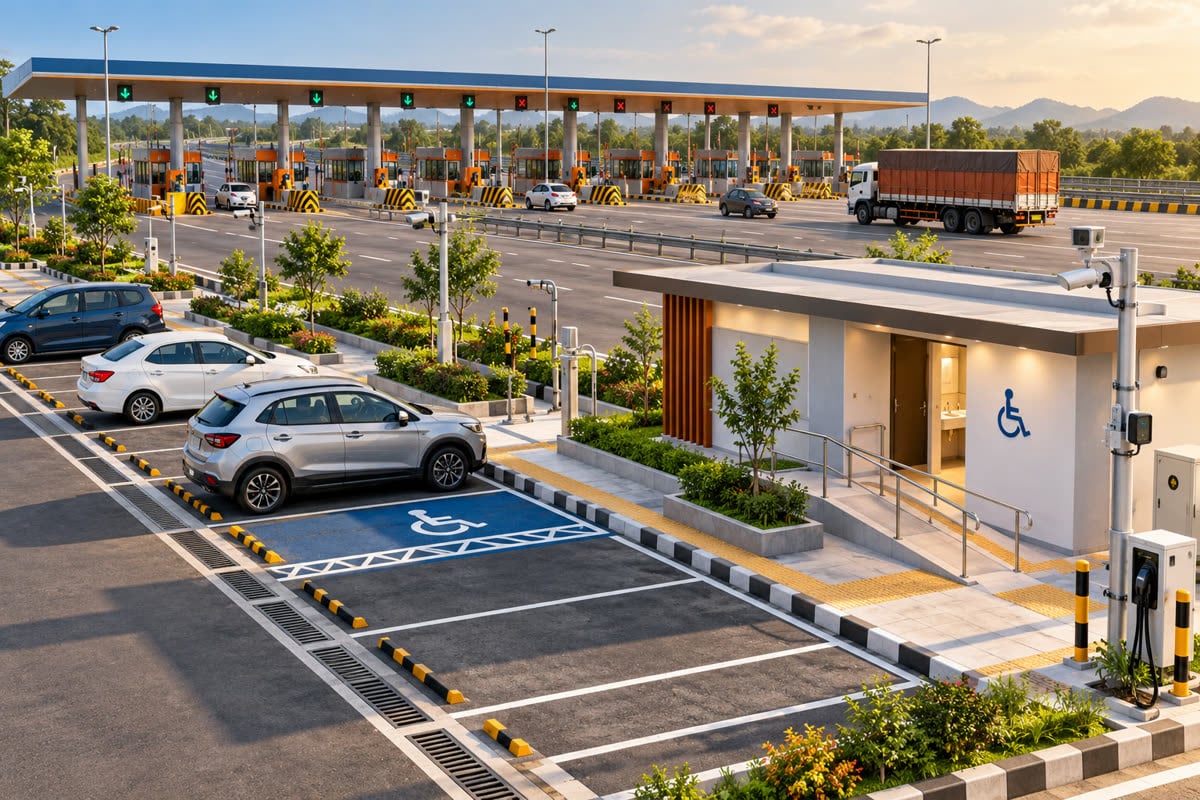
- Covered plazas are to provide at least one universally accessible toilet, with barrier-free entry, suitable doors and grab bars.
- Parking areas are to have designated bays and proper drainage, with provisions for future electric-vehicle charging infrastructure.
- Smart monitoring is intended to track water, odour, sewage, leaks, electricity supply and toilet occupancy through a central digital platform.
- The public reports do not give a plaza-by-plaza rollout timetable, so the practical impact will depend on implementation and maintenance.
What NHAI's 23 October guidelines cover
The new guidance covers the upgradation, maintenance and smart monitoring of public toilet facilities and designated parking areas at toll plazas. Existing toilet blocks are to undergo a technical assessment before rehabilitation, allowing the responsible agency to identify repairs or replacements rather than treating every facility as a routine cleaning job.
The listed physical works include flooring, plumbing, sanitary fittings, lighting, ventilation, drainage and signage. Cleaning and housekeeping schedules are expected to reflect the size of the toilet block and the traffic it handles. That matters on busy routes, where a facility designed for low traffic can deteriorate quickly if servicing is not matched to actual use.
Safety and accessibility are explicit requirements
The reported guidelines add practical safeguards for women, families and passengers who stop at night. These include proper lighting, CCTV surveillance of approaches and parking areas, sanitary-napkin vending machines and clear signs showing where public amenities are available.
Each covered toll plaza must also provide at least one universally accessible toilet unit. The requirements include barrier-free access, suitable doorways and grab bars for people with disabilities. The wording is important for highway users: it describes an accessible facility, not merely a separate sign or a reserved parking bay.
Parking gets a defined place in the plan
Parking is treated as part of the amenity upgrade rather than an informal space beside the toll lanes. The guidance calls for designated parking bays and proper drainage. It also provides for future electric-vehicle charging infrastructure.
That last point should not be read as a promise that a charger is already available at every covered plaza. The current reports do not specify a charging rollout date, the number of chargers or the plazas that will receive them first. EV drivers can continue to check the state-wise EV charging directory before starting a long highway journey.
How the smart monitoring is meant to work
The proposed monitoring layer is designed to make basic failures visible before they become a repeated user complaint. It is expected to track water availability, odour, sewage levels, leakages, electricity supply and toilet occupancy. The data is to feed an NHAI central digital platform so officials can see facility conditions, maintenance records, complaints and agency performance.
Users are expected to be able to send feedback through QR codes linked to the Rajmargyatra app and through touchscreens at toilet facilities. Amar Ujala reported a tiered oversight model involving daily supervision, weekly technical inspections, monthly reviews, quarterly audits and an annual third-party assessment. The useful test will be whether an alert or complaint results in a repaired, supplied and usable facility, not simply whether it appears on a dashboard.
The guidance also calls for mechanised cleaning of septic tanks, soak pits and sewer lines, with no manual entry into septic tanks, manholes or sewer lines, according to the current reports. That is relevant both to sanitation quality and to the safety of the workers maintaining the facilities.
How this fits NHAI's enforcement drive
This is the next layer of a wider NHAI push. In its 12 October 2026 release, the Ministry said user fee collection agencies would face weekly inspections of toilet blocks, toll booths, surrounding areas and signboards. Deficiencies could lead to show-cause notices and contractual penalties. If unresolved notices reached or exceeded 10% of the toll plazas operated by an agency, it could be declared a non-performer and barred from NHAI bids for 15 days or until pending deficiencies were rectified.
The new guidance adds more detail about what the facilities should contain and how day-to-day conditions should be recorded. NHAI's 30 July 2026 public-toilet initiative had already described a performance-based framework, IoT-enabled monitoring, independent audits and verified commuter feedback through Rajmargyatra. The October guidelines move that policy direction closer to a checklist for toilets, parking and user feedback.
What changes for highway users now
There is no announced change to toll rates in this update, and the statement does not guarantee that every plaza will be upgraded immediately. A traveller may see better facilities only as the relevant agency completes assessments, repairs and monitoring work. The stated standards also do not replace the need to check whether a particular stop is open, stocked or suitable for a planned break.
For a long drive, use the toll-charge calculator to estimate route charges and the road-trip planner to organise fuel, rest and charging stops. If a facility displays a QR feedback code or provides a Rajmargyatra touchpoint, recording a specific issue such as no water, a blocked accessible route or damaged drainage gives the monitoring system a clearer problem to resolve.
What to watch next
The next useful signals will be the number of plazas covered in the first phase, the publication of facility-level standards or contracts, and evidence that alerts and complaints lead to repairs within defined time limits. For drivers, the value of the policy will be measured at the stop: a lit approach, a usable accessible toilet, a drained parking area and a clear route back to the highway.
Sources
- Amar Ujala: NHAI toll-plaza toilets to get smart monitoring and alerts — 23 Oct 2026.
- Bhaskar Hindi: NHAI issues guidelines for upgradation, smart monitoring of toilet facilities and parking at toll plazas — 23 Oct 2026.
- PIB/MoRTH: NHAI Introduces Stricter Monitoring to Ensure Clean and Well-Maintained Toilet Blocks and Other Facilities at Toll Plazas — 12 Oct 2026.
- PIB/MoRTH: NHAI Launches Initiative to Develop World-Class Public Toilet Facilities at Toll Plazas — 30 Jul 2026.