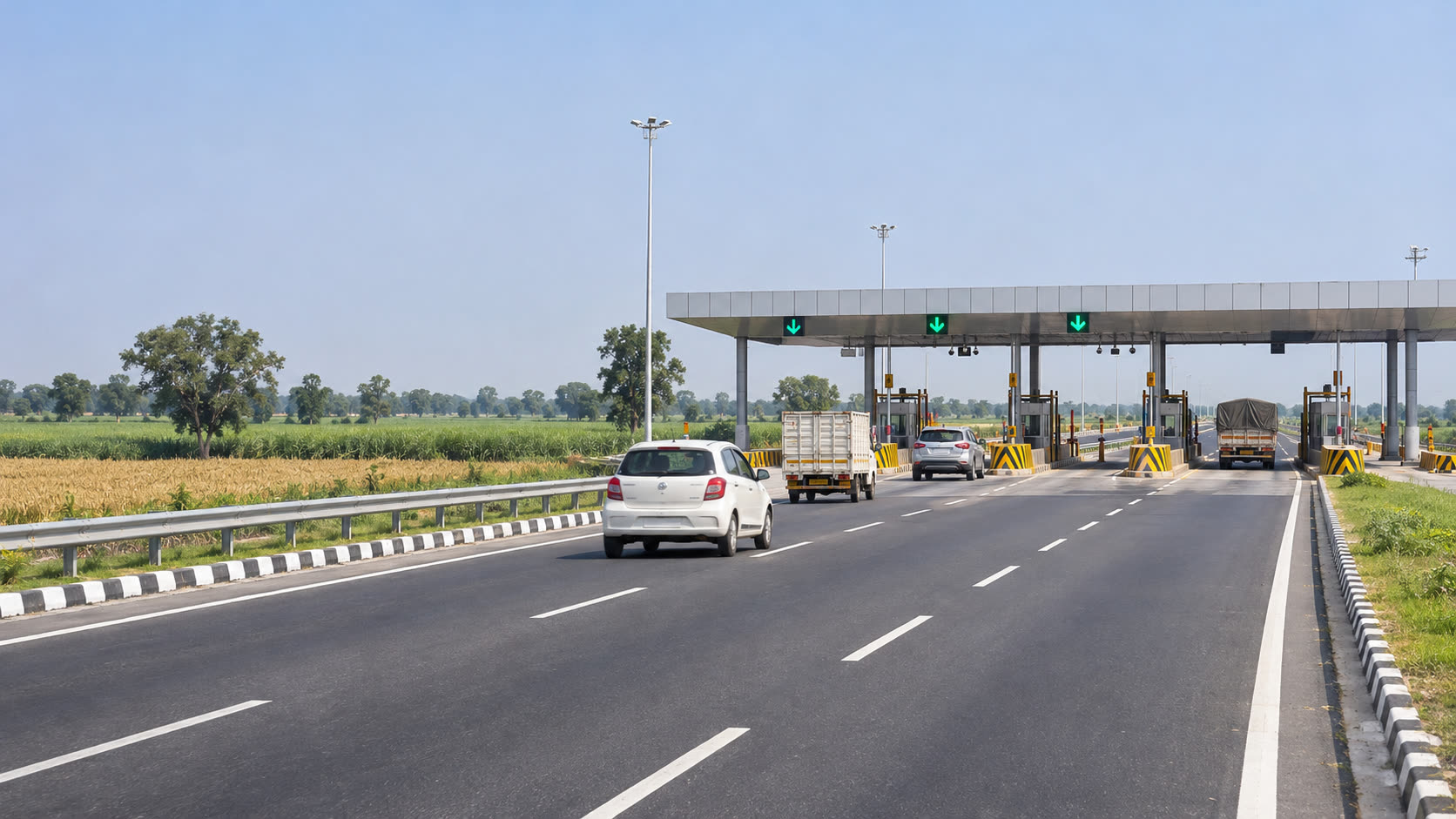
NHAI is developing standard designs and drawings for light vehicular underpasses, small vehicular underpasses and reinforced concrete box culverts on national highways and expressways, according to a 21 Nov report and an official government tender. If the proposal moves through consultancy, proof-checking and adoption, it could make future local crossings quicker to design and approve; it does not change today’s tolls, FASTag rules or traffic restrictions.
Key takeaways
- The proposal covers light and small vehicular underpasses and RCC box culverts.
- NHAI wants to reduce repeated design, scrutiny and approval work across similar projects.
- Proposed drawings would be checked against Indian Roads Congress, Bureau of Indian Standards and MoRTH requirements.
- Indian Institutes of Technology are expected to be involved in proof-checking the standard designs.
- This is a design and procurement-stage development, not a new toll rule or an immediate route change.
What NHAI is planning
The National Highways Authority of India is working towards a common design library for structures that appear repeatedly on highway projects. The New Indian Express reported on 21 Nov 2026 that the plan covers light vehicular underpasses, small vehicular underpasses and reinforced cement concrete box culverts for highways and expressways.
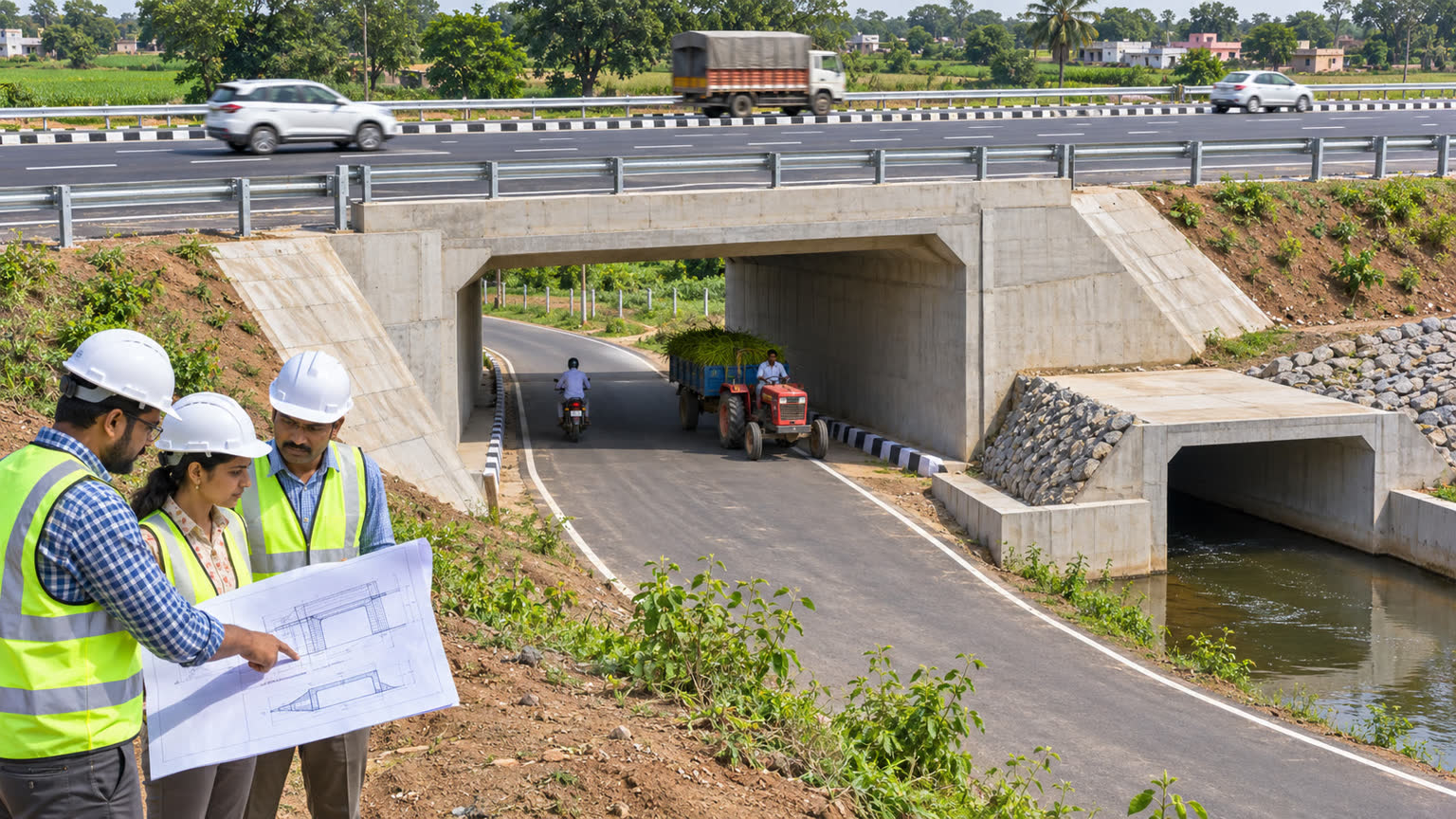
A light or small vehicular underpass takes local movement below the main highway. It can serve light motor vehicles, service roads, agricultural equipment and other local access traffic without requiring those users to cross the main carriageway at grade. A box culvert is a rectangular or square reinforced-concrete structure beneath a road or embankment. It can carry water, utilities or a low-clearance passage, depending on the project design.
Why standard designs could matter
At present, similar structures are generally designed and approved separately for individual highway packages. That means consultants and contractors repeat calculations, prepare new drawings and seek scrutiny even when a structure has dimensions and functions similar to one used elsewhere.
NHAI’s proposed approach is to develop structurally optimised drawings that can be adapted directly at suitable sites. The stated aim is to reduce design and approval time, avoid unnecessary use of concrete and steel, limit material wastage and bring more consistency to construction quality. These are expected benefits, not a published estimate of savings or a guaranteed completion timeline.
The plan also matters because an underpass is not only a traffic structure. Drainage, soil conditions, utilities, local road geometry, flood paths and the safety of approaches all affect whether a standard drawing can be used. A common template can reduce repetitive work, but it cannot remove the need for site-specific checks.
Where the process stands now
The government e-procurement listing shows NHAI seeking consultancy for the development of standard designs and drawings for underpasses and RCC box culverts, including proof-checking by an IIT. The tender record places the work at the consultancy stage. The New Indian Express also reported that NHAI may appoint a private consultant to help develop the drawings.
That distinction is important for road users. The proposal has not announced that every existing highway will receive a new underpass, nor has it set a corridor-by-corridor construction schedule. It also does not say that a local crossing will automatically be built wherever residents request one. The final location and form of a structure will still depend on each project’s traffic, land, drainage, safety and engineering requirements.
What it could mean for drivers and local traffic
Local trips and farm access
On future corridors, a properly planned underpass could let local traffic move between adjoining areas without joining fast through-traffic. That may reduce conflict points and waiting at surface crossings. The effect will depend on whether the underpass is open to the relevant vehicle types and whether its approach road is usable in all seasons.
Through traffic and fleet movement
Separating local movements from the main carriageway can make highway operations more predictable once the structure is built. For transporters, however, the near-term impact remains a project-by-project question. Construction work, temporary diversions and access changes can still affect travel time before any new structure opens. When a corridor advisory changes a planned journey, drivers can compare route tolls through the toll-charge calculator and estimate fuel use with the fuel cost calculator.
Water management and road safety
Box culverts are also part of the drainage system. A standardised design process could make it easier to check water flow and structural details consistently, but it should not be read as a promise that every waterlogging or flooding problem will disappear. Drivers should continue to follow local warnings and diversion signs during construction or heavy rain.
What changes now for highway users
For the moment, there is no announced change to toll fees, FASTag deductions, pass eligibility, insurance checks or general highway speed rules because of this proposal. There is also no basis to assume an immediate reduction in a driver’s toll or fuel bill. The practical change today is only that NHAI is moving towards a more uniform way of preparing and checking some highway structures.
People planning a long drive can continue to use the road-trip planner for route preparation and then check official project or district traffic notices for local diversions. A new design standard, if adopted, will affect future project planning rather than rewrite the route conditions on an already open road overnight.
What to watch next
- NHAI’s award or appointment for the design consultancy.
- Publication of the standard drawings and the conditions under which project teams may use them.
- Proof-checking outcomes and confirmation that the drawings follow the applicable IRC, BIS and MoRTH requirements.
- Project-level notices showing where an underpass or culvert is actually sanctioned, built and opened.
Bottom line: NHAI’s plan could reduce repeated engineering work and help future highway projects handle local crossings more consistently. For drivers, the useful takeaway is to treat it as a pipeline change: there is potential for smoother access and more predictable construction in later projects, but no immediate toll, FASTag or traffic-rule change has been announced.