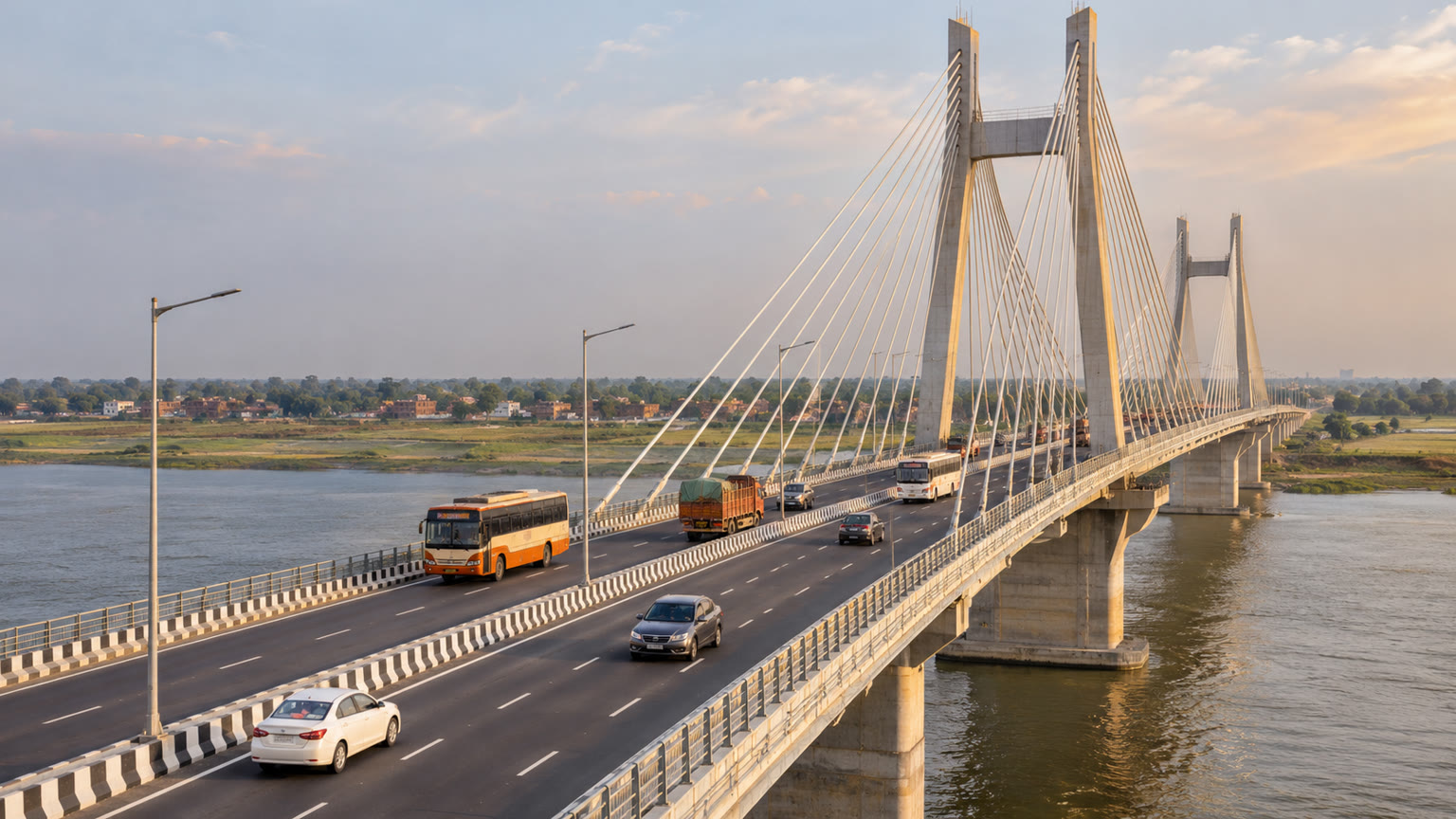
Nitish Setu, a 19.7-km Ganga bridge project linking Kachchi Dargah in Patna district with Bidupur in Vaishali, opened on 21 Nov 2026. The same programme also flagged off 100 PM-eBuses, making the day a significant mobility update for drivers, bus users and goods operators in Bihar.
For road users, the immediate change is an additional six-lane crossing over the Ganga. The bridge is expected to ease pressure on Mahatma Gandhi Setu and JP Setu and reduce travel time between north and south Bihar, although the actual saving will depend on the starting point, destination, traffic and route chosen.
Key takeaways
- Nitish Setu is now open to the nation as a six-lane Ganga crossing connecting Patna and Vaishali districts.
- The wider project covers 19.7 km, including the main bridge and approach roads, and was built at an estimated cost of ₹4,280 crore.
- The government also flagged off 100 PM-eBuses in Bihar on 21 Nov 2026.
- The opening changes route-planning options; it does not by itself announce a new toll rate or guarantee a fixed fuel saving.
What opened in Bihar
Akashvani News reported on 21 Nov 2026 that Prime Minister Narendra Modi dedicated Nitish Setu to the nation in Vaishali. The official account described it as a six-lane bridge across the Ganga, built at a cost of around ₹4,280 crore. The project links Kachchi Dargah in Patna district with Bidupur in Vaishali district.
The project’s total length is 19.7 km. The Economic Times reported that this comprises a 9.7-km main bridge and 10 km of approach roads. These are project dimensions, not a promised reduction in the distance of every journey between Patna and Vaishali. Drivers should still compare the full route from their own origin to destination.
Why the connection matters
The PMO’s announcement before the opening and the post-inauguration account from Akashvani said the new crossing is expected to ease congestion on Mahatma Gandhi Setu and JP Setu, reduce travel time and strengthen connectivity between north and south Bihar. That matters beyond private cars: buses, agricultural vehicles, delivery fleets and other goods carriers may gain another route option when traffic management settles.
The bridge is part of a wider Bihar programme valued at around ₹34,470 crore, according to the PMO and the 21 Nov reports. That total covers projects across road connectivity, energy, urban infrastructure, water resources, education, healthcare and transport; it should not be read as the construction cost of Nitish Setu alone.
What it means for drivers and transporters
Route planning becomes more important
The useful question for a traveller is not simply whether Nitish Setu is open, but whether it improves the complete journey. A trip that starts in Patna, passes through the Kachchi Dargah side and continues towards Vaishali may have a different time and distance profile from a trip beginning elsewhere in the city. Before leaving, compare the available corridor, expected traffic and stop locations in the road trip planner.
Freight and fleet operators can use the same approach for repeat corridors. A shorter or more predictable crossing can affect a vehicle’s driving schedule, driver hours and fuel planning, but those effects should be measured against the actual route and operating pattern rather than assumed from the bridge length.
Fuel and toll budgets still need a live check
A new bridge does not automatically mean a lower fuel bill. Fuel use depends on distance, traffic, vehicle efficiency, idling and the final destination. Readers can enter those trip details in the fuel cost calculator and then compare the result with their own vehicle’s recent consumption.
The 21 Nov inauguration reports confirm the bridge opening and its connectivity purpose, but they do not announce a new toll schedule for this article’s route. A driver planning a paid highway journey should check the latest route-level toll information in the toll charge calculator before budgeting. Existing toll arrangements should not be treated as changed merely because a new crossing has opened.
What the 100 PM-eBuses mean
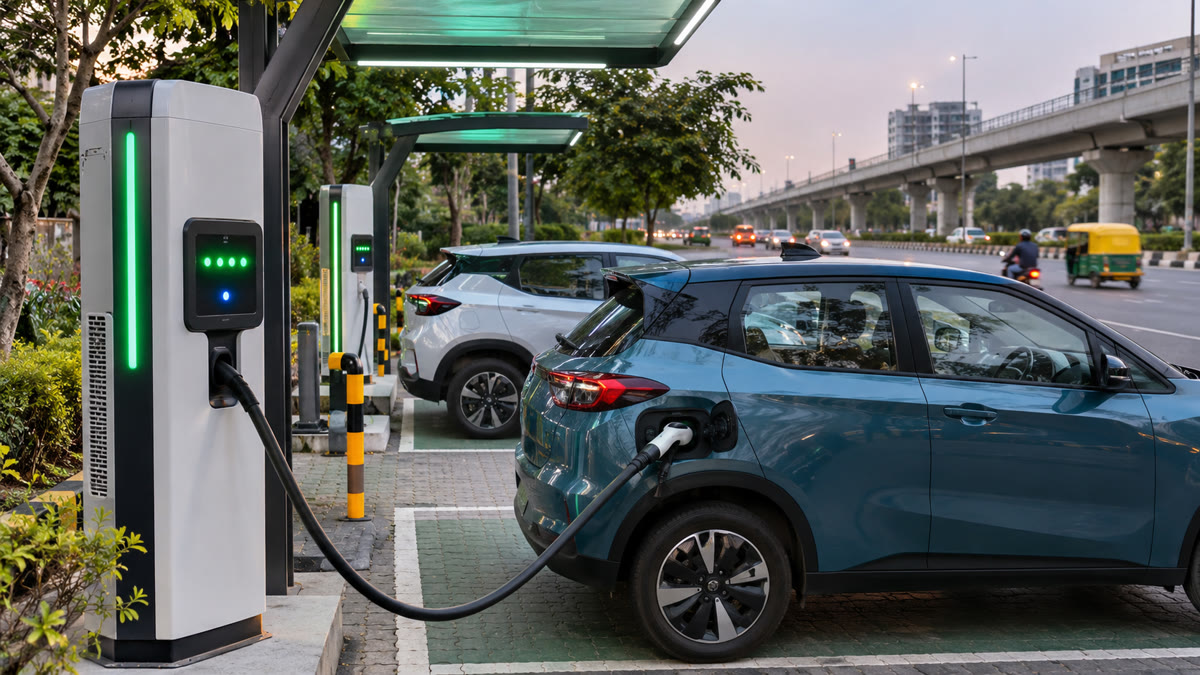
The same Bihar programme flagged off 100 PM-eBuses, according to Akashvani News and The Economic Times. This is a public-transport addition, not a statement that every route will receive a bus immediately. The sources do not provide a complete city-by-city route list or operating timetable, so commuters should wait for the relevant transport authority or operator to publish service details before relying on a particular corridor.
For fuel and mobility users, the combination of a new inter-district road link and cleaner buses points to two different changes: private and commercial vehicles get another road option, while public transport capacity is being expanded. Their effects will be visible only after traffic patterns, bus schedules and route operations settle.
What to watch next
- Traffic signage, lane operations and route guidance at both ends of Nitish Setu.
- Any official toll-rate or fee-collection notification linked to the new crossing.
- Bus routes, frequency and charging arrangements for the 100 PM-eBuses.
- Whether congestion on Mahatma Gandhi Setu and JP Setu changes after regular traffic shifts.
Reader takeaway: Nitish Setu is now a usable connectivity option for Bihar journeys, but the practical benefit is route-specific. Check the complete route, toll position and fuel estimate before setting out, especially for a first trip across the new corridor.