NTPC Vindhyachal has dispatched its first pond-ash rake by rail for an NHAI road project in Varanasi, using a rail-cum-road arrangement on 5 October 2026. For drivers, this is a highway-construction logistics development rather than a new toll or traffic rule: the immediate change reported is how a bulk construction material is being moved to the project.
The consignment left Krishnashila Siding through Indian Railways under a dedicated contract, according to reports published on 5 and 6 October 2026. The move is relevant to FuelPrice readers because rail-led freight can reduce the amount of long-distance road hauling needed for heavy materials, although trucks still handle the final road leg and no immediate route or toll change has been announced.
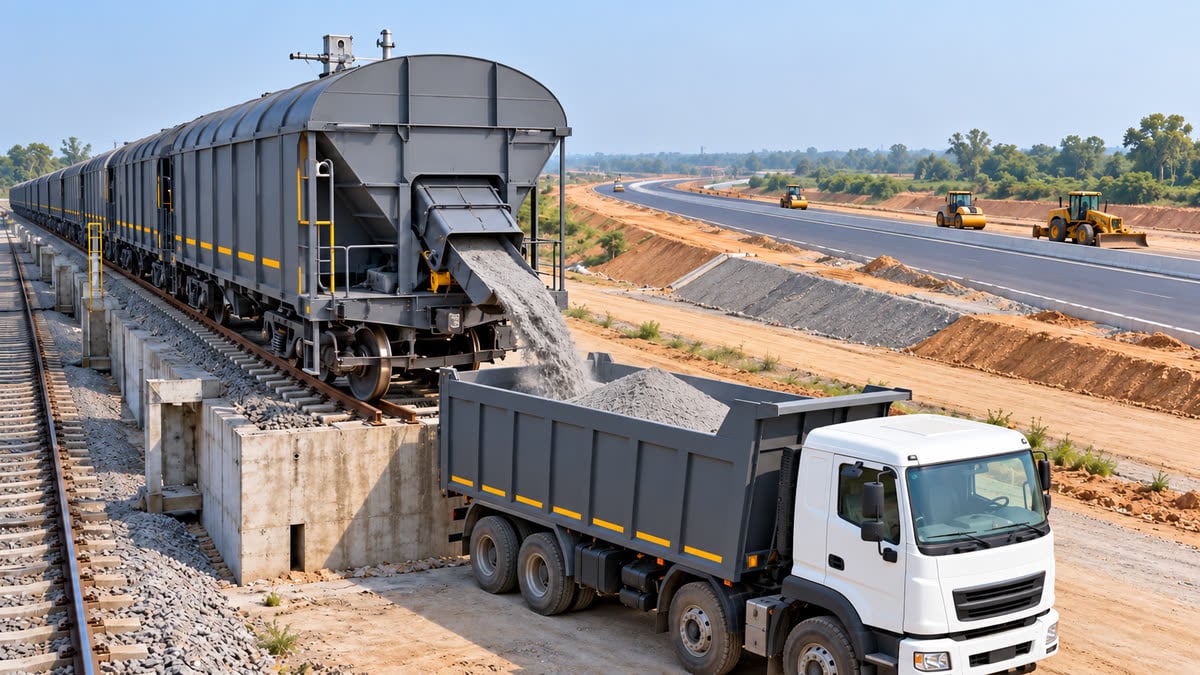
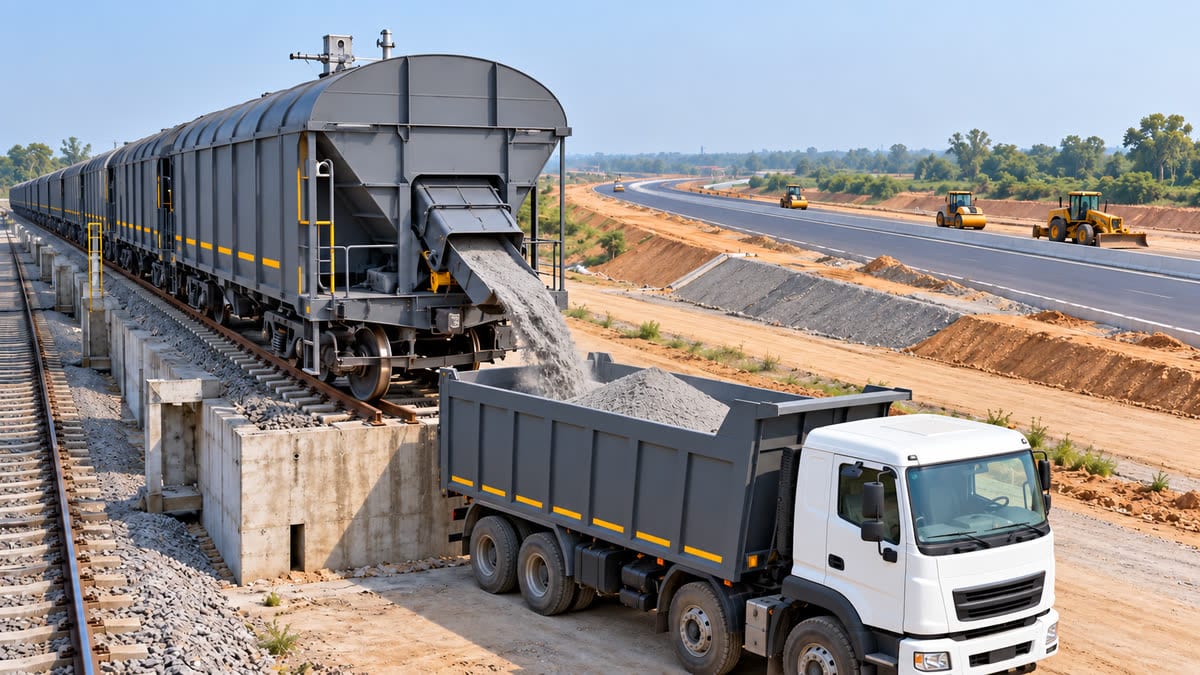 Illustrative rendering of rail-cum-road pond-ash logistics for highway construction; this is not a photograph of the reported NTPC consignment.
Key takeaways
- NTPC Vindhyachal has flagged off its first pond-ash rail rake for an NHAI project in Varanasi.
- The material is moving in rail-cum-road mode: rail carries the bulk of the journey, followed by road delivery to the project site.
- NTPC and the reporting outlets describe the arrangement as a way to support ash utilisation and reduce dependence on road transport.
- The dispatch is not an announcement of a new toll fee, a highway opening or a traffic restriction for motorists.
What happened at Vindhyachal
Kishore Kumar Hota, executive director of NTPC Vindhyachal, flagged off the rake from Krishnashila Siding. PSU Watch and Maritime Gateway both reported that the consignment is intended for the National Highways Authority of India in Varanasi and will move through Indian Railways before the road leg.
The event marks the first rake under the dedicated arrangement reported by the two outlets. NTPC’s procurement archive also lists a pond-ash transportation contract from Vindhyachal to a project near Deen Dayal Upadhyaya Junction at Varanasi through rail-cum-road mode, providing the official contract context behind the movement.
What pond ash is and why highways use it
Pond ash is a coal-fired power station by-product stored in ash ponds. When it meets the required project specifications, it can be used as a construction material, including for fill and road infrastructure. Reusing it in a highway project gives the material a productive destination while reducing the need to move some other bulk material to the site.
That does not make every ash shipment suitable for every road job. The project authority and contractor still have to follow the applicable material, handling, safety and environmental requirements. The current report confirms the dispatch and its logistics model; it does not state that construction work is complete or that road users will see an immediate change.
How rail-cum-road freight affects drivers and fleets
Rail-cum-road, or RCR, is a split movement. Rail is used for the long-haul portion from the power station area, while trucks move the material between the rail siding and the highway project. That means road freight is reduced for the longest part of the journey, but local truck operations remain necessary for loading, unloading and the final delivery.
For fleet operators, the useful change to watch is the possible shift in the type and length of work: fewer long-distance trips for this dedicated material movement, but more planned short-haul transfers around the project location. The reports do not provide a quantity, a freight-rate comparison or a measured fuel saving, so those benefits should be treated as the stated objective of the arrangement rather than a verified result.
For private drivers, the dispatch does not change petrol or diesel prices. Anyone estimating the fuel effect of a trip near an active construction corridor can use the FuelPrice fuel cost calculator with the actual city fuel rate and distance rather than assuming that a logistics announcement changes retail pump prices.
What it means for the Varanasi road project
The consignment connects a power-station by-product with an NHAI road project and may help keep construction material moving without putting the entire haul on the road network. It is a supply-chain step, not a confirmation of a project completion date, a new operational corridor or a change in user fees.
Drivers planning a longer journey can use the road-trip planner to review the route and then check the toll-charge calculator for the latest available estimate. Those tools answer the travel questions that this dispatch does not: how long a trip may take, what fuel it may use and what tolls are currently listed.
What to watch next
- Whether the dedicated contract develops into regular rail-cum-road movements from Vindhyachal to the Varanasi project.
- How the final road leg is scheduled around local construction access roads and public traffic.
- Whether NHAI or NTPC publishes a project update with quantities moved, delivery milestones or measured logistics outcomes.
- Local traffic advisories near active work zones; the reported rake dispatch itself is not a closure notice.
Reader takeaway
The first pond-ash rake is a small but concrete example of how Indian highway projects can link rail freight with the last-mile flexibility of trucks. It may reduce long-haul road dependence for this contract, but motorists should not expect an immediate toll, fuel-price or route change from the dispatch alone.
Sources
- Maritime Gateway — NTPC Vindhyachal dispatches first pond ash rake for NHAI Varanasi project — 6 October 2026
- PSU Watch — NTPC Vindhyachal sends first pond ash rail rake to NHAI Varanasi under dedicated contract — 5 October 2026
- NTPC eProcurement archive — Pond ash transportation contract to an NHAI project near Varanasi through RCR mode — 6 August 2026