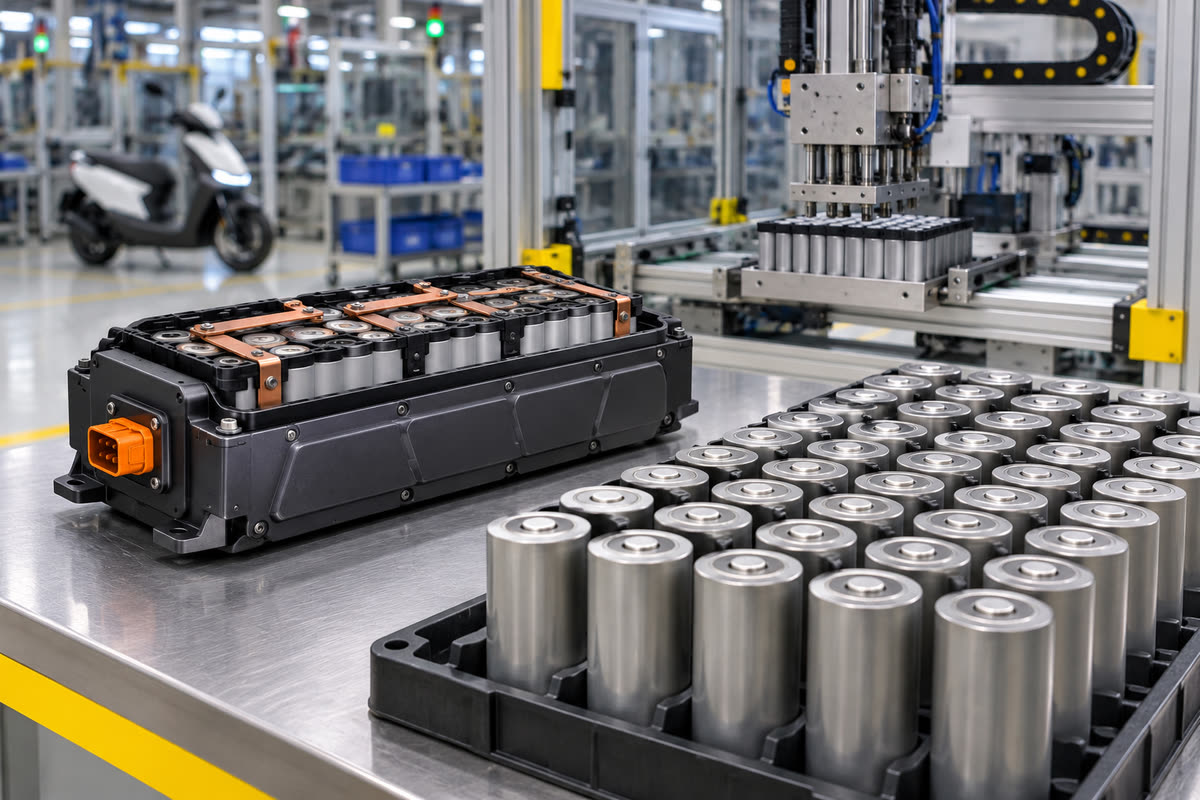
In its 12 Nov 2026 Q2 FY27 earnings call, reported by Autocar Professional on 20 Nov 2026, Ola Electric projected 4–5 lakh vehicle orders in financial year 2027–28, using an assumption that its average battery pack will rise to 5 kWh. The company’s management estimate is tied to 2–3 GWh of captive cell consumption; it is a planning projection, not a confirmed order book or delivery commitment.
For Indian electric-scooter buyers and fleet operators, the development matters because it links future product volume to larger battery packs, domestic cell production and the company’s shift to a dealer-led retail network. It does not by itself change the price, range or availability of any Ola model currently on sale.
Key takeaways
- Ola Electric’s 12 Nov 2026 FY28 projection covers 400,000–500,000 vehicle orders, as reported by Autocar Professional on 20 Nov 2026.
- The same company calculation assumes average battery capacity of 5 kWh, up from about 3.8 kWh in the current portfolio.
- At the 12 Nov 2026 call, Ola said it had commissioned 6 GWh of cell capacity and planned a longer-term move towards 20 GWh after stabilising the present plant.
- Larger packs can support more range, but pack size alone does not establish a certified range, price or real-world running cost.
- The next useful checks are product specifications, charging access, service reach and whether the company converts the projection into actual production and deliveries.
What Ola Electric has actually projected
The headline number came from a question about Ola Electric’s planned use of its own battery cells. In the earnings call held on 12 Nov 2026, chairman and managing director Bhavish Aggarwal said analysts could assume an average pack size of about 5 kWh for FY28. He linked 2–3 GWh of automotive cell consumption with a potential 400,000–500,000 orders.
That distinction is important. The 4–5 lakh figure is not a statement that customers have already placed those orders, and it is not a confirmed FY28 sales target issued as a product guarantee. It is a volume implied by the company’s cell-consumption assumption and its expected average pack size. Autocar Professional reported the projection on 20 Nov 2026.
The estimate also spans the 2027–28 financial year, so it is a forward-looking management view rather than a current-month sales update. Actual volumes will depend on cell yields, vehicle production, dealer inventory, prices, financing, after-sales capacity and customer demand.
The battery-cell plan behind the number
Ola said in the 12 Nov 2026 call that its cell business achieved commercial operation on 23 Sep 2026 after adding 3.5 GWh of capacity, taking the total to 6 GWh. Management said the immediate priority is to stabilise that capacity before moving towards a longer-term 20 GWh plan. The company expects to raise external equity at the cell-company level for the expansion, and said the gigafactory has been designed with the larger scale in mind.
Management also said in the same call that, at full 20 GWh capacity, capital expenditure could be below ₹400 crore per GWh. That is a company estimate for a fully scaled facility, not a reported cost saving already available to scooter buyers. Ola also described grid-storage applications for its cells, including the planned Mahashakti product, so the full future cell output should not be read as a one-for-one forecast for electric scooters.
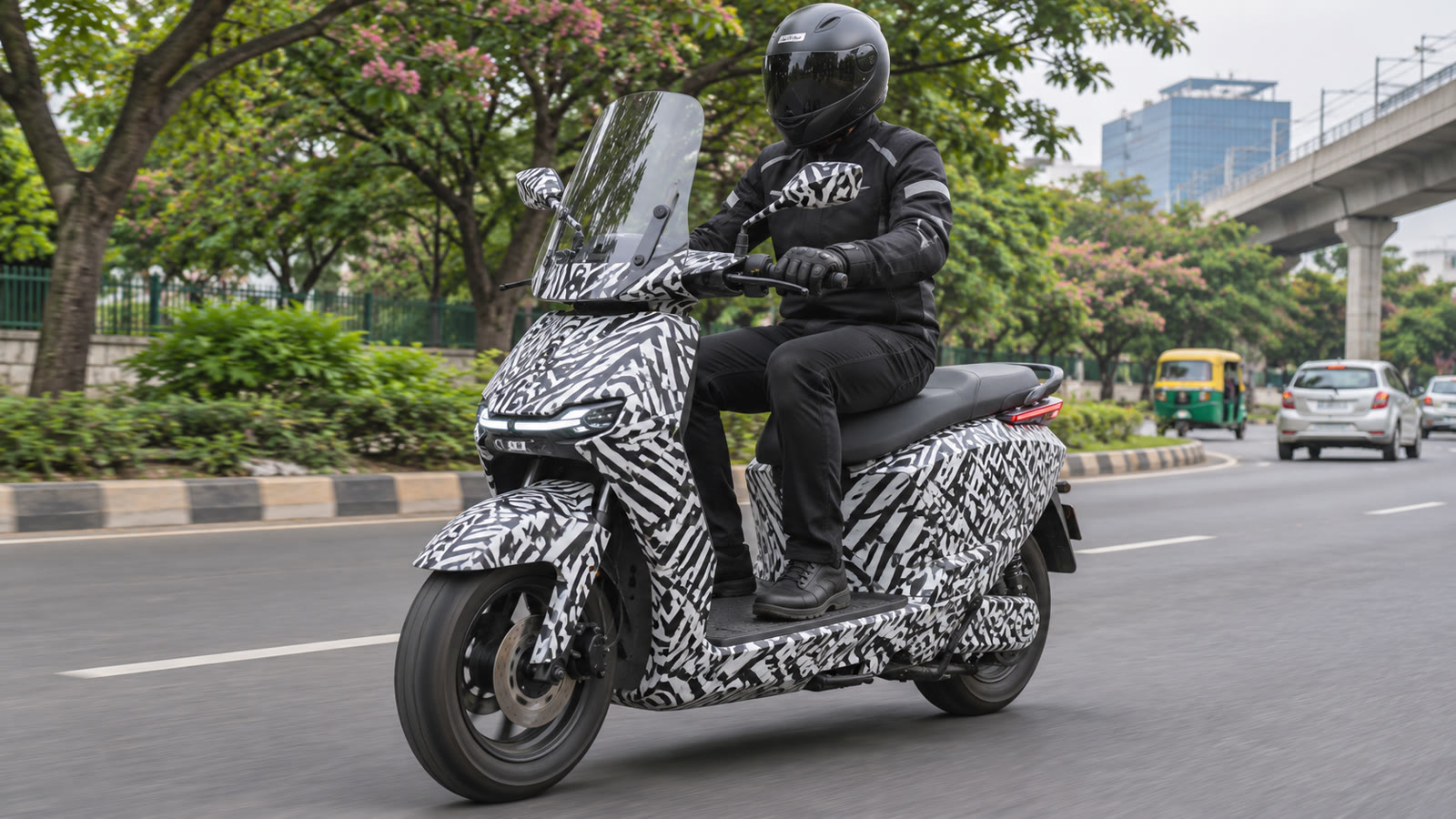
The company’s current average pack assumption of 3.8 kWh is moving towards 5 kWh partly because customers are choosing higher-range variants and because Ola expects greater use of its 4680-format cells. A bigger battery can add stored energy, but the effect on range still depends on motor efficiency, vehicle weight, software, tyres, riding conditions and the test cycle used for a certified figure.
What it could mean for EV buyers
For a buyer, a larger average pack is a product-direction signal rather than a promise about every model. It may support longer-range variants, but it can also affect vehicle weight, charging time, manufacturing cost and the final ex-showroom price. The relevant comparison remains model-specific: battery capacity, certified range, charger type, charging time, warranty terms, service coverage and the cost of replacing the pack.
Charging access will matter as the battery portfolio grows. The EV charging directory can help readers identify public charging locations, but a listing does not guarantee that a charger is compatible, available or working. Owners and fleet managers also need to account for home-charging tariffs, charging losses and the route pattern rather than treating the battery headline as a complete running-cost calculation.
For the petrol alternative, the fuel-cost calculator can model the fuel side of a regular commute. The comparison still needs a separate electricity estimate and can use the actual model’s battery and efficiency data once those figures are available.
Supply and service are as important as cells
Ola’s 12 Nov 2026 call also showed why production scale and retail execution will matter. The company reported Q2 FY27 vehicle volume of about 35,000–36,000 units and said 4,000–5,000 vehicles ready for delivery had been delayed by a charger-supply issue in September 2026. It said those vehicles were booked in the first week of October 2026.
Ola stopped taking orders through its direct-to-consumer stores from 1 Nov 2026 as it moved towards a dealer model. As of 8 Nov 2026, management said the network had 255 dealer partners operating 319 stores, with plans for 450 stores by December 2026 and more than 700 by March 2027. Those are company-stated rollout plans, so the practical test will be whether they improve delivery availability and service response without weakening coverage in smaller cities.
For longer rides, the road-trip planner can help map distance and stops, but it cannot replace a model-specific range check or a confirmation that a charging point is operational.
What to watch next
- Whether Ola publishes a specific 5 kWh or larger-pack product with a price, certified range and delivery timeline.
- Whether the 6 GWh cell operation reaches stable yields before the proposed 20 GWh expansion is funded and scheduled.
- Whether the dealer transition reduces the reported supply backlog and expands dependable service access.
- How actual FY28 production and customer deliveries compare with the 400,000–500,000 planning estimate.
Reader takeaway
Ola Electric’s disclosure points to a possible shift towards higher-capacity electric two-wheelers supported by domestic cell production. For now, it is a company projection built on battery-consumption assumptions, not a new purchase offer or a confirmed order pipeline. For current buyers, the relevant checks are the specific scooter’s certified range, charging arrangements, warranty and service network; future capacity plans become meaningful only when they appear in an announced product, price and delivery schedule.