Delhi has clarified that vehicles registered outside the capital and below BS-VI emission standards will face an entry restriction every year from 1 November to 31 January, rather than only under a one-off winter order. The current cycle is already in force from 1 Nov 2026, so NCR commuters and fleet operators need to check a vehicle’s registration, emission category and exemption before entering Delhi.
Key takeaways
- The Delhi government’s 7 Nov clarification makes the non-Delhi below-BS-VI entry restriction a recurring winter measure.
- For the current cycle, the restriction runs from 1 Nov 2026 to 31 Jan 2027.
- Petrol and diesel vehicles registered outside Delhi that are below BS-VI, including BS-IV and older vehicles, are affected under the public notification.
- CNG and electric vehicles, along with ambulances, fire services and other specified essential vehicles, are exempt from this specific restriction.
- A valid PUC certificate remains a separate compliance check; it does not by itself make a restricted vehicle eligible to enter.
What Delhi’s new clarification says
According to a 7 Nov PTI report published by Moneycontrol, the Delhi Transport Department’s public notification says that other-state-registered BS-IV and below vehicles will not be allowed to ply in Delhi every year from 1 November to 31 January. The report also says that, from 1 Nov 2026, commercial goods vehicles and buses below BS-VI are included, including buses operating under an All India Tourist Permit and other service regimes.
News On AIR describes the wider Winter Pollution Master Plan as a permanent framework. That plan is scheduled to operate each year from 1 November to 28 February, while the vehicle-entry restriction has its shorter 1 November to 31 January window. Keeping those dates separate matters: a driver may see pollution-control measures continue after the vehicle-entry window ends, even though this particular entry rule is limited to January 31.
Which vehicles are affected
The main test is the combination of registration location and emission standard. A petrol or diesel car, scooter, motorcycle, bus or goods vehicle registered outside Delhi and below BS-VI falls within the entry restriction described in the notification. In practical terms, this includes BS-IV and older vehicles; a valid PUC does not cancel the separate BS-VI eligibility requirement.
BS-VI vehicles registered outside Delhi are not covered by this particular below-BS-VI restriction, although other traffic, permit or pollution-control orders can still apply. CNG and electric vehicles are exempt from the specific restriction, as are ambulances, fire-service vehicles and other essential-service categories identified by the government. Owners or operators relying on an exemption should still keep the registration and category documents that establish it.
The update is relevant beyond private cars. A bus operator running an interstate service, or a transporter whose vehicle enters the capital for delivery, needs to check the vehicle’s fuel type, BS standard, permit conditions and destination. A through-truck that does not need to enter Delhi may need a route plan that keeps it on an appropriate peripheral corridor.
Why the recurring dates matter to NCR users
The practical change is predictability. Commuters from Gurugram, Faridabad, Noida, Ghaziabad and other NCR districts cannot treat the restriction as a temporary announcement that may disappear after one winter. The government’s clarification creates a recurring November-to-January planning point for daily commutes, school runs, fleet rosters and delivery schedules.
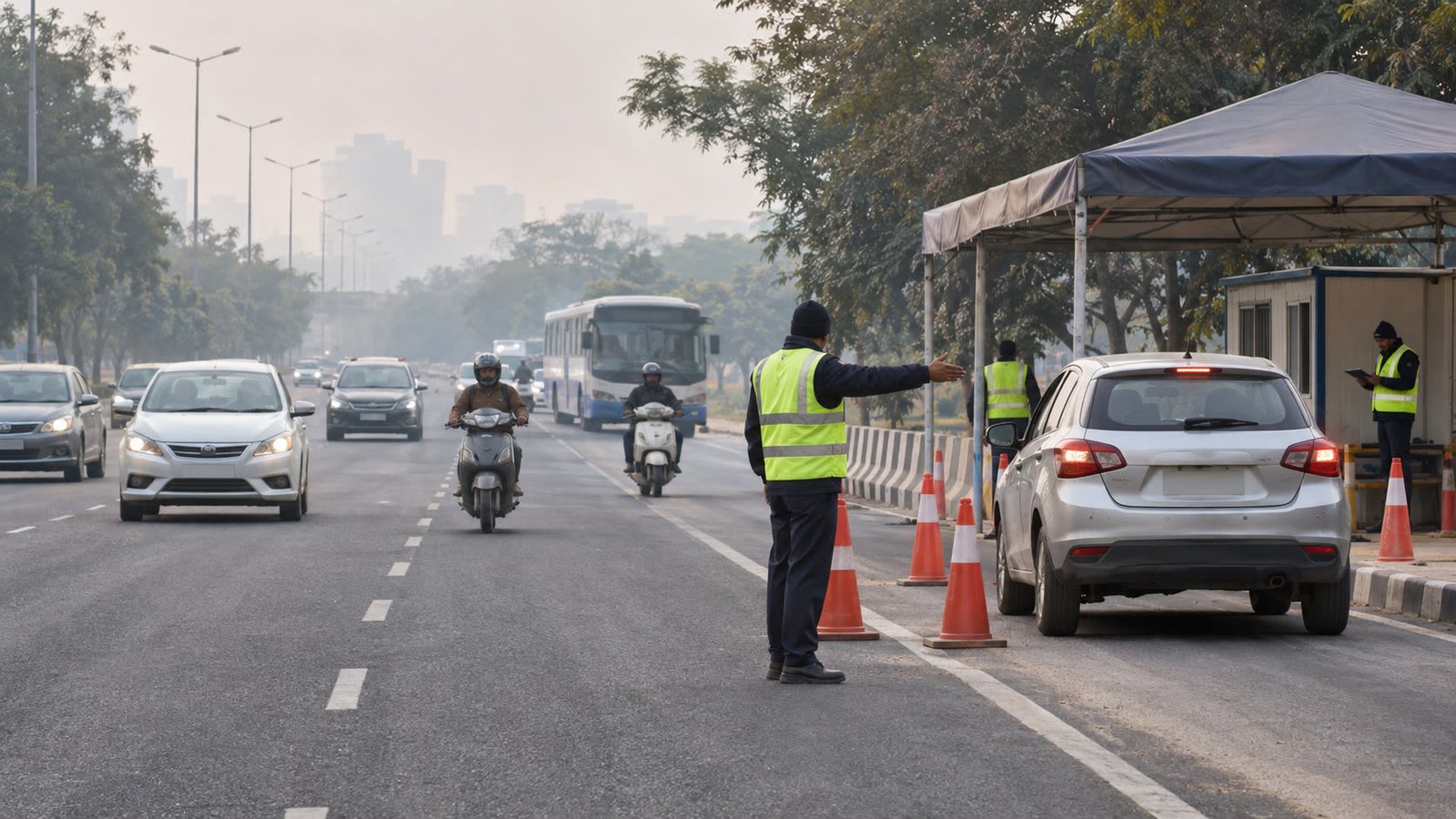
FuelPrice’s earlier report recorded vehicles being turned back during the first enforcement period. This new clarification adds the longer-term point: the same seasonal entry window is intended to return every year. Readers can compare that earlier border-check report with the current update before planning a regular Delhi journey.
The wider plan also says vehicles without a valid PUC certificate will not be supplied fuel at petrol pumps, CNG stations or LPG stations in Delhi throughout the year. This makes PUC validity a separate check from the seasonal entry rule. A vehicle can be eligible on emission standard but still face a fuel-supply problem if its certificate is not valid.
What to check before entering Delhi
- Registration and BS standard: Check the registration state and the vehicle’s emission standard in the registration certificate or official vehicle records. Do not assume that a vehicle’s age alone proves whether it meets BS-VI.
- Fuel type and exemption: If the vehicle is CNG or electric, keep the documents that show its fuel type. If it is being used for an essential service, confirm that the category and paperwork match the current government notification.
- PUC and permits: Check the validity of the PUC certificate before departure. Commercial vehicles and buses should also check their permit conditions and whether the planned Delhi entry is for a permitted destination.
- Route and timing: If the vehicle is not eligible, plan an alternative before reaching a border. For a revised trip, the road-trip planner can help compare routes, while the fuel-cost calculator can estimate how extra distance may affect running cost.
What to watch next
The annual framework does not remove the possibility of separate Delhi traffic advisories, CAQM measures or route-specific enforcement orders. Exemption details, checkpoint operations and treatment of commercial categories can be clarified through later official notices, so a time-sensitive trip should be checked against the latest advisory.
For now, the reader takeaway is straightforward: before driving into Delhi from another state, verify the vehicle’s registration, BS standard, fuel type, PUC status and any applicable permit or exemption. If the vehicle is below BS-VI and runs on petrol or diesel, plan for the 1 November to 31 January restriction every year rather than waiting to find out at the border.
Related context is available in FuelPrice’s earlier report on vehicles turned back at Delhi borders.
Sources
- News On AIR — Delhi Govt notifies permanent Winter Pollution Master Plan to curb seasonal air pollution — 2 Jul 2026; updated 7 Nov 2026
- Moneycontrol/PTI — Delhi vehicle ban: Nov-Jan restrictions on non-Delhi vehicles below BS-VI standards to continue every year — 7 Nov 2026
- The Indian Express — 48 lakh non-BS-VI vehicles in NCR districts next door, police have task cut out as restrictions kick in today — 1 Nov 2026