Residents in Tamil Nadu’s Pallikonda area have asked for a complete toll-fee exemption for non-commercial vehicles using the Pallikonda toll plaza, The Hindu reported on 15 Nov 2026. The notified framework currently offers eligible nearby private-vehicle owners a local monthly pass or a new annual concessional pass; it does not amount to a blanket zero-fee waiver.
For drivers planning frequent crossings, the practical question is therefore not whether a general exemption has begun, but whether the vehicle and residence meet the local-pass conditions and whether Pallikonda qualifies under them.
Key takeaways
- The Hindu reported the exemption request on 15 Nov 2026; it is a demand from residents, not a confirmed change in toll collection.
- G.S.R. 917(E), effective from 1 Nov 2026, lets eligible nearby owners choose between the existing monthly pass and a concessional local pass.
- Eligibility requires a non-commercial vehicle, a valid and functional FASTag, and residence within 20 km of the relevant fee plaza.
- The annual local-pass fee is ₹1,500 where the plaza is outside municipal or local town limits, or ₹3,000 where it is within those limits.
- The pass is valid only at the selected plaza and is not available in some closed user-fee systems or where a service or alternative road is available.
What Pallikonda residents are asking for
The reported demand is for a full exemption from toll charges for non-commercial vehicles using the plaza. Residents said removing the charge would reduce the cost of routine travel and support agricultural activity in the area, according to The Hindu’s 15 Nov report.
That is different from the local-pass system already notified by the Ministry of Road Transport and Highways. The official rule creates a discounted access option for qualifying local users; it does not automatically make every resident’s crossing free. Until NHAI or the Ministry issues a separate Pallikonda-specific order, drivers should treat the exemption as a request under consideration rather than an operating rule.
What the current local-pass rule says
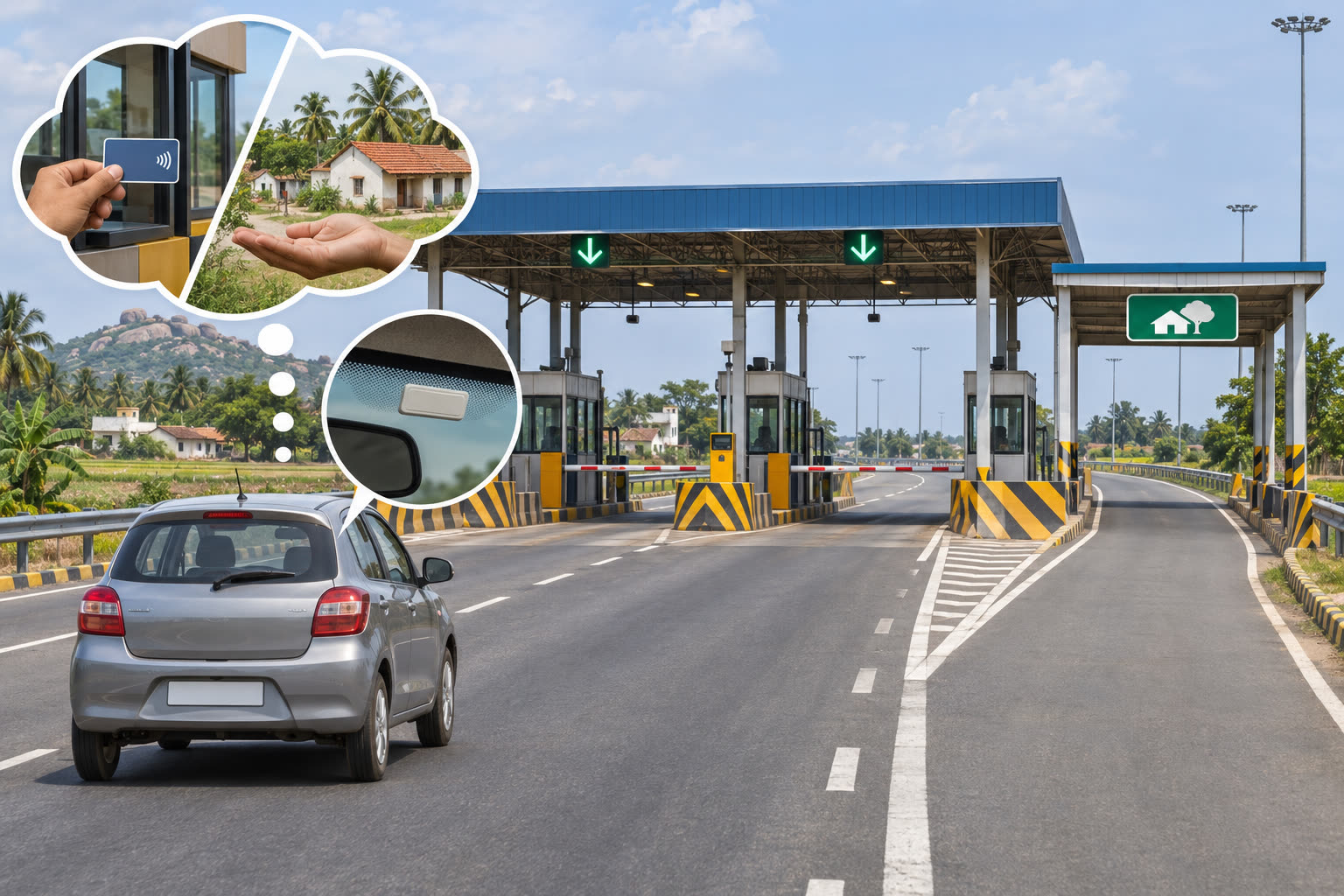
The National Highways Fee (Determination of Rates and Collection) (Fifth Amendment) Rules, 2026, notified as G.S.R. 917(E), came into force on 1 Nov 2026. Under the new sub-rule, a person who owns a mechanical vehicle registered for non-commercial use, has a valid functional FASTag and resides within 20 km of a fee plaza may choose either the monthly pass under the existing rule or the concessional local pass.
The concession is tied to one specific fee plaza. It cannot be treated as a nationwide toll-free entitlement or transferred to another plaza on the same journey. The fee is ₹1,500 per year if the plaza is outside municipal or local town limits and ₹3,000 per year if it is within those limits. The government may revise those rates each year from 1 April.
That structure gives local drivers a defined alternative while the Pallikonda exemption request is unresolved. It also means the applicable rate cannot be assumed from the vehicle owner’s location alone; the classification of the plaza and the other conditions in the notification matter.
What a local driver should check
Before relying on a local pass for a Pallikonda crossing, the owner should verify the following with the plaza or the official Rajmargyatra service:
- Residence: the owner must meet the 20-km condition for the specific fee plaza. An address beyond that limit does not qualify under the notified rule.
- Vehicle and FASTag: the vehicle must be non-commercial and its FASTag must be valid and functional. A pass attached to another vehicle or a non-working tag will not solve a toll-payment problem.
- Plaza classification: check whether the plaza falls outside or within municipal or local town limits before estimating the annual fee.
- Road conditions: the concessional pass is not issued where the highway or expressway uses a closed user-fee collection system, or where a service road or alternative road is available for the commuter.
- Availability route: the PIB release says the annual pass is available at eligible toll plazas from 1 Nov 2026 and through the Rajmargyatra App from 1 Dec 2026. A driver should confirm Pallikonda’s live availability rather than assume that the rule applies automatically.
How the pass changes the cost calculation
The two annual rates work out to ₹125 a month when ₹1,500 is spread across 12 months, and ₹250 a month when ₹3,000 is spread across 12 months. Those are simple equivalents, not a promise of savings: the actual value depends on how often the vehicle crosses that one plaza and what alternative toll or route costs exist.
For a complete trip budget, combine the applicable toll treatment with fuel and route distance in the fuel cost calculator, then check the route’s toll estimate in the toll charges calculator. The road-trip planner can help compare a route that uses the plaza with an alternative, where one is legally and practically available.
What to watch next
The immediate watch point is whether NHAI, the Ministry or the toll operator publishes a Pallikonda-specific clarification on eligibility, the applicable local-pass rate or the residents’ exemption request. Until that happens, the official position remains the notified local-pass framework: qualifying non-commercial vehicle owners may apply for the applicable pass, while a blanket exemption has not been announced in the sources reviewed for this report.
Drivers should retain the FASTag and vehicle details used for eligibility checks and confirm the latest plaza status before a regular commute. Any future exemption or change in rate should be checked against an official notice rather than an informal message or an unverified toll-rate post.
Sources
- Residents seek exemption of taxes for non-commercial vehicles at Pallikonda toll plaza — The Hindu, 15 Nov 2026.
- Government of India Introduces Concessional Local Pass for National Highway Users Living Near Fee Plazas — Press Information Bureau, 27 Oct 2026.
- National Highways Fee (Determination of Rates and Collection) (Fifth Amendment) Rules, 2026, G.S.R. 917(E) — Gazette of India, 26 Oct 2026.