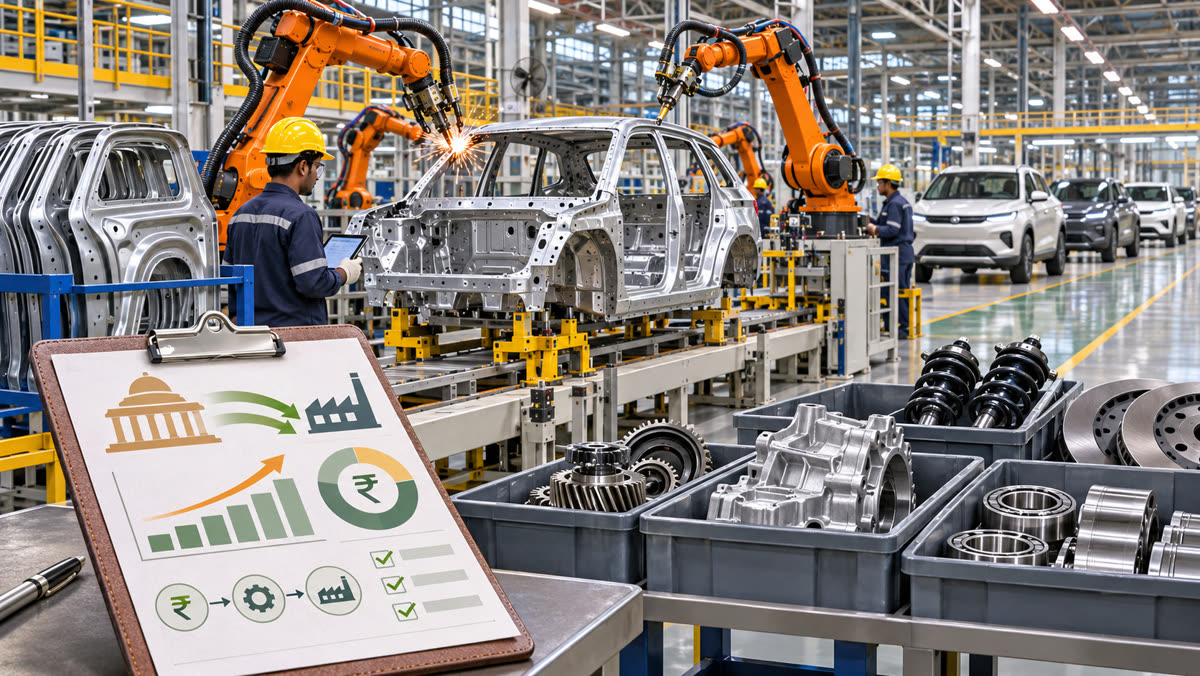
India’s Production Linked Incentive (PLI) scheme for automobiles and auto components disbursed ₹4,385.28 crore during FY 2026–27 up to 25 Nov 2026, according to the Ministry of Heavy Industries. The report matters to vehicle buyers because it shows how quickly support is being released for domestic advanced-technology manufacturing, but it does not announce an immediate cut in car prices, fuel rates or toll charges.
Key takeaways
- PLI-Auto disbursements reached ₹4,385.28 crore during FY 2026–27, measured up to 25 Nov 2026.
- Cumulative payouts since the scheme began reached ₹6,771.64 crore as of 25 Nov 2026.
- Approved applicants reported ₹52,806 crore of cumulative investment as of 30 Sep 2026, above the ₹42,500 crore target cited by the ministry.
- The scheme is tied to advanced automotive technology and requires at least 50% domestic value addition for eligible products.
- The update is an industry-support report, not a retail subsidy or a promise that any particular model will become cheaper.
What changed in the latest PLI-Auto report
The Ministry of Heavy Industries released the figures after a review meeting chaired by Union Minister for Heavy Industries and Steel H. D. Kumaraswamy on 25 Nov 2026. The ministry said FY 2026–27 disbursements had reached ₹4,385.28 crore by that date. Business Standard and The Economic Times separately reported the same payout figure and the ministry’s wider progress update.
The scheme’s approved budgetary outlay is ₹25,938 crore over the programme period cited by the ministry. Its purpose is to encourage production of advanced automotive technology products, including electric vehicles and their components, through incentives linked to eligible sales. That design is different from a consumer coupon: the money is released to approved industry participants when scheme conditions and performance requirements are met.
Why domestic value addition is central
One of the most important checks in the update is the domestic value-addition requirement. Eligible products must meet a minimum DVA of 50% to qualify for the incentive. In practical terms, at least half of the value counted for the product must be added in India through the activities covered by the scheme’s rules; the threshold is not a claim that every part of a vehicle is made locally.
As of 25 Nov 2026, the ministry said DVA certificates had been issued to nine Champion original-equipment manufacturers covering 139 products or variants. Ten Component Champions had certificates covering 53 products or variants. These certificates indicate that the certified products met the scheme’s stated localisation test; they do not by themselves establish the retail price, range, mileage or reliability of a vehicle.
What it means for vehicle buyers and drivers
For a person buying a car, bike or EV, the immediate effect is limited. The announcement does not change the price displayed by a dealer, the fuel rate at a pump or the toll charged on a highway. It also does not identify a model that will receive a lower sticker price because of the payout. Buyers can still use the fuel cost calculator to compare running-cost assumptions separately from any industrial policy support.
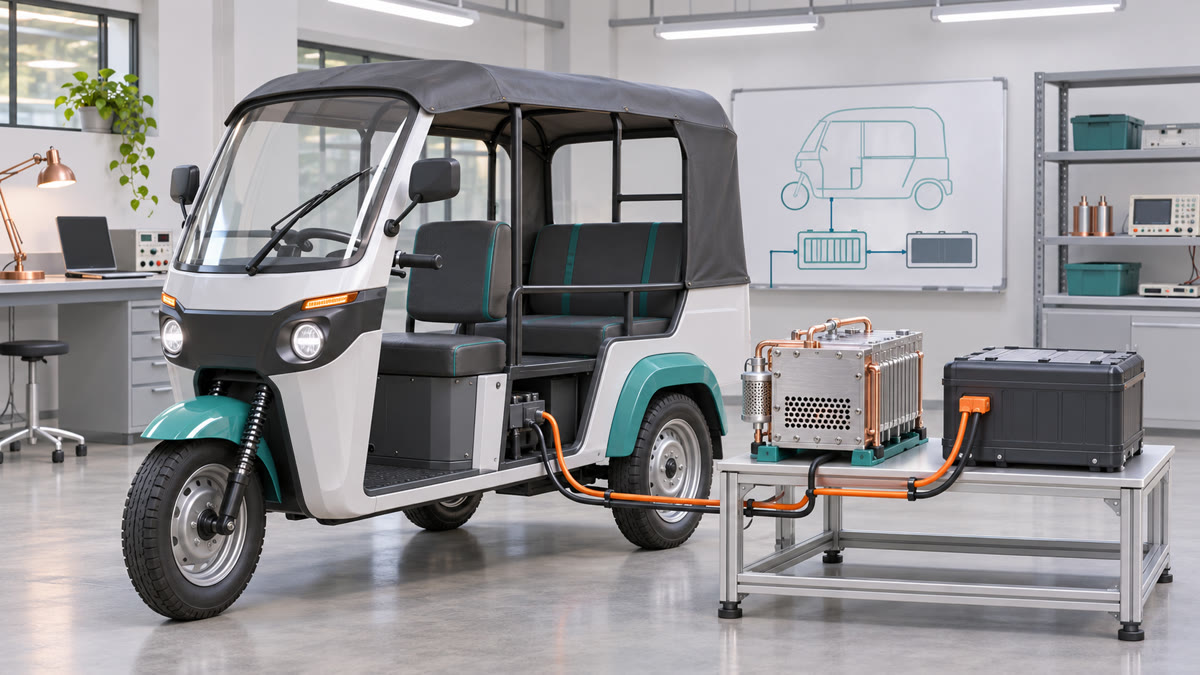
The longer-term relevance is the supply chain. If eligible manufacturers continue to invest in components, power electronics, electric drivetrains and other advanced systems, domestic capacity could become more important in the availability and servicing of newer vehicles. That is a possible industry effect, not a guaranteed saving. EV owners and prospective buyers can use the state-wise EV charging directory to assess charging access independently of the manufacturing incentive figures.
For conventional vehicle users, the report is not a fuel-price signal. Petrol and diesel prices continue to depend on the retail pricing decisions of oil marketing companies, taxes, crude costs and local conditions. Current rates should be checked on the live fuel-prices page, rather than inferred from a manufacturing incentive announcement.
What the investment and jobs figures show
In its 25 Nov 2026 update, the ministry said approved applicants had reported cumulative investment of ₹52,806 crore as of 30 Sep 2026, compared with a target of ₹42,500 crore. It also reported incremental sales of ₹82,993 crore over the FY 2019–20 base year and 77,755 employment opportunities under the scheme. Incremental sales here means additional sales of eligible products compared with the stated base year; it is not the same as total industry sales or a forecast of future car demand.
Those figures are useful as a progress snapshot, but they need to be read with the scheme’s eligibility conditions. Reported investment is not the same as money already spent by every supplier, and employment attributed to a scheme does not tell a buyer how many jobs relate to a particular model. The clearest consumer-facing takeaway is that the policy is trying to build a deeper domestic automotive base, especially around advanced technology and components.
What to watch next
The next useful updates will be whether more products receive DVA certification, how later disbursements compare with the scheme’s approved outlay, and whether manufacturers report new capacity or product launches linked to the supported technologies. It will also matter whether local component availability improves service coverage and replacement options over time. None of those outcomes should be treated as confirmed until the relevant company, regulator or ministry publishes supporting details.
Reader takeaway
The PLI-Auto report is positive for India’s manufacturing pipeline, not an instant discount announcement. Vehicle buyers should treat the ₹4,385.28-crore FY 2026–27 payout as an industry-progress number, then compare the actual model price, warranty, running cost, charging or fuel access and service network before making a purchase decision.
Sources
- Press Information Bureau, “PLI Scheme for Automobile and Auto Component Industry Records ₹4,385.28 Crore Incentive Disbursement in FY 2026–27” — 25 Nov 2026.
- Business Standard, “Auto PLI scheme disburses ₹4,385 crore in first eight months of FY27” — 25 Nov 2026.
- The Economic Times, “PLI Auto Scheme records Rs 4,385 cr incentive disbursement in current fiscal: Govt” — 25 Nov 2026.