Ukraine struck Russia’s Ryazan oil refinery on 15 October, causing a fire after President Volodymyr Zelenskyy said Kyiv would resume attacks on Russian energy sites. The incident matters beyond the war because the Rosneft-owned plant supplies the Moscow market, and any prolonged disruption could add another regional risk to gasoline and diesel availability while refined-fuel markets remain sensitive.
Key takeaways
- Reuters and the Associated Press independently reported a fire at the Ryazan refinery after a Ukrainian drone attack on 15 October 2026.
- The strike followed a reported pause on attacks against energy targets; Reuters said Ukraine had observed the pause for three days, while also noting that the arrangement was not confirmed by both sides.
- The extent of the refinery damage and its operating status were still being assessed in the initial reports.
- A single refinery incident does not automatically mean a global pump-price jump. The near-term questions are how long the plant is affected, where replacement fuel comes from and whether other supply routes remain open.
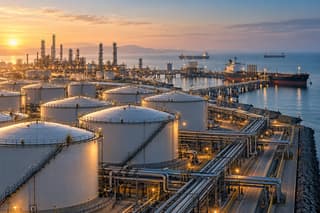
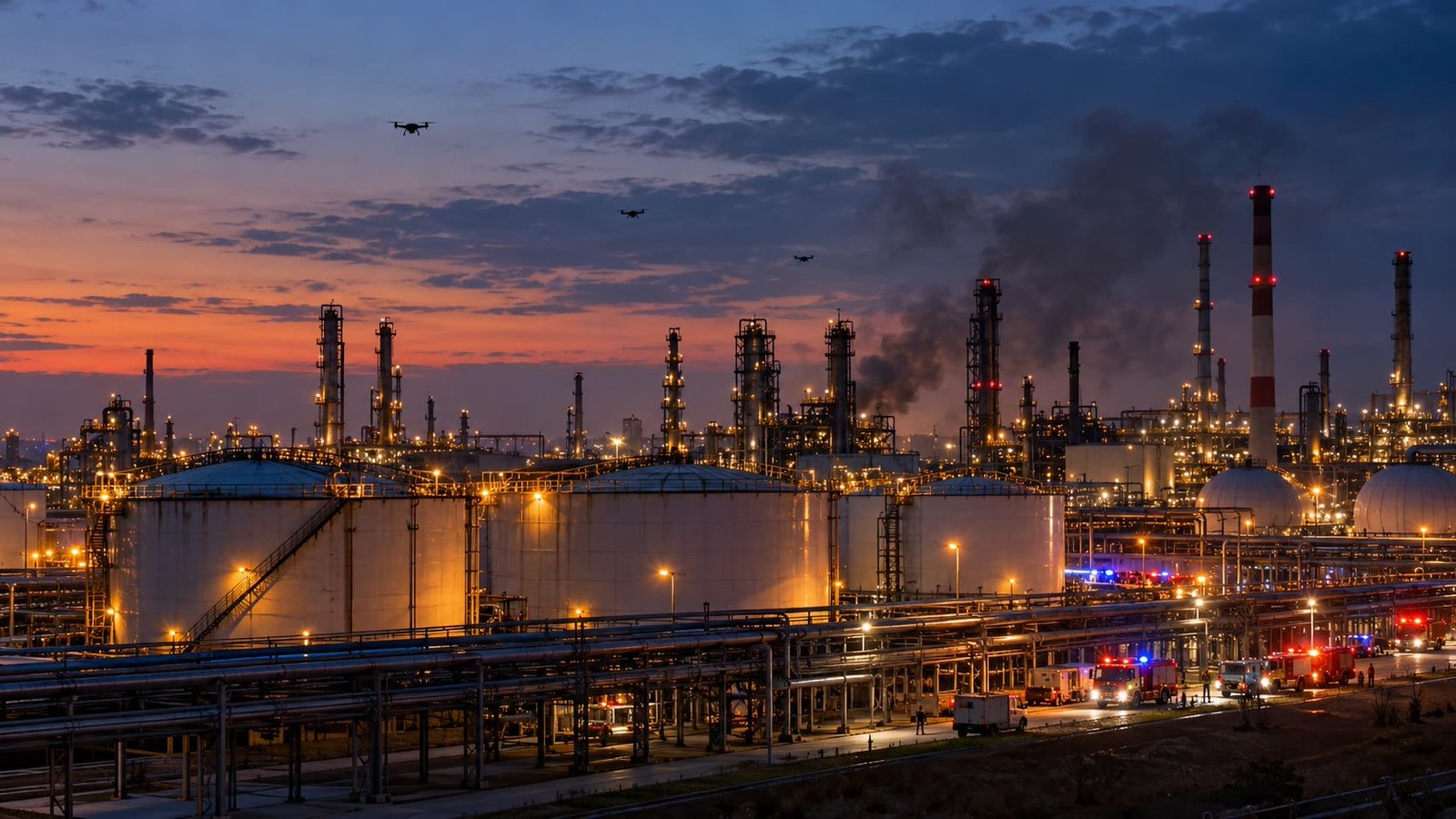
Image note: This is an illustrative editorial image of refinery disruption, not a photograph of the Ryazan refinery.
What happened at the Ryazan refinery
Russian regional authorities said a large drone attack caused a fire at an oil refinery in the Ryazan region, southeast of Moscow. Reuters reported that Governor Pavel Malkov said emergency services were working at the scene and that material damage was being assessed. The Associated Press separately reported that the strike started a fire at the facility, citing the Russian Defense Ministry and the regional governor.
A Ukrainian official told Reuters that Ukraine had hit the refinery in response to Russian missile and drone attacks on Ukrainian energy infrastructure. Zelenskyy told the Financial Times that Kyiv’s pause on strikes against Russian refineries was over. AP also reported that a senior Ukrainian official confirmed the refinery had been hit.
The claims around the pause remain contested. Reuters said the reported energy ceasefire had not been confirmed by both Moscow and Kyiv. AP reported that Kremlin spokesperson Dmitry Peskov said Ukraine had never stopped its attacks on refineries, while Moscow has also said Ukrainian strikes have had limited effect. The available reporting therefore supports the fire and the strike, but not a settled account of the agreement or the full damage.
Why the refinery matters for fuel supply
Refineries turn crude oil into usable products such as gasoline, diesel and jet fuel. If a large plant loses storage, processing or loading capacity, the first effect is usually regional: nearby wholesalers may need replacement cargoes, transport routes may lengthen and local inventories may draw down faster.
Reuters reported that the Ryazan refinery is owned by Rosneft and helps supply Moscow. That makes its operating status more important than the fire’s visual impact alone. A short interruption may be absorbed through stocks or rerouting; a longer outage would put more pressure on other Russian refineries and on the movement of finished fuel into the Moscow area.
That distinction matters for international readers. Crude benchmarks respond to expectations about total supply, but retail gasoline and diesel prices also depend on refinery margins, shipping, storage, taxes, currency movements and local competition. A refinery fire can therefore tighten a specific product market without producing an immediate or uniform price move at every forecourt.
What drivers, fleets and transporters should watch
The practical signal is uncertainty in refined products, not a confirmed global shortage caused by this one incident. Fleet operators can compare current prices through the live fuel prices page, then test how a higher diesel or gasoline assumption changes a route budget with the fuel cost calculator. Those checks are more useful than applying a single headline percentage to every journey.
For long-distance travel, replacement supply may matter as much as the refinery itself. Watch for official updates on whether Ryazan is running normally, at reduced rates or offline; reports of product movements into Moscow; and any evidence that other Russian plants or export routes are being used to compensate. The road-trip planner can help separate the fuel-price question from the route and distance assumptions in a trip plan.
What to watch next
The next meaningful evidence should come from operating updates, not unverified images or early claims about lost capacity. Markets will look for confirmation of damage to processing units, tanks or loading infrastructure, followed by any change in regional wholesale prices. Governments and companies may also adjust fuel logistics if the plant cannot return quickly.
There is a wider strategic issue as well. The incident shows how an energy-target pause can remain fragile when refineries and power infrastructure are treated as part of the conflict’s pressure points. If attacks continue, the market may price a higher risk premium into regional diesel and gasoline flows even when crude production itself is unchanged.
Reader takeaway
The confirmed early picture is a fire at the Ryazan refinery after a reported Ukrainian strike, with the scale and duration of the disruption still unclear. For drivers and transport businesses, the sensible watchpoints are local product availability, wholesale-to-retail pass-through and the speed of any replacement supply—not an assumption that one incident automatically sets fuel prices worldwide.
Sources
- Associated Press — Ukraine abandons truce and attacks Russian oil refinery as Zelenskyy says he feels betrayed by Trump — 15 Oct 2026
- Reuters, via ThePrint — Drone attack causes fire at Russia’s Ryazan refinery, regional governor says — 15 Oct 2026
- Official website of the President of Ukraine — Volodymyr Zelenskyy and Friedrich Merz Discussed How Russia Is Responding to President Trump’s Statement on an Energy Ceasefire with New Attacks on Ukraine — 12 Oct 2026
This article is for general information only and is not financial, insurance or legal advice.