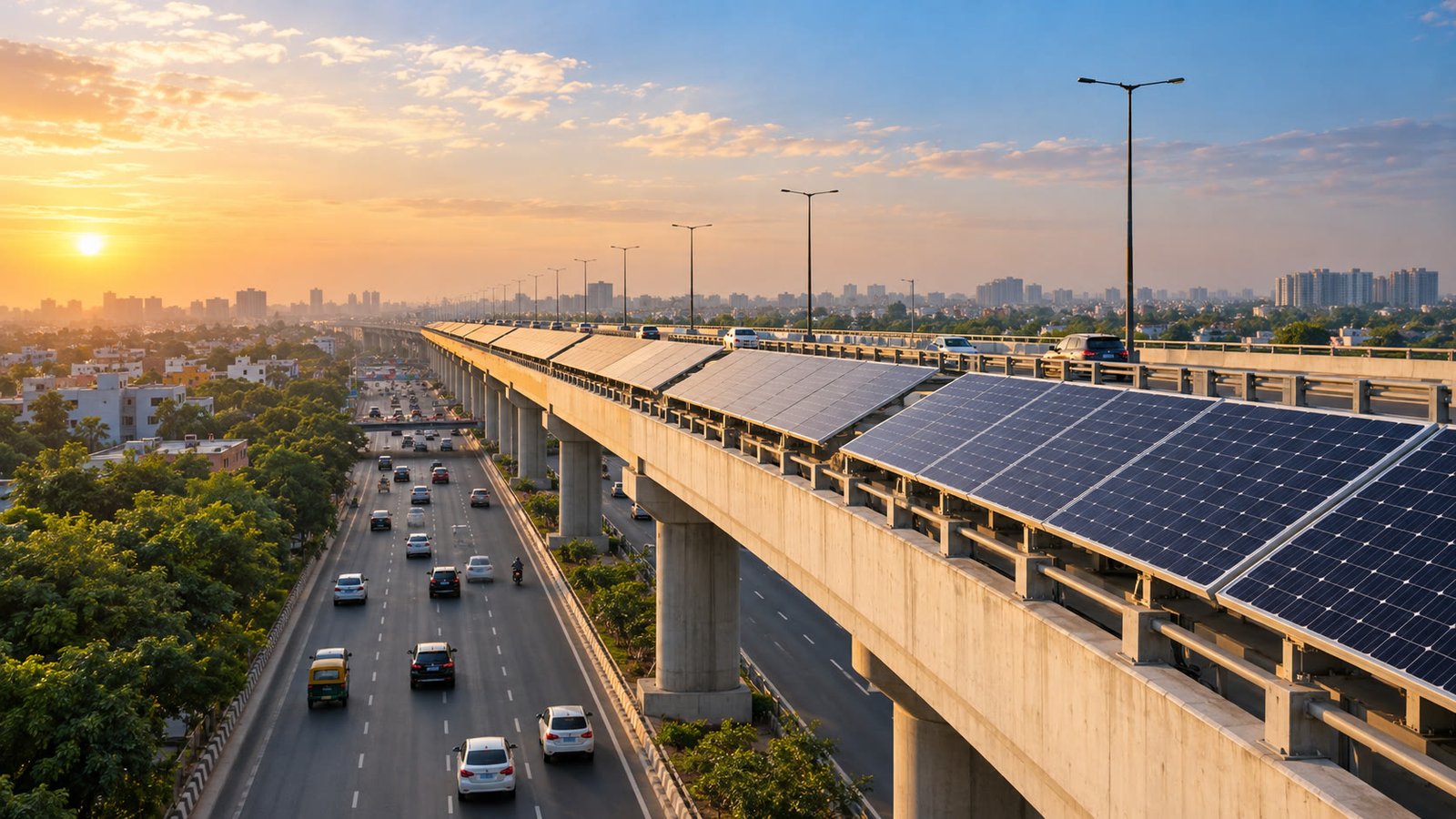
SECI has floated a tender to select a developer for a minimum 4 MW solar photovoltaic project along the elevated Delhi–Dehradun Highway, in coordination with NHAI. The proposal is still at the procurement stage: the notice does not announce a toll revision, route closure or new charging facility for drivers as of 12 Oct 2026.
For people planning trips on the corridor, the practical message is simple. This is a renewable-energy and highway-infrastructure tender, not a change to what motorists pay or where they can drive today. The final design, power-use arrangement, construction schedule and operating terms are still to be decided.
Key takeaways
- SECI is seeking a solar power developer for a project with a minimum capacity of 4 MW along an elevated section of the Delhi–Dehradun Highway.
- The project is being taken forward under the Renewable Energy Service Company, or RESCO, model through tariff-based competitive bidding.
- The tender does not by itself confirm the final panel layout, electricity tariff, commissioning date or use of the power.
- There is no announced toll hike, route-access change or public-charging rollout attached to this notice.
- Drivers should continue to check live route charges and fuel costs separately when planning a Delhi–Dehradun journey.
What SECI has invited bids for
The Solar Energy Corporation of India has issued a Notice Inviting Tender for selecting a solar power developer to set up a grid-connected photovoltaic project along the elevated Delhi–Dehradun Highway. The official notice specifies a minimum generation capacity of 4 MW. It also places the work in Phase I and ties developer selection to tariff-based competitive bidding.
The wording matters because a minimum capacity is not the same as a final installed capacity. The notice starts a procurement process; it does not mean panels are already being installed or that the highway has begun generating electricity. The detailed Request for Selection and later project documents will determine the technical design, commercial terms and delivery obligations.
The project builds on a memorandum of understanding signed by SECI and NHAI in November 2025. The government described that earlier collaboration as covering renewable-energy projects along the elevated portion of Package 1, the Delhi section of the Delhi–Saharanpur–Dehradun Highway, also identified as NH-709B.
What the RESCO model means
Under a typical RESCO arrangement, a selected developer finances, builds and operates the solar plant, while the participating public entity buys electricity under an agreed contract. The exact commercial structure for this highway project is not final in the preliminary notice, so it would be premature to estimate a tariff, savings or any effect on toll collection.
For road users, the distinction is important. Solar generation along a highway corridor could eventually support electricity demand linked to lighting, monitoring, buildings or other facilities, but the tender does not confirm which loads will receive the power. It also does not say that the electricity will be used to operate EV chargers.
What changes for drivers now
Nothing in the tender changes the existing toll schedule or access rules for the Delhi–Dehradun route. It does not announce a construction diversion, a lane closure or a new fee. Any future work near a live elevated corridor would still need traffic-management, safety and maintenance arrangements, but those details have not been published with the preliminary notice.
Drivers making the journey can use the toll-charge calculator to check the currently listed route charges. Because a solar tender has no immediate effect on petrol or diesel consumption, the fuel-cost calculator can be used separately to estimate a trip based on vehicle mileage, distance and the latest fuel rate.
For a longer journey involving stops or a return leg, the road-trip planner remains the relevant tool. These checks are more useful for a current trip than treating a proposed energy project as an immediate cost or travel change.
Why the pilot matters beyond one highway
Elevated highways are difficult places to add new infrastructure. Any solar installation has to account for structural loading, wind, vibration, drainage, corrosion, electrical protection, maintenance access and the risk of objects or work activity affecting traffic. The official tender does not yet settle those engineering questions.
If the pilot moves ahead, it could give NHAI and SECI evidence on whether renewable generation can be integrated with transport assets without compromising road safety or maintainability. It could also show whether the model works economically when access, safety and grid-connection costs are higher than at a conventional ground-mounted solar site.
That is why the project should be read as a test of infrastructure integration rather than a promise of cheaper travel. The earlier government announcement spoke about powering highway infrastructure and reducing the carbon footprint, but the present tender does not quantify emissions reductions or confirm a financial saving for motorists.
What to watch next
The next meaningful updates will be the detailed selection documents, the bid-submission timetable, the final engineering configuration and the identity of the selected developer. Road users should also look for information on grid connectivity, construction access, safety controls and whether the generated electricity will serve highway assets, be supplied to the grid or follow another arrangement.
Until those details are confirmed, the Delhi–Dehradun solar plan is best described as a proposed highway-energy pilot. It is a notable infrastructure step, but it is not a new toll rule, a confirmed EV-charging station network or an immediate change to a driver’s trip cost.
Sources
- Solar Energy Corporation of India, Notice Inviting Tender for the elevated Delhi–Dehradun Highway solar project, 9 Oct 2026
- Vyqon, SECI Proposes Minimum 4 MW Solar Pilot on Elevated Delhi–Dehradun Highway Under RESCO Model, 12 Oct 2026
- Press Information Bureau, SECI and NHAI sign MoU for a cleaner Delhi–Saharanpur–Dehradun Highway, 10 Nov 2025