Automakers and city-gas distributors have challenged parts of the Commission for Air Quality Management (CAQM) roadmap for electric vehicles in Delhi-NCR, arguing that policy should compare CNG, electric and other cleaner technologies. The disagreement matters to drivers because the roadmap is still a proposal, not a new ban or an immediate change to vehicle use, fuel purchase or registration.
Financial Express reported on 12 Oct 2026 that industry representatives questioned the air-quality basis for phasing out newer CNG vehicles and asked for a technology-neutral assessment. The report follows the CAQM expert panel recommendations covered earlier by FuelPrice; this article focuses on the new industry response and what vehicle owners need to watch next.
Key takeaways
- The reported CNG objections are industry claims and have not been independently validated as a replacement for CAQM's assessment.
- CAQM's expert-panel roadmap remains an interim recommendation. It is not, by itself, an enforceable Delhi-NCR-wide EV rule.
- Financial Express reported an OEM estimate that BS-VI CNG cars contribute 0.0001% of the region's annual PM2.5 pollution; the calculation uses CAQM data plus industry assumptions.
- Business Standard reported proposals for cabin filtration, roadside emissions sensing, EV incentives and charging access. The recommendations do not automatically create a subsidy or deadline for owners.
- CNG owners, EV buyers and fleets should wait for a formal notification that states the vehicle class, geography, effective date, exemptions and enforcement process.
What the new pushback is about
Financial Express said carmakers and city-gas distributors are asking CAQM to assess multiple technologies rather than treating battery-electric vehicles as the only pathway. The report said an OEM calculation, based on CAQM data and additional industry assumptions, estimated that BS-VI CNG cars account for 0.0001% of Delhi-NCR's annual PM2.5 pollution. It also reported a broader OEM estimate of 0.004% for BS-VI cars. Financial Express clearly noted that these figures were not independently validated.
That qualification is important. The percentages are reported industry estimates, not a new government finding, and they should not be read as proof that CNG has zero emissions or that EVs have no air-quality advantage. The industry's argument is that the policy should compare the marginal benefit of replacing newer, compliant vehicles with the cost of doing so, while also considering electricity generation, vehicle manufacturing and the practical availability of charging.
The Association of CGD Entities (ACE) has separately challenged the basis for restrictions on new CNG light goods vehicles under CAQM Direction No. 102, issued on 19 Aug 2026, according to the Financial Express report. ACE questioned an assessment that a BS-VI CNG light goods vehicle emits 57.1 times the PM2.5 of a BS-VI CNG passenger car. It also claimed that stopping new CNG light goods vehicle registrations would cut annual Delhi-NCR PM2.5 by less than 0.001%. These are attributed claims in an industry submission, not confirmed changes to the rules.
What CAQM has proposed
CAQM's website lists the interim report of its expert committee for abatement of vehicular emissions in Delhi-NCR. The panel's recommendations include a phased shift towards zero-tailpipe-emission vehicles, alongside measures for older vehicles, public transport and charging. The earlier FuelPrice coverage of the proposed Delhi-NCR EV sales path explains the reported targets and why they should not be mistaken for an immediate registration ban.
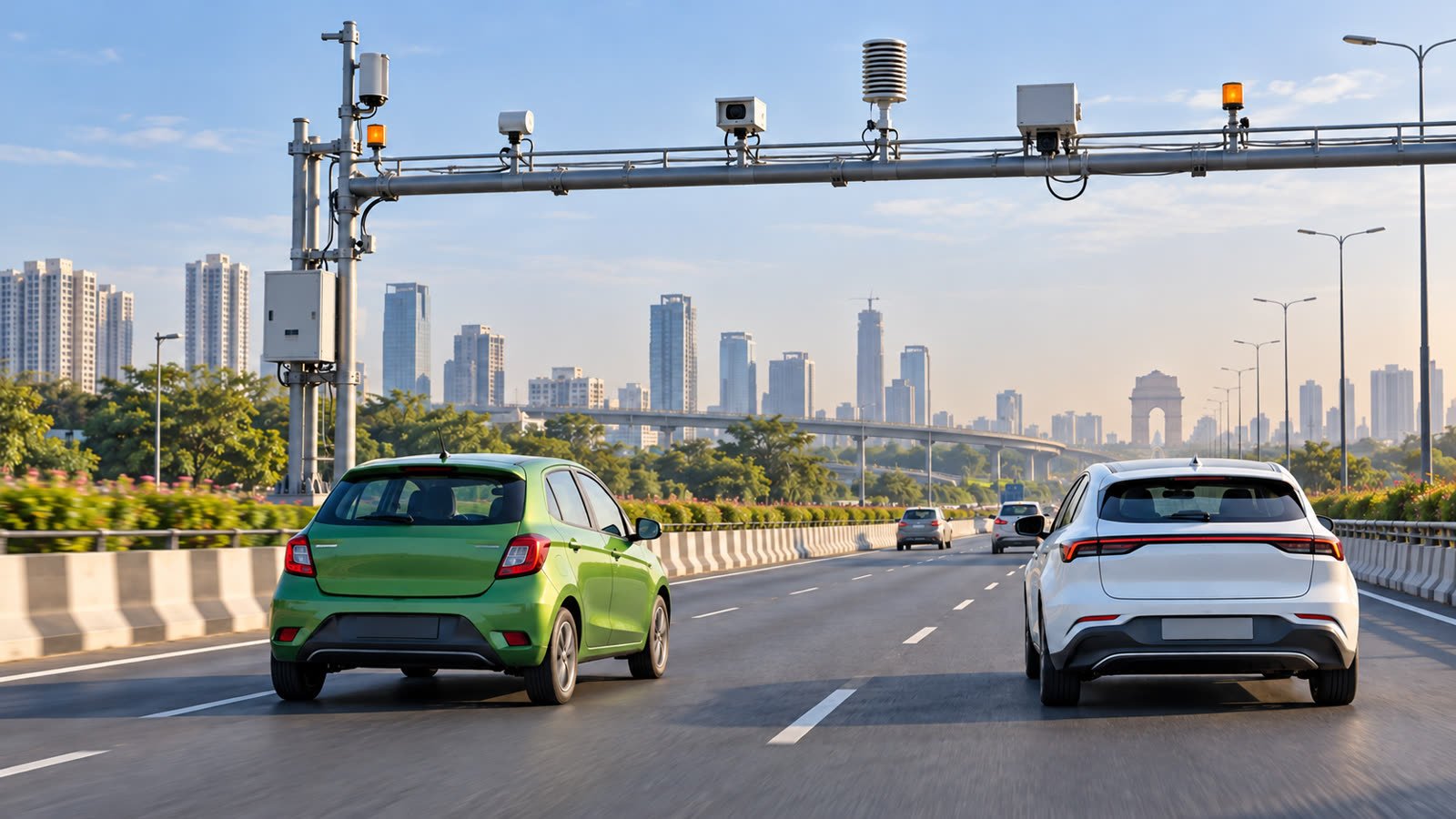
Business Standard reported that the committee's interim report was submitted to CAQM on 18 Aug 2026 and proposed mandatory filtration of PM2.5 and volatile organic compounds inside vehicle cabins. It also reported a proposal to make roadside remote sensing of emissions mandatory from 1 Apr 2028, with readings used to identify vehicles that may need inspection, repair or re-testing. The report did not specify an implementation deadline for cabin filtration or which vehicle categories would be covered.
The same report described proposed support for certified electric retrofits, including ₹20,000 for a two-wheeler and ₹40,000 for a three-wheeler conversion, as well as purchase and scrappage support for some vehicle categories. Those amounts are recommendations, not approved benefits. Owners should not treat them as available money until a government notification sets eligibility, funding, application steps and the effective date.
What it means for CNG car owners
There is no immediate instruction in the reported industry response that requires a private CNG car owner to scrap the vehicle, switch powertrains or stop buying fuel. A policy proposal and an industry objection do not change the registration certificate, insurance document or fuel-station process. Any enforceable restriction would need a formal order from the competent authority.
CNG is also not automatically the cheapest or most suitable choice for every route. A fair comparison should use the vehicle's actual efficiency, the dated fuel rate, queue or detour time at CNG stations, service access and the expected daily distance. Drivers can check current rates in the live fuel-price hub and compare a route using the fuel-cost calculator. The result will vary by city, vehicle condition and driving pattern.
What it means for EV buyers and fleets
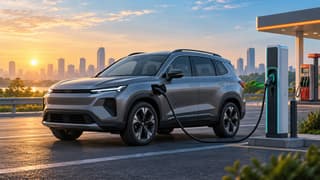
The committee recommendations could eventually affect which models manufacturers prioritise for Delhi-NCR, how dealerships plan stock and how quickly public and workplace charging expands. They do not yet guarantee a subsidy, a charging point or a particular resale value. Buyers comparing an EV should separate the policy signal from the ownership calculation: battery efficiency, electricity tariff, charging losses, home-parking access, public-charger uptime, battery warranty and repair coverage all matter.
Fleet operators have an additional issue because the current debate includes light goods vehicles. Before making a replacement or procurement decision, a fleet should confirm whether the vehicle is an N1 light goods vehicle, whether the proposed measure applies to its registration geography and whether the final order contains transition protection for vehicles already on the road. The state-wise EV charging directory can help map public charging options, but operators still need to confirm access, connector compatibility and operating hours with each network.
What drivers should check now
- Check the latest CAQM, Delhi and NCR-state notifications instead of relying on a headline about a panel recommendation.
- Identify the exact vehicle category: private car, two-wheeler, three-wheeler, taxi, bus or light goods vehicle.
- Record the proposal's effective date, covered geography, emission standard, exemptions and enforcement mechanism before changing a purchase or fleet plan.
- For an EV comparison, calculate the complete route cost and charging time rather than comparing only a claimed range or a proposed incentive.
- For a CNG vehicle, keep the registration, pollution-control and insurance documents current and check any applicable local direction separately.
What to watch next
The next meaningful development will be a formal CAQM, Delhi or central-government decision that accepts, changes or rejects the interim recommendations. The response to ACE's technical objections will also show whether the commission publishes revised emission factors or a fresh assessment for CNG light goods vehicles. Until then, the story is a policy debate with possible future consequences, not a new nationwide fuel or vehicle rule.
For readers, the practical takeaway is to keep today's vehicle decisions grounded in the rules currently in force and the route actually travelled. The proposed transition may change the market, but a notification—not an interim report or an industry submission—will determine what drivers must do.
Sources
- Financial Express — “Automakers question CAQM’s EV push, highlight negligible pollution from BS-VI CNG cars” — 12 Oct 2026
- Business Standard — “CAQM panel proposes car cabin filters, roadside emission checks in Delhi” — 11 Oct 2026
- Commission for Air Quality Management — “Interim Report of the Expert Committee for Abatement of Vehicular Emission in Delhi NCR” — 8 Oct 2026