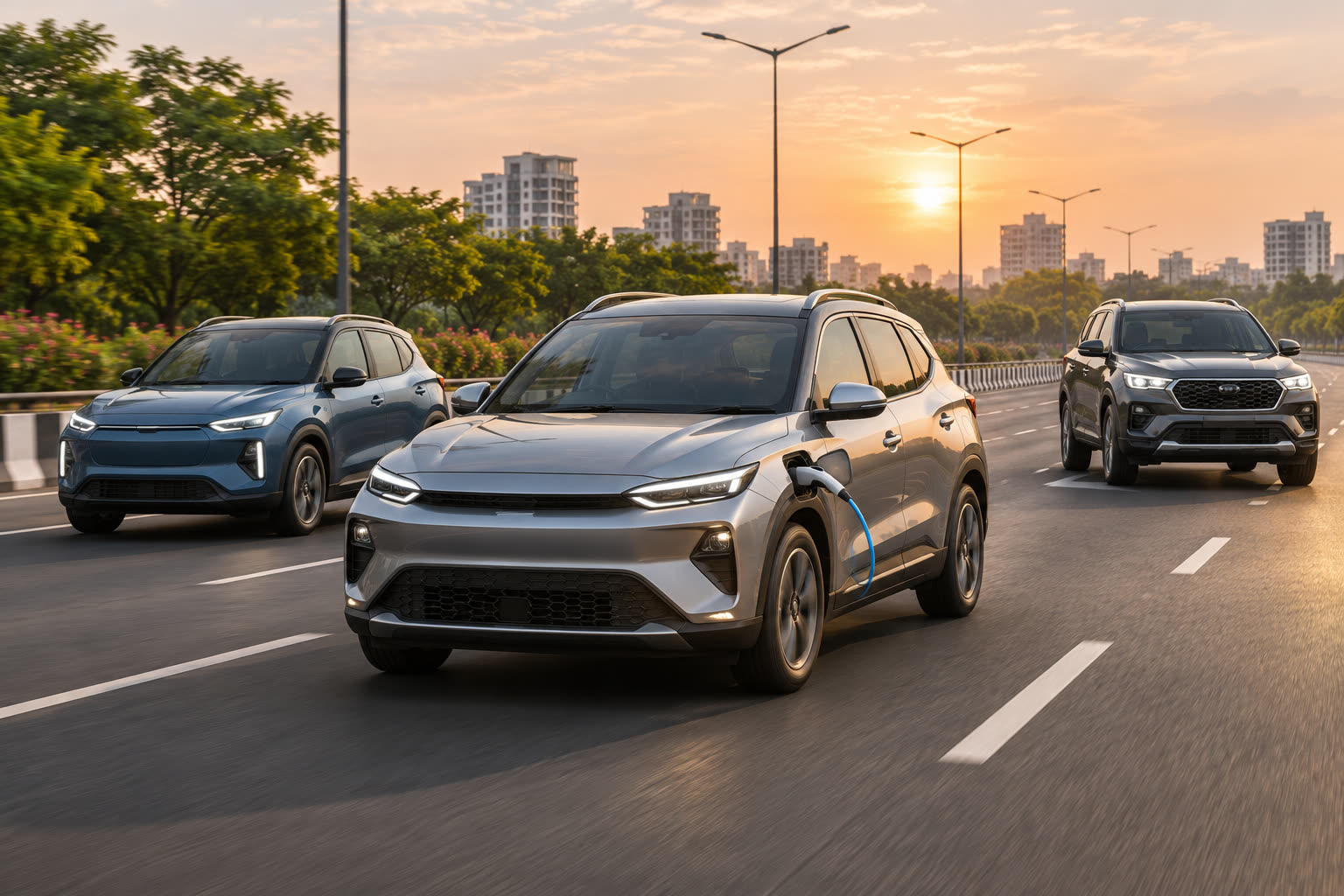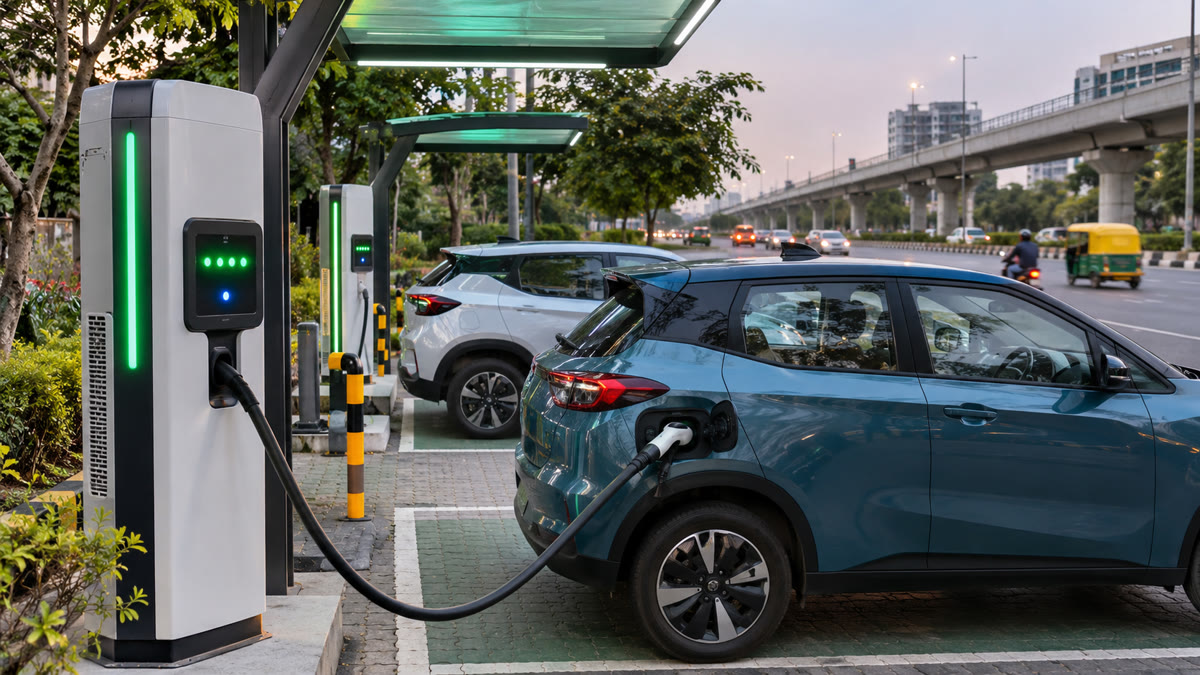
SIAM's first National EV Charging Day, held in New Delhi on 20 Nov 2026, put charger uptime, capacity, access and payment ease at the centre of India's EV transition. For drivers, the message is practical: a charging point on a map only helps if it is working when they arrive, delivers the required power and lets them complete a payment without avoidable friction.
The Society of Indian Automobile Manufacturers (SIAM), with support from the Ministry of Heavy Industries, used the event to discuss a more dependable public-charging network. The discussions matter beyond the industry because public-charging reliability affects whether an EV can be used for longer work trips, inter-city travel and commercial operations rather than only predictable home-to-office journeys.
Key takeaways
- SIAM's first National EV Charging Day focused on a scalable and accessible charging network, not only the number of installed points.
- Officials highlighted uptime, charging capacity, maintenance, easy discovery and convenient payments as measures of useful infrastructure.
- SIAM said around 9,000 chargers were being set up under PM E-DRIVE, with approximately ₹900 crore sanctioned for charging infrastructure; ETAuto reported the same programme with more precise figures.
- Guidelines discussed at the event call for car charging stations every 25 km on highways and charging facilities for buses and trucks every 100 km.
- EV owners and fleet operators should watch operational availability and corridor coverage, not treat a sanctioned or listed charger as a guaranteed charge stop.
Why reliability matters more than a station count
For an EV user, the relevant question is not simply how many chargers a state or company has announced. It is whether a usable connector is available at the required time, whether the charger can provide the vehicle's expected power, and whether the location is accessible without a long detour. A point that is installed but offline, occupied or difficult to pay for can still leave a driver planning around a charging gap.
That distinction is important for highway travel. A petrol or diesel driver can usually compare several fuel stations along a corridor, while an EV driver may need to account for connector compatibility, charging time, battery state and the next reliable stop. The same issue is more consequential for taxis, delivery vehicles, buses and trucks, where downtime directly affects a working day.
For route preparation, FuelPrice's EV charging station directory can help identify available locations by state. A longer journey also needs a route-level view of stops and timing, which is where the road-trip planner fits into the decision.
What SIAM and officials highlighted
Five building blocks for the network
SIAM President Shenu Agarwal described the next phase through five areas: Power, Space, Segments, Platform and Partnerships. In practical terms, that means charging sites need an adequate electricity connection, suitable land, equipment for different vehicle categories, digital systems that make stations easy to find and use, and cooperation between government, automakers, charging operators and distribution companies.
Prime Minister's adviser Tarun Kapoor said the network should be judged by reliability, regular maintenance and reasonable tariffs. That shifts the conversation from announcements to service quality. A driver needs to know whether a station is operational, what type of charging it offers and how much time a normal session may take, rather than only seeing it counted in a national total.
Highway distances and public funding
Dr Hanif Qureshi, Additional Secretary in the Ministry of Heavy Industries, said the Ministry of Power guidelines discussed at the event provide for a car charging station every 25 km on highways and facilities for buses and trucks every 100 km. Those distances are planning benchmarks; they do not mean every route already has a fully operational charger at those intervals.
SIAM's event release said around 9,000 chargers were being established under PM E-DRIVE and approximately ₹900 crore had been sanctioned to states for charging infrastructure. ETAuto's 20 Nov report gave a more precise account of the same announcement, while the SIAM release rounded the figures. The useful takeaway is that funding and deployment are moving, but sanctioned capacity is not the same as live, maintained capacity.
That gap is why uptime reporting and fault resolution are as important as new installations. If a charger is broken for several days, a map listing can create false confidence unless the status is updated quickly and an alternative is visible.
What changes for EV drivers and operators
The event does not introduce a new consumer mandate or a single nationwide charging app. It sets out the quality issues that states and infrastructure providers will need to solve as the network grows. For readers, four checks are useful when planning around public charging:
- Check live status: look for a current availability signal and keep a fallback location on the route.
- Match the connector and power: a station may be listed but still be unsuitable for a particular vehicle or trip time.
- Review access and payment: a charger behind restricted premises or with unclear payment options may not work for an unplanned stop.
- Allow time for the full session: charging time varies with the vehicle, battery state, charger capacity and site load.
Fleet operators have an additional planning layer. Buses and trucks may need higher-capacity charging, predictable depot access and energy management that avoids costly peak demand. The event's emphasis on segments recognises that a network designed only around private cars will not automatically serve commercial mobility.
What to watch next
The next test is whether announced and sanctioned infrastructure becomes dependable service across smaller towns, industrial areas, tourism circuits and emerging corridors, rather than remaining concentrated in major cities. That will require coordination on land, grid connections, tariffs, maintenance and digital status information.
For EV buyers, the reader-level takeaway is simple: charging access should be assessed as a service, not just a map pin. Before a long trip, the useful questions are whether the station is operating, whether it fits the vehicle, how long the stop may take and what the next option is. Drivers comparing an EV journey with a petrol or diesel alternative can also use the fuel cost calculator for the fuel-side estimate, while keeping charging and toll costs separate.
Sources
- SIAM — “SIAM Organises its First National EV Charging Day: Advancing the growth and readiness of EV Charging Infrastructure” — 20 Nov 2026
- ETAuto — “PM E-DRIVE records over 30 lakh EV sales till September 2026: Kumaraswamy” — 20 Nov 2026
- The Machine Maker — “SIAM Holds First National EV Charging Day to Accelerate India’s Charging Infrastructure Growth” — 21 Nov 2026