A 150-acre multimodal logistics park at Sindi Railway in Wardha, Maharashtra, broke ground on 1 Nov 2026, with National Highways Logistics Management Limited (NHLML) and Jawaharlal Nehru Port Authority (JNPA) as joint developers. For freight operators and exporters serving Vidarbha, the project could change how long-haul cargo moves between road, rail and ports; the government says an Haldia-linked route may lower some container costs from ₹1.5 lakh to ₹1 lakh, but that is a projection, not a live tariff.
Key takeaways
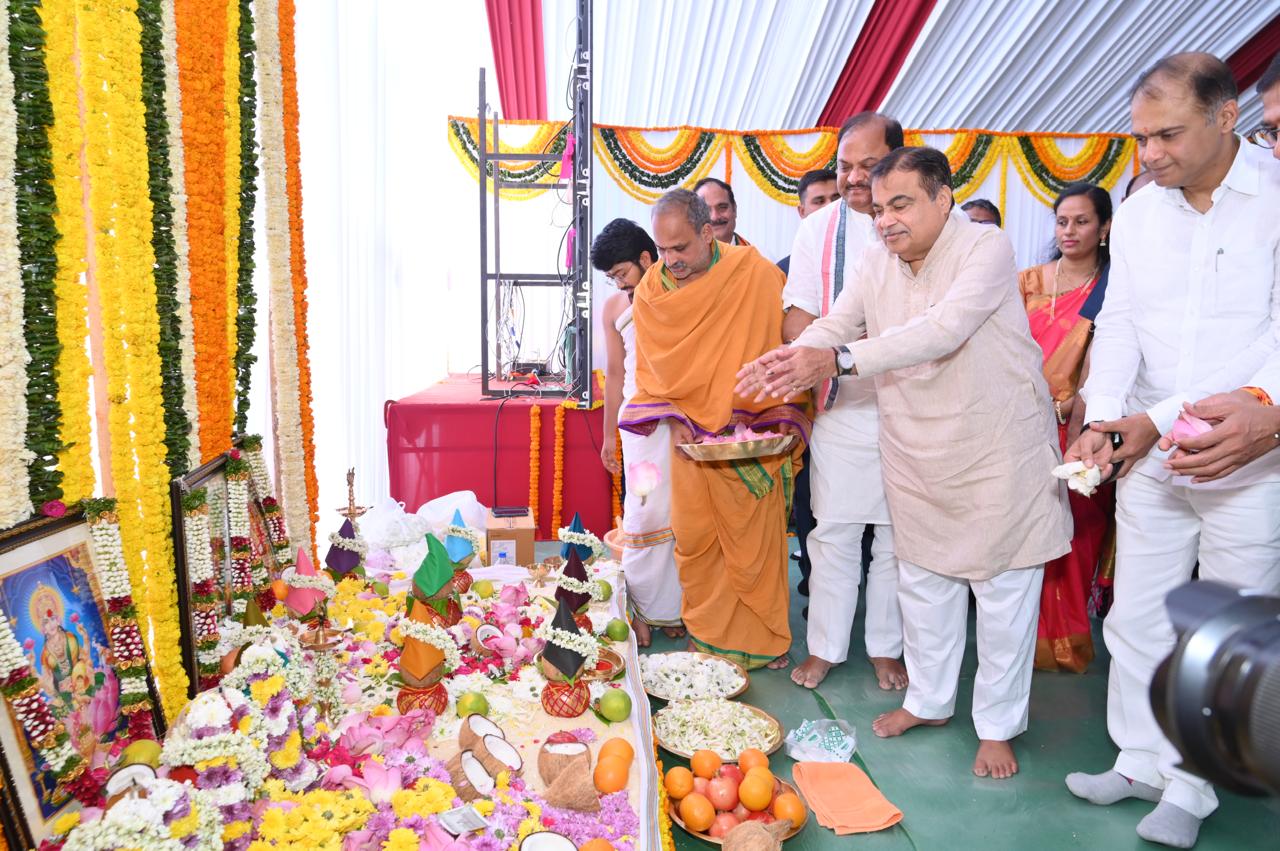
- Union Minister Nitin Gadkari performed the bhoomipujan on 1 Nov 2026 for the Sindi Railway logistics park near the Nagpur-Wardha border.
- The proposed park covers 150 acres and is being developed by NHAI’s logistics arm NHLML with JNPA; AMARA TRANZ Solution is the development entity identified for NHLML’s role.
- The government said a first railway rake carrying Maruti cars had already started from the project, while warehouses, cold storage and customs facilities remain part of the wider development.
- For some Bangladesh-bound cargo, the proposed Haldia route is expected to reduce the transport-cost estimate from ₹1.5 lakh to ₹1 lakh per container. The figure is not a guaranteed rate for every shipment.
What changed at Sindi Railway
The Ministry of Road Transport and Highways said the groundbreaking ceremony took place at Sindi Railway, Wardha, on 1 Nov 2026. The PIB release identifies NHLML, a special-purpose vehicle of the National Highways Authority of India, and JNPA as joint developers. It also says NHLML is undertaking development through AMARA TRANZ Solution.
The project is planned near Sindi Railway station on the Nagpur-Wardha district border. The government says the 150-acre site will consolidate cargo from Nagpur and Wardha through warehouses, cold storage and exporter clusters. A customs office is also planned so containers can be handled closer to the producing region instead of being moved first to a major seaport or distant logistics centre.
Maritime Gateway’s 2 Nov 2026 report confirmed the groundbreaking and described the first Maruti-car rake as an initial cargo movement. That distinction is important for transport users: a first rail movement does not mean that the full multimodal park, its storage facilities or its customs operation are already available to every shipper.
| Project element | What is confirmed | What to treat as expected |
|---|---|---|
| Groundbreaking | Bhoomipujan held on 1 Nov 2026 | Construction and commissioning milestones are still ahead |
| Project footprint | 150 acres near Sindi Railway | No full commissioning date in the latest release |
| Rail activity | Government says the first Maruti-car rake has started | Regular schedules and wider cargo access remain to be established |
| Freight-cost estimate | ₹1.5 lakh to ₹1 lakh per container, according to the government | A route-specific projection, not a published universal tariff |
How the freight route could change
A multimodal logistics park is intended to combine cargo aggregation, storage and transport links. In practical terms, Sindi is meant to act as an inland dry port: cargo can be consolidated, stored and transferred between road and rail before moving to a seaport or overseas route. The latest PIB release and Navbharat Live report both describe planned warehouses, cold storage, exporter clusters and a customs office, while Maritime Gateway notes that the broader facility is still being developed.
The PIB release describes two relevant flows. Vidarbha’s cotton, cotton lint, yarn, textiles, oranges and vegetables could move through JNPA to international markets. For Bangladesh-bound consignments, the government says cargo can travel via Haldia in Kolkata rather than first going west to Mumbai. Those are route options, not a claim that every shipment will follow the same path or receive the same price.
The current announcement should be read as a development milestone, not a completed freight service. PIB says the park will be connected to the dry port and that warehouses, cold storage and a customs office will be established; Maritime Gateway similarly notes that the latest announcement gives no commissioning date for the complete facility. Until those pieces are in place, a shipper cannot assume that the projected route or cost is available on demand.
Why the ₹50,000 difference is only a projection
The government’s stated estimate moves from ₹1.5 lakh to ₹1 lakh per container, a difference of ₹50,000, or about one-third. Maritime Gateway notes that the announcement does not specify the container size or provide a detailed calculation of the estimate. The number should therefore be read as an expected route-level comparison, not as a confirmed saving on every container.
As a simple planning illustration, a shipper moving 10 containers would see a ₹5 lakh difference if the same estimate applied to every shipment. That arithmetic excludes handling, storage, customs, insurance, last-mile movement and any change in rail or port charges. Actual quotes will depend on the commodity, origin, destination, service frequency and the point at which the park becomes fully functional.
What it means for transporters and fleet operators
Road freight will remain important because containers still need first- and last-mile movement between farms, factories, warehouses, the dry port and customers. A rail-linked long-haul option could reduce some highway kilometres for selected consignments, which may change diesel use, toll exposure and driver scheduling. It could also create more demand for short-haul container haulage around Sindi, Nagpur and Wardha.
Operators comparing a road-only route with a rail-road combination can first model the diesel portion using the fuel cost calculator. The result is only one part of the decision: loading time, empty return distance, waiting at terminals and the frequency of available rakes can outweigh a headline freight estimate.
Because road legs will continue, fleet managers can also check live fuel prices for the states on the route and calculate how a change in distance affects a trip’s running cost. This keeps the projected container figure separate from the actual operating cost of a truck or transporter.
Where road haulage remains in the route, the toll charges and trip-cost calculator can help compare the highway portion with the proposed rail alternative. The relevant comparison is total landed cost, not just the rail charge or the amount of diesel avoided.
What to watch next
- Whether the planned warehouses, cold storage and customs office receive clear construction and commissioning milestones.
- How frequently rail cargo services run and which commodities can book them.
- Whether actual freight quotes support the government’s ₹50,000-per-container estimate for specific Bangladesh-bound and JNPA-linked routes.
- How road access, tolls and last-mile truck availability affect the final cost for shippers and fleet operators.
Reader takeaway: Sindi Railway’s project is a meaningful logistics-infrastructure development for Vidarbha, but its financial and mobility impact will be measured only when the promised rail, storage, customs and road connections operate as one system. Until then, the ₹1.5 lakh-to-₹1 lakh comparison is a government expectation to test against actual route quotes.
Sources
- Press Information Bureau — “Union Minister Nitin Gadkari Performs Bhoomipujan of Multi-Modal Logistics Park at Sindi Railway” (1 Nov 2026)
- Maritime Gateway — “Sindi logistics park targets lower freight costs for Vidarbha exporters” (2 Nov 2026)
- Navbharat Live — “सिंदी रेलवे में लॉजिस्टिक्स पार्क का भूमिपूजन: विदर्भ के संतरे-कपास सीधे जाएंगे विदेश, गडकरी का बड़ा ऐलान” (2 Nov 2026)