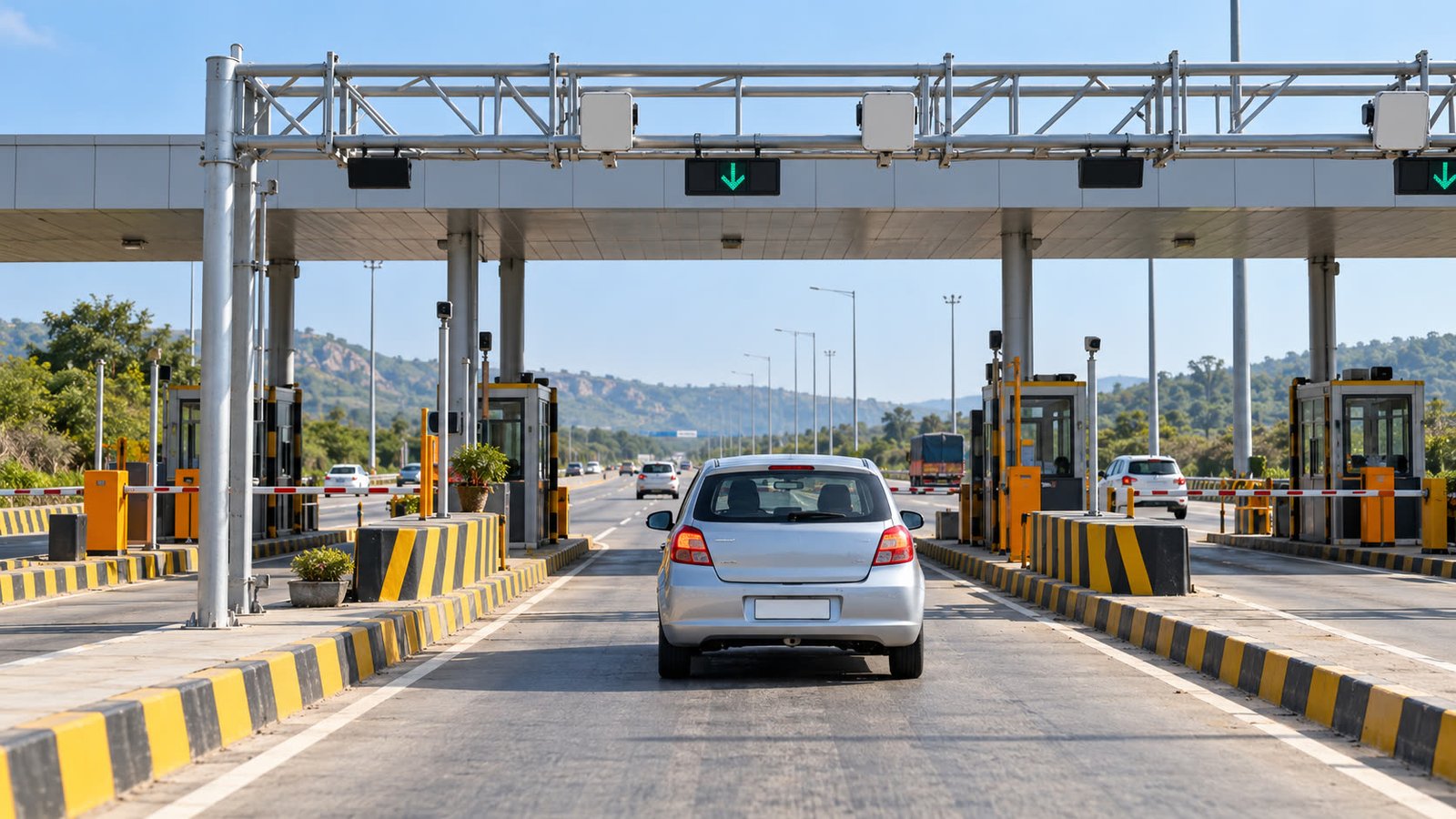
India’s new Concessional Local Pass for National Highway toll plazas took effect on 1 Nov 2026. Eligible non-commercial vehicle owners living within 20 km of a fee plaza can choose an annual pass priced at ₹1,500 or ₹3,000, which matters for people who cross the same plaza for daily work, school or local trips.
The change is confirmed under the National Highways Fee (Determination of Rates and Collection) (Fifth Amendment) Rules, 2026. The pass is tied to one specific toll plaza, so it is a local commuting option rather than a nationwide FASTag benefit.
Key takeaways
- The scheme applies to eligible non-commercial vehicles whose owners live within 20 km of a National Highway fee plaza.
- The annual fee is ₹1,500 where the plaza is outside municipal or local town limits, and ₹3,000 where it is within those limits.
- The vehicle must have a valid, functional FASTag registered for non-commercial use.
- The pass is valid only for the designated plaza and cannot be transferred to another plaza.
- It is available at eligible toll plazas from 1 Nov 2026; the Rajmargyatra App option starts from 1 Dec 2026.
What the new local pass changes
The Ministry of Road Transport and Highways notified the amendment on 26 Oct, and the government announced that it would come into force on 1 Nov. The new provision gives qualifying local users a choice between the existing monthly pass and the new annual Concessional Local Pass for commuting through the specific fee plaza.
That distinction is important. The pass is not a general-purpose toll subscription for every National Highway or expressway. It is linked to the fee plaza connected to the applicant’s residence and vehicle, and the same pass cannot be used at other plazas.
Annual fee depends on the plaza’s location
| Fee-plaza location | Concessional Local Pass fee |
|---|---|
| Outside municipal or local town limits | ₹1,500 per year |
| Within municipal or local town limits | ₹3,000 per year |
These are annual charges under the new rules. The government may revise the rates each year, with any revision taking effect on 1 Apr. Drivers therefore need to check the applicable fee for the relevant year rather than treat the current amounts as permanent.
Who can use the FASTag local pass?
Residence within 20 km is necessary, but it is not the only condition. The rule also requires a valid and functional FASTag registered for non-commercial use. That makes the scheme relevant to private vehicle owners who regularly use the same National Highway fee plaza, not to commercial fleet vehicles using the corridor as part of their operations.
The pass is also plaza-specific. A qualifying resident may use it for the designated fee plaza, but the benefit does not automatically extend to another plaza on the same route or to a different highway. This is why checking the exact plaza attached to the application matters before relying on the pass for a regular journey.
For routes with more than one fee point, readers can review the expected toll charges in FuelPrice’s toll-charge calculator and separate the plaza covered by the local pass from the other tolls on the journey.
Where the concession does not apply
The government has set two clear exclusions. The Concessional Local Pass will not be issued on a National Highway or expressway where toll collection follows a closed user-fee system. It is also unavailable where a service road or another alternative road is available for commuters.
In practice, this means living close to a toll plaza does not automatically establish eligibility. The road’s fee-collection arrangement and the availability of an alternative route must also be checked. The relevant plaza or implementing authority remains the place to confirm whether the local pass is available for that location.
How to check the position now
- Identify the fee plaza. Confirm which National Highway plaza is on the regular route and whether the residence falls within the 20-km limit.
- Check the vehicle and tag. The vehicle must be non-commercial, and its FASTag must be active and registered for non-commercial use.
- Check the exclusions. Confirm that the plaza is not part of a closed user-fee system and that no service road or alternative road removes eligibility.
- Ask at the eligible plaza. The pass is available at eligible toll plazas from 1 Nov 2026. The government says the Rajmargyatra App channel will be available from 1 Dec 2026.
- Compare the whole trip. If a journey uses other toll plazas, add those charges separately. FuelPrice’s road-trip planner can help map the route, while the fuel-cost calculator can keep the fuel portion separate from toll costs.
What drivers should watch next
The immediate point to watch is implementation at individual fee plazas. The central rule sets the eligibility conditions and rates, but the local pass still depends on the particular plaza meeting those conditions. The Rajmargyatra App rollout from 1 Dec should also give residents another way to access the facility.
Drivers should also avoid confusing this local pass with the separate nationwide FASTag Annual Pass. The local option is designed around repeated use of one nearby plaza; it does not replace the need to account for other tolls, closed-system roads or routes where an alternative road affects eligibility. FuelPrice’s FASTag annual-pass comparison guide explains the distinction in more detail.
Reader takeaway
For an eligible private vehicle owner living within 20 km of a qualifying National Highway toll plaza, the new pass creates a fixed annual local-toll option from 1 Nov 2026. The key checks are the plaza’s municipal status, a working non-commercial FASTag, the closed-system and alternative-road exclusions, and the fact that the pass applies only to the designated plaza.
Sources
- Ministry of Road Transport & Highways, “Government of India Introduces Concessional Local Pass for National Highway Users Living Near Fee Plazas”, 27 Oct 2026
- NDTV, “Live Within 20 Km Of A Toll Plaza? You May Be Eligible For Rs 1,500 Annual Pass From November 1”, 27 Oct 2026
- Autocar India, “Govt introduces FASTag local pass for residents within 20km of toll plazas”, 28 Oct 2026