Reports published on 28 Sep 2026 say Switch Mobility has secured an order for 840 electric buses from Antony Road Transport Solutions for deployment with the Delhi Transport Corporation (DTC) and Delhi Transport Department under Phase I of the PM E-DRIVE scheme. The announcement matters for Delhi-NCR commuters and fleet operators because it adds a large, mixed-size electric-bus order to the capital's public-transport pipeline, but it does not yet announce routes, fares or a first-service date.
Key takeaways
- The reported order covers 840 air-conditioned electric buses for Delhi deployment.
- The mix is split equally between 420 9-metre buses and 420 12-metre buses.
- Antony Road Transport Solutions is the operator named in the reports; DTC and the Delhi Transport Department are the deployment partners.
- The reports do not specify routes, depot locations, passenger fares, delivery dates or when the first bus will enter service.
- The order is reported, so the next useful confirmation for passengers will be an official route, fleet or service notice from Delhi's transport authorities.
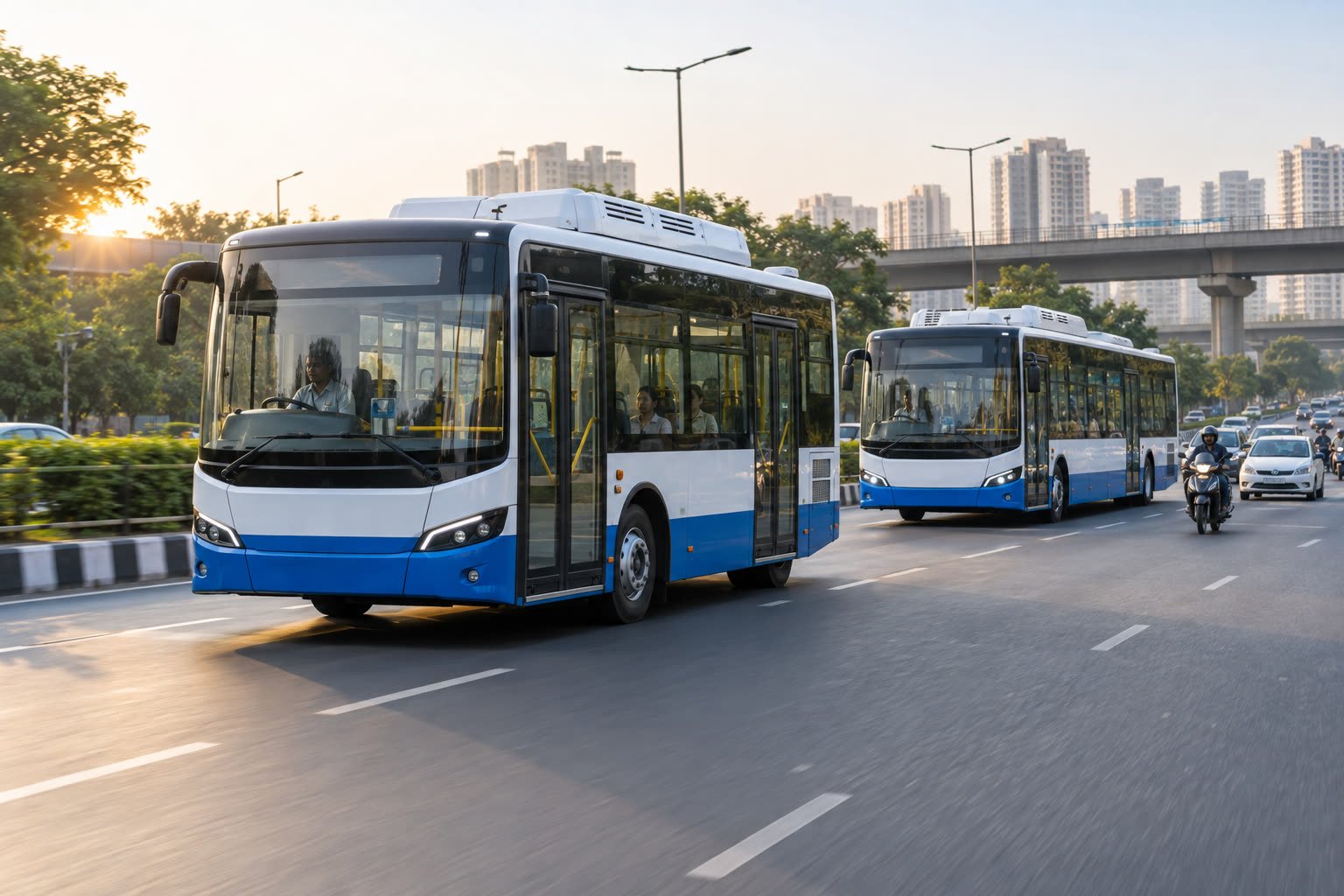
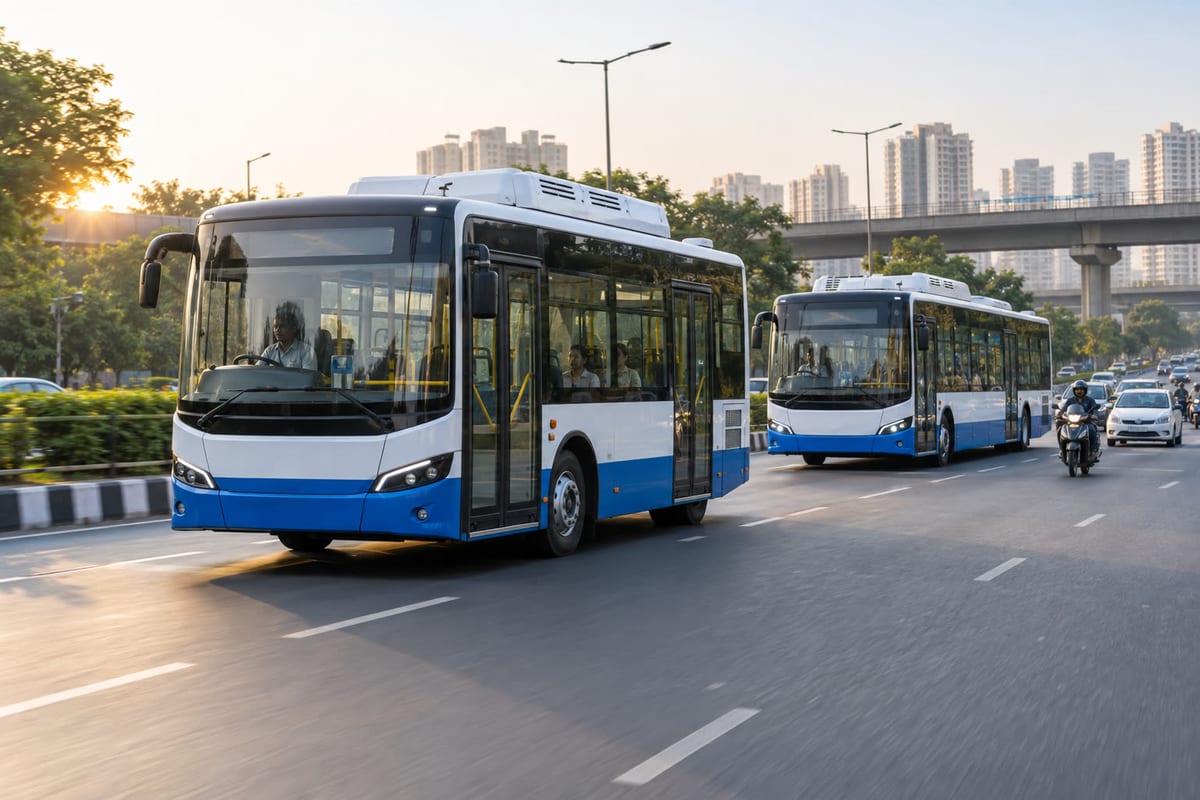 AI-generated editorial illustration of the type of electric-bus deployment discussed in this report; it is not an official photograph of the contracted buses.
What Switch Mobility has announced
Autocar Professional and Motoring Trends, in separate reports dated 28 Sep 2026, say the agreement is for 840 buses supplied by Switch Mobility to Antony Road Transport Solutions. The reported vehicle split is 420 9-metre and 420 12-metre air-conditioned electric buses. Both reports say the buses are intended for deployment in Delhi through DTC and the Delhi Transport Department.
The two sizes point to different operating needs. A 9-metre bus can be easier to place on tighter urban corridors, at smaller depots or on routes where turning space and stop spacing limit the use of a full-size vehicle. A 12-metre bus is suited to heavier passenger flows on wider corridors. That is a practical reading of the mix, not a confirmation of the routes on which either size will run.
The buses are described as being based on Switch Mobility's EiV platform. The reported equipment includes modular battery configurations, regenerative braking and dual-gun fast charging. Passenger and safety features listed in the reports include low-floor access, USB charging, fire detection and suppression equipment, multi-level battery protection, and the Switch iON system for vehicle monitoring and diagnostics. These are platform and order details; the reports do not provide a battery capacity, certified range, charging tariff or per-kilometre operating cost for this specific Delhi contract.
How the order fits PM E-DRIVE
The Ministry of Heavy Industries said in a PIB update published on 17 Mar 2026 that PM E-DRIVE support was available for 14,028 e-buses across nine large cities. The same update recorded a Phase I allocation of 2,800 buses for Delhi, with 10,900 buses allocated across the first phase nationally at that point. It also explained that deployment follows tendering, a concession agreement and supply by manufacturers.
On that dated allocation, the reported 840-bus order would equal 30% of Delhi's Phase I allocation (840 divided by 2,800). That is an arithmetic comparison, not a separate government target and not proof that 30% of the allocation is already operating. The agreement reported on 28 Sep is an important step, but buses still have to be supplied, commissioned and assigned to services before commuters can count them as live capacity.
What it means for Delhi-NCR commuters
The immediate passenger takeaway is limited but clear: Delhi's planned electric-bus fleet is getting another reported supply-and-operations package. Air-conditioned, low-floor buses can improve boarding access and everyday comfort when they are placed on routes, while different bus lengths give the operator more flexibility in matching vehicle size to demand.
There is no confirmed fare change in the announcement. There is also no basis yet to say that the buses will replace a particular CNG or diesel service, add a particular number of trips, or reduce travel time on a named corridor. Those effects depend on route allocation, depot readiness, charging infrastructure and service schedules that have not been published in the reports reviewed for this article.
What fleet operators and EV users should watch
For fleet operators, the operational questions are more important than the headline count. The order points to fast-charging capability and digital diagnostics, but a useful cost comparison will need the final bus specification, daily duty cycle, charging energy rate, maintenance arrangement, availability standard and contract payment terms. Until those figures are public, readers should not treat the 840-bus announcement as a rupee-per-kilometre claim.
Operators comparing a diesel baseline can use the FuelPrice fuel-cost calculator once a comparable route and distance are known, and check the latest live fuel prices separately. Private EV owners looking at charging availability in the same wider transition can browse the state-wise EV charging directory; the directory does not confirm where these buses will charge.
What changes now, and what does not
- Reported change: Switch Mobility is to supply 840 electric buses, split across two bus lengths, to the named Delhi operator under the PM E-DRIVE Phase I framework.
- Not yet confirmed: passenger routes, fares, delivery milestones, depot or charger locations, launch dates and the number of buses that will be available for service at any one time.
The next useful update should come from DTC, the Delhi Transport Department or the operator with route allocations and commissioning details. Until then, the order is best understood as a reported expansion of Delhi-NCR's planned electric public-transport capacity—not as 840 buses already running on city roads.
Sources
- Autocar Professional: “SWITCH Mobility Secures 840 Electric Bus Order Under PM E-Drive” — 28 Sep 2026
- Motoring Trends: “Switch Mobility Secures Order For 840 E-Buses From Antony Road Transport Solutions” — 28 Sep 2026
- Press Information Bureau, Ministry of Heavy Industries: “FAME-II AND PM E-DRIVE SCHEMES” — 17 Mar 2026
- SWITCH Mobility: “SWITCH Electric Buses / EiV Series” — accessed 28 Sep 2026