Tata Motors Passenger Vehicles, Tata Passenger Electric Mobility (TPEM) and Stellantis India signed a definitive agreement on 12 October 2026 to collaborate on vehicle technology and product development in India for more than 50 global markets. The announcement matters to Indian drivers because it could shape future models and export work, but it is not a new Tata or Jeep launch: the companies have not named a vehicle, price or launch date.
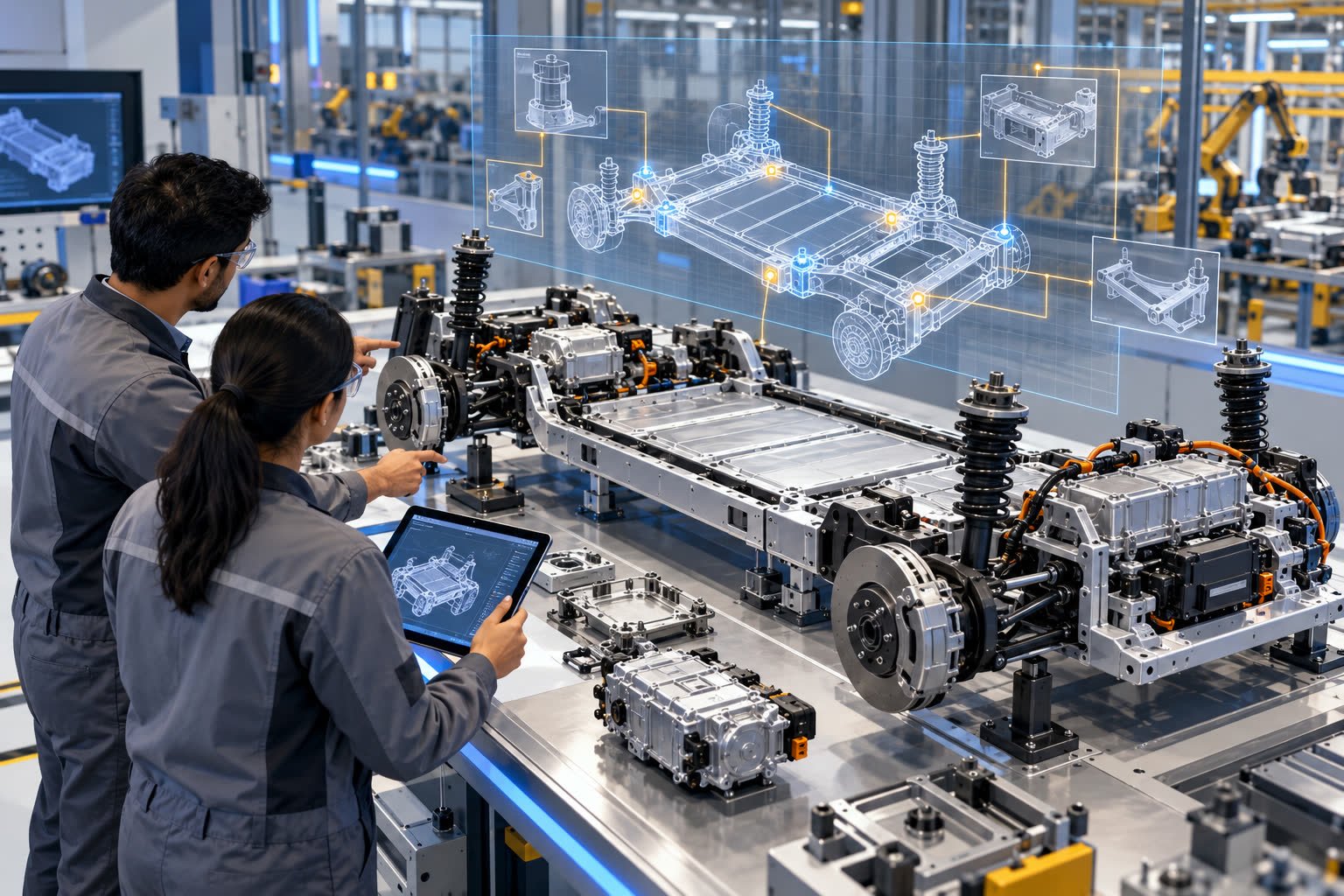
Illustrative visual: an editorial representation of vehicle engineering and export manufacturing; it is not a photograph of a specific future model.
Key takeaways
- The agreement expands the Tata–Stellantis relationship from manufacturing into product technology and vehicle architecture.
- Stellantis will use Tata Motors’ product technology and architecture with its own engineering capabilities in India.
- Vehicles developed under the agreement are planned for manufacture in India through Fiat India Automobiles Private Limited (FIAPL), the existing 50:50 joint venture.
- The announcement confirms a global development scope, not an immediate Indian showroom launch or confirmed consumer price.
What the agreement confirms
In the companies’ 12 October 2026 announcement, Tata Motors Passenger Vehicles said it would provide Stellantis access to its product technology and vehicle architecture. Stellantis will combine those capabilities with its product-development and engineering operations in India to address different customer, regulatory and operating requirements across more than 50 global markets.
Manufacturing is planned at FIAPL, the 50:50 Tata–Stellantis joint venture facility in Ranjangaon near Pune. The latest pact builds on a memorandum of understanding signed in February 2026, which covered possible cooperation in manufacturing, engineering and supply chains in India and overseas. The new agreement gives that earlier intent a more specific focus on advanced technology and product collaboration.
Why the shift matters to the auto industry
Tata and Stellantis have worked together for more than two decades through their manufacturing relationship. Moving into vehicle architecture and product development gives the partnership a wider role: Indian engineering and manufacturing are being positioned as part of a global product programme, not only as a local assembly base.
A shared architecture can, in principle, let automakers adapt a common engineering foundation to several markets. That may help spread development and compliance work across a larger volume of vehicles, but the companies have not disclosed a cost saving, production target or investment amount for this programme. Those outcomes should therefore be treated as possibilities to watch, not as confirmed benefits.
The Ranjangaon facility is already part of the companies’ manufacturing network. Independent coverage has identified Tata and Stellantis products associated with the site, including the Nexon, Altroz, Curvv, Jeep Compass and Jeep Meridian. The new announcement does not say which existing platform, powertrain or future model will be used for the 50-plus-market programme.
What it means for Indian buyers and drivers
No immediate price or booking change
There is no confirmed change to the price, features, warranty or availability of any Tata, Jeep, Citroën or other Stellantis vehicle in India because of this agreement. No booking window has been announced, and the companies have not said whether the first products will be petrol, diesel, hybrid, electric or another powertrain.
For someone comparing a car today, the useful distinction is between a partnership announcement and a product announcement. Current purchase decisions still depend on the model’s published price, specification, service network, insurance and running cost. A buyer comparing monthly use can estimate a route or commute with FuelPrice’s fuel-cost calculator using the vehicle and fuel price that are actually available, rather than assuming a future collaboration will reduce costs.
Possible longer-term relevance
If the programme produces India-bound vehicles later, the use of a common architecture could broaden the range of body styles and powertrains developed with Indian engineering. It could also make India more important in export-linked vehicle development. Neither result is guaranteed by the agreement, and neither company has provided a timetable.
TPEM’s participation confirms that Tata’s electric-mobility business is included in the signatories, but it does not confirm an electric model under this pact. EV owners and prospective buyers can continue to check real-world charging access through the state-wise EV charging directory while waiting for an actual product announcement.
What the pact does not say
- It does not name a Tata, Jeep, Citroën or Fiat model for the programme.
- It does not publish an investment amount, production capacity, start date or export volume.
- It does not confirm that any new vehicle will be sold in India, or disclose its price, engine, battery or range.
- It does not change today’s toll, fuel-price, registration or insurance rules.
What to watch next
The next useful updates will be concrete rather than promotional: the first platform or vehicle name, the powertrain and regulatory markets, the production timetable at Ranjangaon, and whether the programme adds capacity or uses existing lines. A named product would also make it possible to assess Indian pricing, service support, fuel or charging costs and suitability for long-distance travel.
For now, drivers planning a trip should use current vehicle and route data in the road-trip planner, not an unannounced model. The partnership is strategically significant for India’s auto manufacturing and export story, but its consumer impact will only become measurable when the companies disclose products and timelines.
Reader takeaway
The 12 October 2026 Tata–Stellantis agreement is a confirmed expansion into vehicle technology and global product development, with manufacturing planned in India for vehicles aimed at more than 50 markets. It is best read as an industry and supply-chain development today—not as a confirmed new car launch, price change or immediate buying opportunity.
Sources
- Tata Motors Passenger Vehicles: Regulation 30 press release on the definitive Tata–Stellantis agreement — 12 Oct 2026
- Reuters via The Economic Times: Tata Motors, Stellantis to develop vehicles in India for 50-plus global markets — 12 Oct 2026
- News9Live: Tata Motors, Stellantis join hands to build cars in India for over 50 global markets — 12 Oct 2026