Toyota Kirloskar Auto Parts (TKAP) inaugurated a new E-Drive manufacturing line at its Bidadi facility near Bengaluru on 16 Nov 2026 after an investment of about ₹460 crore. The line adds 2,00,000 units of annual capacity, lifting TKAP’s total E-Drive capacity to 3,60,000 units; for buyers, the important point is a possible increase in locally made hybrid components, not an immediate cut in a car’s price or fuel bill.
Key takeaways
- The new E-Drive line represents an investment of about ₹460 crore at Bidadi, Karnataka.
- It adds 2,00,000 units a year and takes TKAP’s total E-Drive capacity to 3,60,000 units per annum.
- The line will make next-generation products recognised under the government’s Advanced Automotive Technology category of the Production Linked Incentive scheme.
- TKAP’s existing fourth-generation E-Drive line, commissioned in 2022, will continue to operate alongside it.
- No retail price cut, mileage guarantee or immediate change for existing Toyota owners was announced with the inauguration.
What Toyota added at Bidadi
Reports by ETAuto, TOI Auto and The Economic Times on 16 Nov 2026 agree on the headline numbers. The new production line adds 2,00,000 E-Drive units of annual capacity and lifts TKAP’s combined capacity to 3,60,000 units a year.
| Item | Confirmed detail |
|---|---|
| Investment | About ₹460 crore in the new line |
| Additional capacity | 2,00,000 E-Drive units per year |
| Total TKAP capacity | 3,60,000 E-Drive units per year |
| Location | Bidadi facility near Bengaluru, Karnataka |
| Earlier line | Fourth-generation line commissioned in 2022 |
The E-Drive is a key part of Toyota’s hybrid electric vehicle technology. In practical terms, this is an upstream manufacturing development: it concerns the system and components that support a hybrid powertrain, rather than a new retail model, a new fuel blend or a rule that changes how owners drive.
Why the expansion matters for Indian buyers
India’s vehicle buyer is increasingly comparing three different ownership paths: petrol, strong hybrid and full electric. Local production of hybrid powertrain components can make the supply chain deeper and less dependent on imported assemblies over time. That could help manufacturers plan hybrid volumes, parts support and future product launches, but it does not automatically mean that a showroom price will fall.
There is also no announced change to the fuel economy of any existing Toyota model. A hybrid’s actual running cost still depends on its model, traffic, driving pattern, petrol price and purchase price. Readers comparing options can check live petrol and diesel prices for their city and then use the fuel cost calculator to compare a realistic monthly or trip estimate. Those calculations are more useful than applying a company-wide mileage claim to every driver.
For someone considering a full EV, the comparison is different again: charging access, charging time, battery warranty and home electricity tariffs matter alongside fuel savings. The state-wise EV charging directory can help check whether a charging network is practical for the routes being considered. A hybrid does not need external charging, while a full EV does; the new TKAP line does not change that basic ownership difference.
What the PLI classification means
The new line will manufacture next-generation products recognised under the Advanced Automotive Technology category of the government’s Production Linked Incentive scheme for automobiles and auto components. That places the investment within India’s broader push to localise advanced vehicle technology. It does not, by itself, disclose the incentive amount, the share of the output going to a specific model, or a direct benefit that a buyer can deduct from an on-road price.
The project is also part of a ₹4,800 crore memorandum of understanding signed between Toyota Group companies and the Karnataka government. The reported goals include advanced manufacturing, localisation, employment generation and green-mobility technologies. The new line operates alongside TKAP’s fourth-generation line from 2022 rather than replacing it, so the capacity figure is an expansion of the existing base.
What changes now—and what does not
For the auto industry, the immediate change is more domestic capability for a hybrid-related component. That can support suppliers and reduce import dependence if the line reaches planned output. For drivers, however, the effect is indirect and will take time to show up in product availability or ownership costs.
- Changes now: TKAP has an additional E-Drive production line, higher annual capacity and a larger local manufacturing base for electrified powertrain technology.
- Does not change now: no announced retail price revision, guaranteed fuel saving, retrofit option or warranty change for vehicles already on the road.
- Still to be established: which future models will use output from the line, how much of the supply will serve India, and whether localisation changes delivery times or component costs.
What to watch next
The useful follow-up is not just the size of the factory investment. Watch for model-level announcements, supplier localisation, actual production volumes and any change in the availability or pricing of hybrid vehicles. It is also worth checking whether Toyota or its partners disclose exports from the expanded line, because that would show whether the Bidadi facility is serving only Indian demand or a wider regional supply chain.
Reader takeaway: Toyota’s Bidadi expansion is a meaningful upstream bet on hybrid technology in India, but it is not an immediate consumer discount or a new running-cost promise. For a purchase decision, compare the current vehicle price, real driving pattern, fuel cost and charging access first; treat the new line as a signal about future supply and localisation.
Sources
- ETAuto — Toyota Kirloskar Auto Parts launches ₹460 crore E-Drive manufacturing line at Bidadi facility — 16 Nov 2026
- TOI Auto — Toyota Kirloskar Auto Parts Opens Rs 460 Crore E-Drive Line In Bidadi, Adds 2 Lakh Units Of Hybrid Capacity — 16 Nov 2026
- The Economic Times — Toyota to invest Rs 460 crore in E-Drive manufacturing capacity — 16 Nov 2026
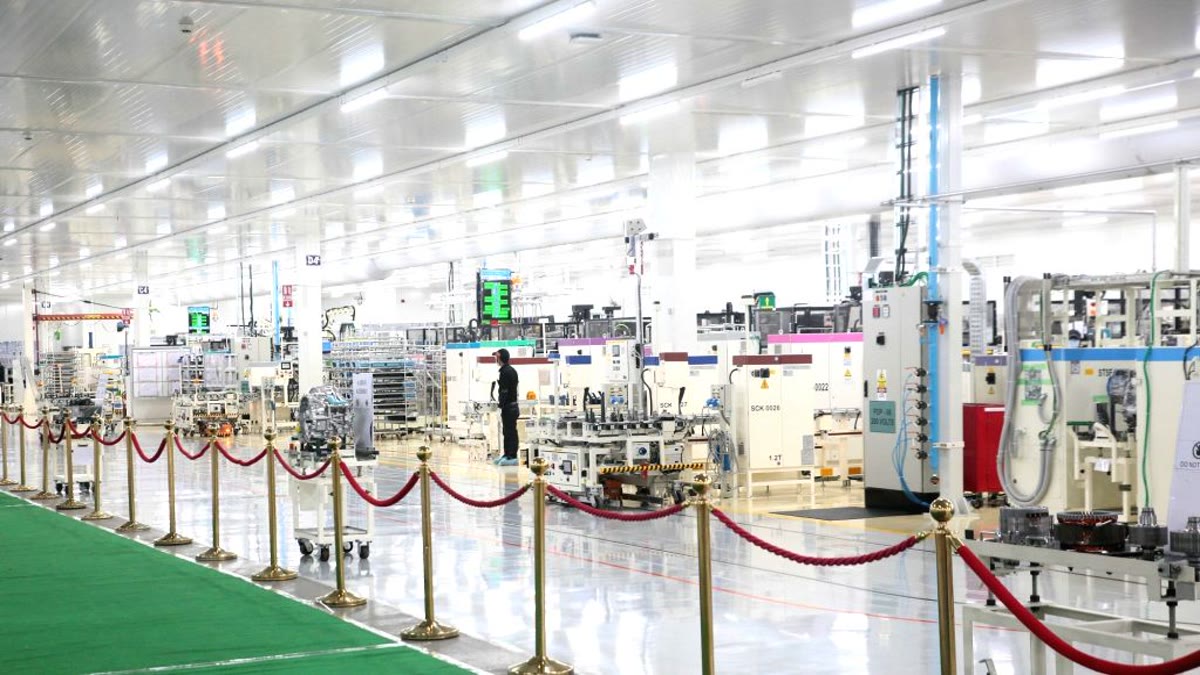
- IANS via Prokerala — Bengaluru: View of the E-Drive manufacturing unit at Toyota Kirloskar Auto Parts — 26 Jun 2022; image credit