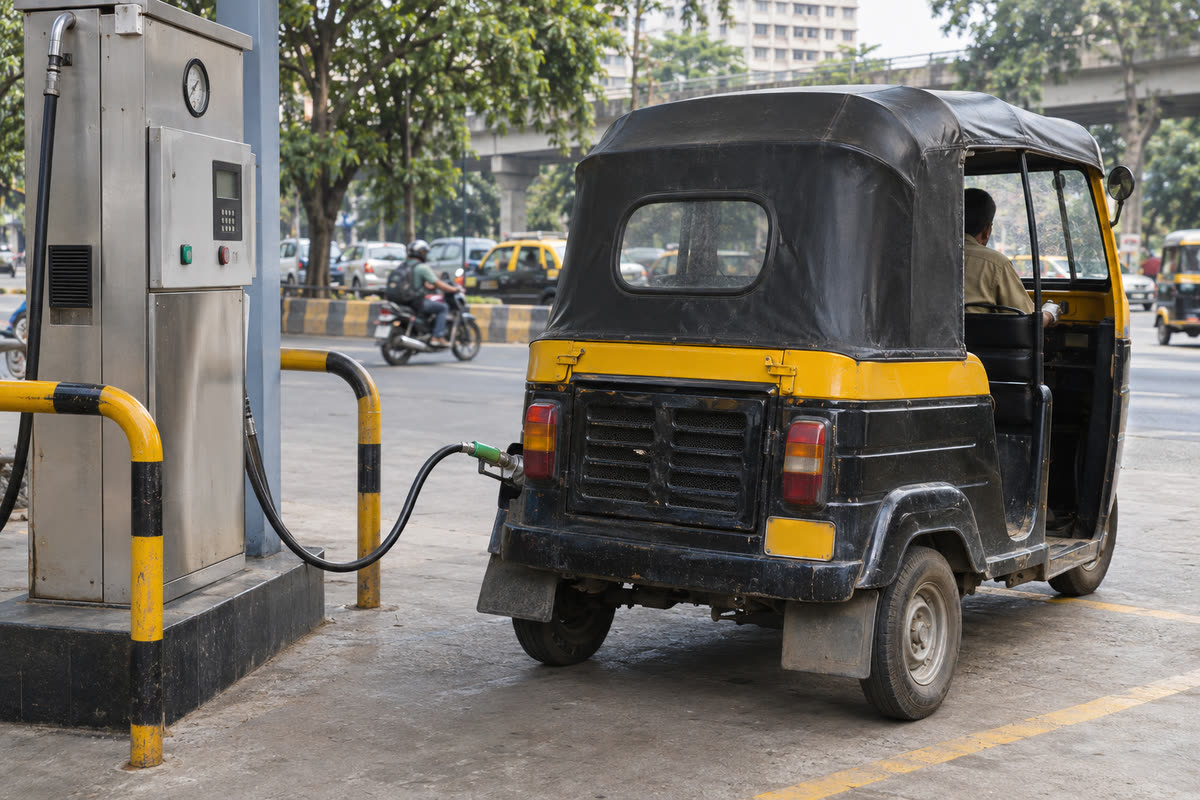
Autorickshaw unions in the Mumbai Metropolitan Region (MMR) have renewed a request to raise the minimum fare by ₹2, from ₹27 to ₹29 for the first 1.5 km, after Mahanagar Gas Ltd (MGL) raised CNG to ₹91.50 per kg from 15 Nov 2026. The reported request is not a new notified fare: commuters should treat ₹27 as the current base fare until an official revision is announced.
Key takeaways
- The fare demand is for a proposed increase from ₹27 to ₹29 for the first 1.5 km; it has not been reported as an approved tariff.
- MGL’s latest reported CNG revision added ₹1.50 per kg, taking the MMR price from ₹90 to ₹91.50 per kg with effect from 15 Nov 2026.
- Economic Times and Times of India reports say the latest increase followed a ₹1 per kg rise on 1 Nov 2026, taking the reported cumulative increase to ₹5.50 per kg over 75 days.
- The immediate fuel impact depends on how many kilograms an auto, taxi or private CNG vehicle buys; the union’s fare request does not automatically change the meter.
What has changed in Mumbai
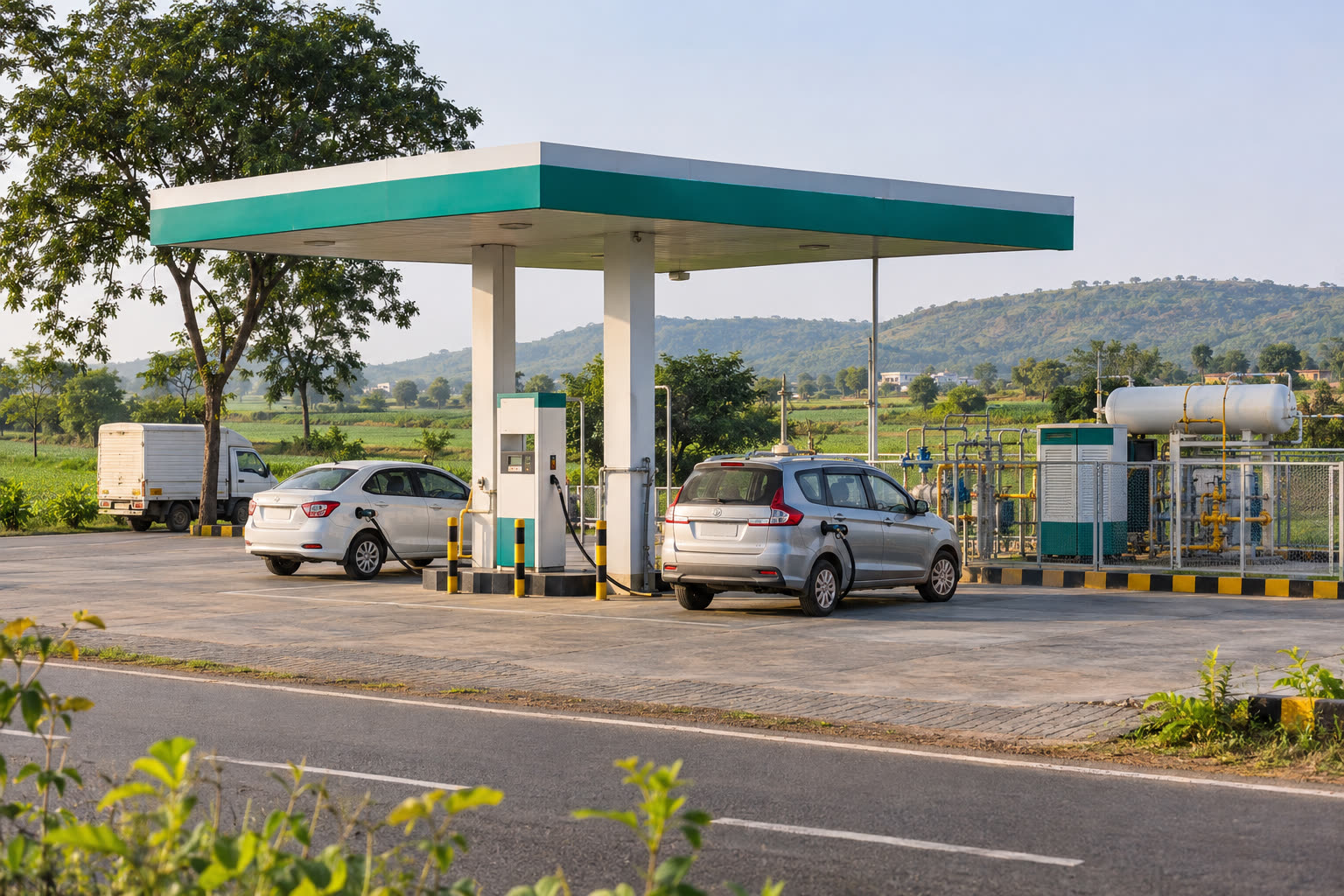
MGL announced the latest ₹1.50-per-kg increase on Saturday, with the revised rate applying from Sunday, 15 Nov 2026, according to the Times of India, Economic Times and Indian Express. The reported retail rate moved from ₹90 to ₹91.50 per kg across Mumbai and adjoining parts of the MMR. This is a change at the CNG pump, not an automatic change to the passenger fare shown on an autorickshaw meter.
The three reports attributed the revision to higher gas procurement costs, lower allocation of domestically produced gas and greater dependence on imported regasified liquefied natural gas (RLNG), amid continuing supply uncertainty linked to the Middle East. MGL’s 4 Nov 2026 earnings-call transcript also described a volatile gas-sourcing mix and restricted RLNG availability, giving context to the company’s explanation without turning that background into a forecast.
FuelPrice’s earlier Mumbai CNG price update records the pump-price change and its effective date. The new development in this follow-up is the response from auto and taxi unions, not another claim that the price hike itself is new.
Why unions are asking for a higher fare
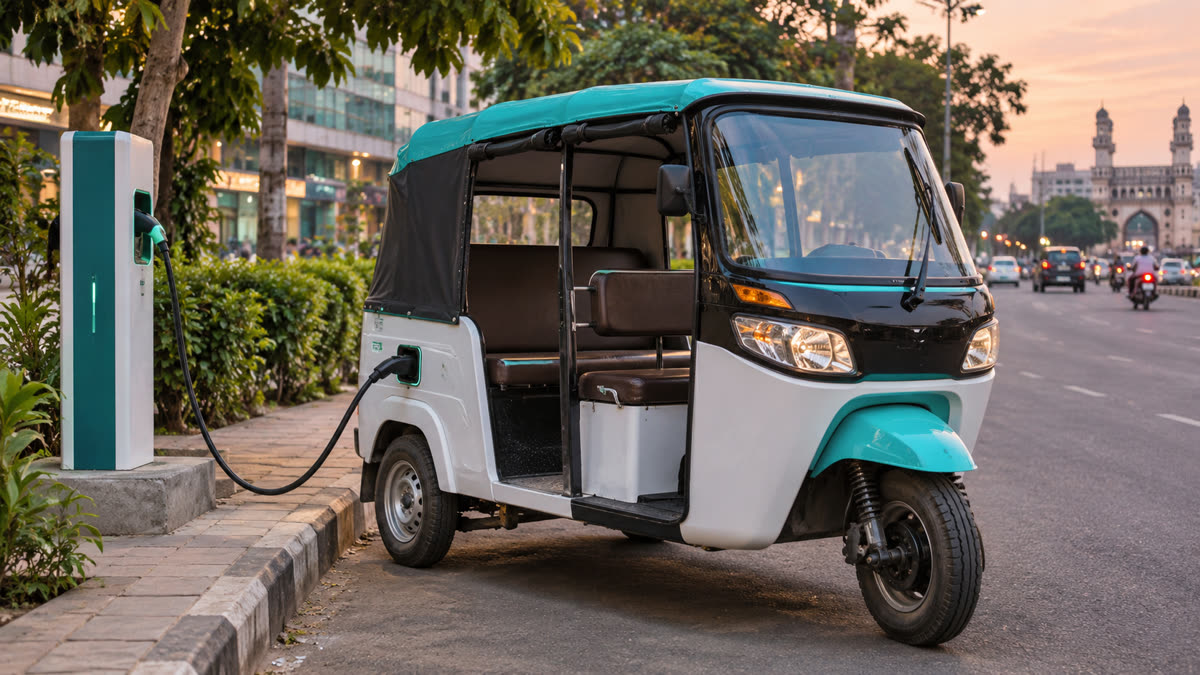
Times of India and Economic Times reports quoted Mumbai Rickshawmen’s Union leader Thampy Kurien as saying that repeated CNG increases had eroded the benefit of the recent fare revision before meter recalibration was complete. Based on the fare-revision formula cited in those reports, unions estimate that the minimum autorickshaw fare should rise by another ₹2, from ₹27 to ₹29 for the first 1.5 km.
That wording matters. A union estimate or request is not the same as an order from the transport authority. Unless a revised fare is formally approved and the corresponding fare chart or meter setting is issued, a commuter should not assume that ₹29 is already the legal minimum. Any later change would also need to clarify how fares beyond the first 1.5 km, waiting charges and taxi fares are affected.
The cost effect for operators
The direct fuel change is ₹1.50 for every kilogram of CNG purchased, not ₹1.50 for every passenger trip. As a simple illustration, an operator buying 10 kg of CNG in a day would spend ₹15 more at the new rate than at the old rate. If that same purchase pattern continued for 26 working days, the additional fuel outgo would be ₹390 for that month. This is arithmetic based on the reported price change, not a claim about average auto consumption or driver earnings.
For a private CNG car, the same method is more useful than a headline percentage: record the kilograms purchased, multiply the quantity by ₹1.50, and compare it with the distance driven. Drivers who want to compare a route’s fuel requirement can use the FuelPrice fuel-cost calculator and then check the latest rates on the live fuel prices page.
What commuters should know now
- Do not treat ₹29 as an effective fare yet. The reports describe it as a union demand based on a formula, not as a notified increase.
- Check the meter and fare display. The CNG price applies at the pump; it does not by itself authorise an extra amount on a passenger’s bill.
- Separate the fuel event from the fare decision. The MMR price is reported as ₹91.50 per kg from 15 Nov 2026, while the proposed fare change still depends on official action.
- Keep the geography in mind. The reported revision covers Mumbai and adjoining MMR areas; CNG rates can differ in other cities, so a national price should not be inferred from this local update.
What to watch next
The next meaningful update is an official decision on the fare request and any revised fare chart or meter instructions. Until then, the practical position for commuters is unchanged: the higher CNG price is already in force in the reported MMR area, but the ₹2 minimum-fare request remains a proposal.
For operators and fleet owners, the useful number to track is actual CNG consumption alongside daily kilometres and fares collected. That record can show whether the higher pump price is being absorbed by the operator or reflected in a formally approved tariff. For commuters, the all-cities fuel-price hub is the safer reference when comparing rates outside Mumbai.
Sources
- Times of India: Rs 1.5/kg CNG hike in Mumbai region rekindles auto fare row; unions seek ₹2 increase in minimum fare — 15 Nov 2026
- Economic Times: CNG gets costlier by ₹1.50/kg in Mumbai, auto unions seek another fare hike — 15 Nov 2026
- The Indian Express: CNG price in Mumbai from November 15: ₹91.50 per kg after MGL hike — 14 Nov 2026
- Mahanagar Gas Limited: Q2 FY27 earnings-call transcript — 4 Nov 2026