Ongoing sewerage work and a damaged road surface on Chennai’s 3.5-km Velachery–Tambaram High Road have reportedly stretched the trip between Tambaram railway station and Camp Road from about 15 minutes to nearly 40 minutes during peak hours. The road is a key link between GST Road and Velachery through Medavakkam and Pallikaranai, so the disruption matters to daily commuters, two-wheeler riders, buses and local freight traffic.
The Times of India and Mirror Now reported the delay on 27 Sep 2026 after speaking to local residents and officials. The reports describe a narrowed, uneven carriageway rather than a complete route closure. Commuters should treat the barricaded section as an active work zone and plan for a slower crossing until the sewer work and subsequent road repairs are completed.
Key takeaways
- The affected stretch runs for about 3.5 km, from the eastern entrance of Tambaram railway station to the Camp Road junction.
- A trip that normally takes about 15 minutes is reportedly taking nearly 40 minutes at peak times.
- The usable carriageway has been reduced at points from an original width of about 80 feet to roughly 40 feet.
- Metrowater officials told both outlets that the sewerage work was about 75% complete and that the balance was expected by mid-October 2026.
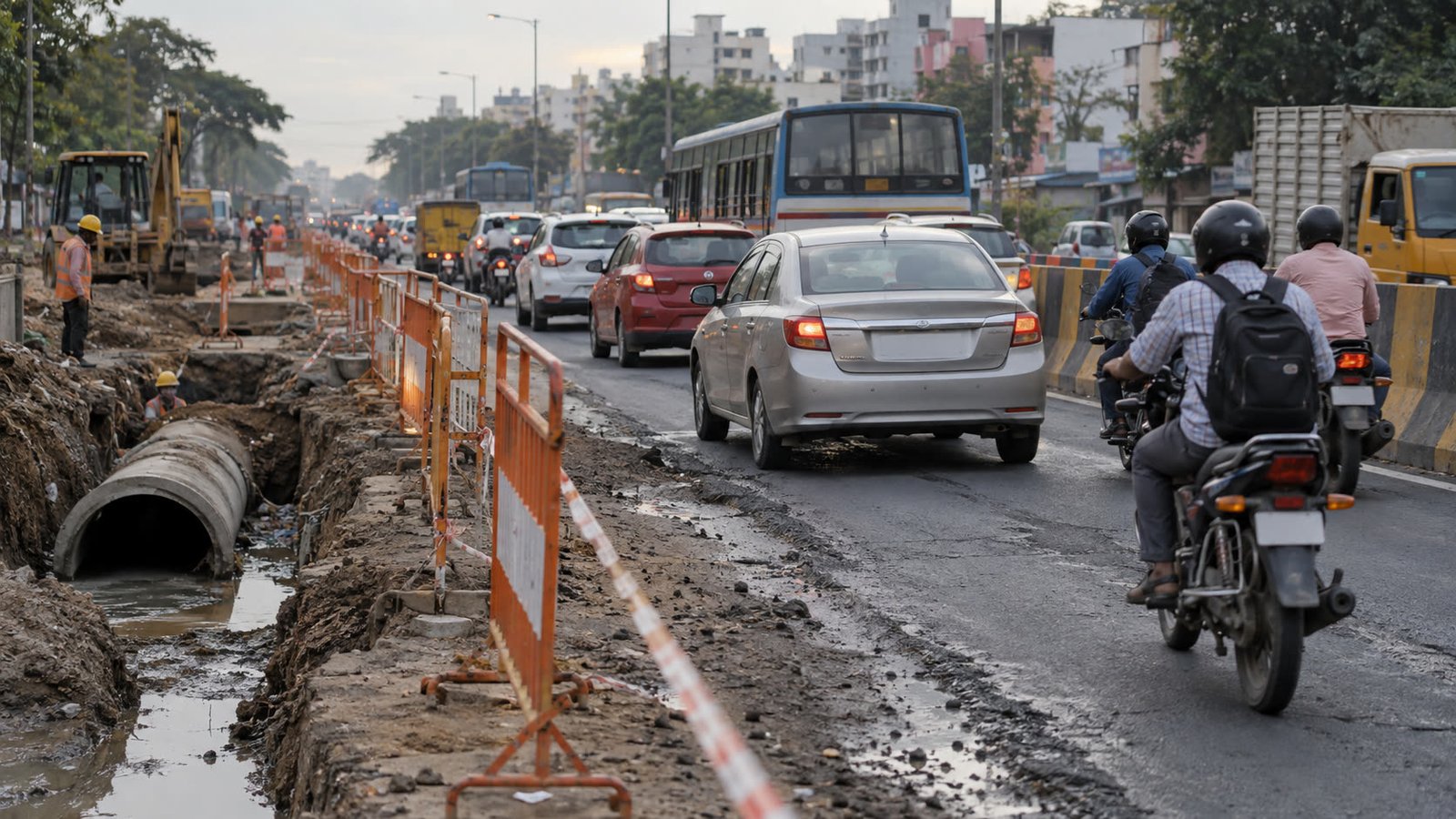
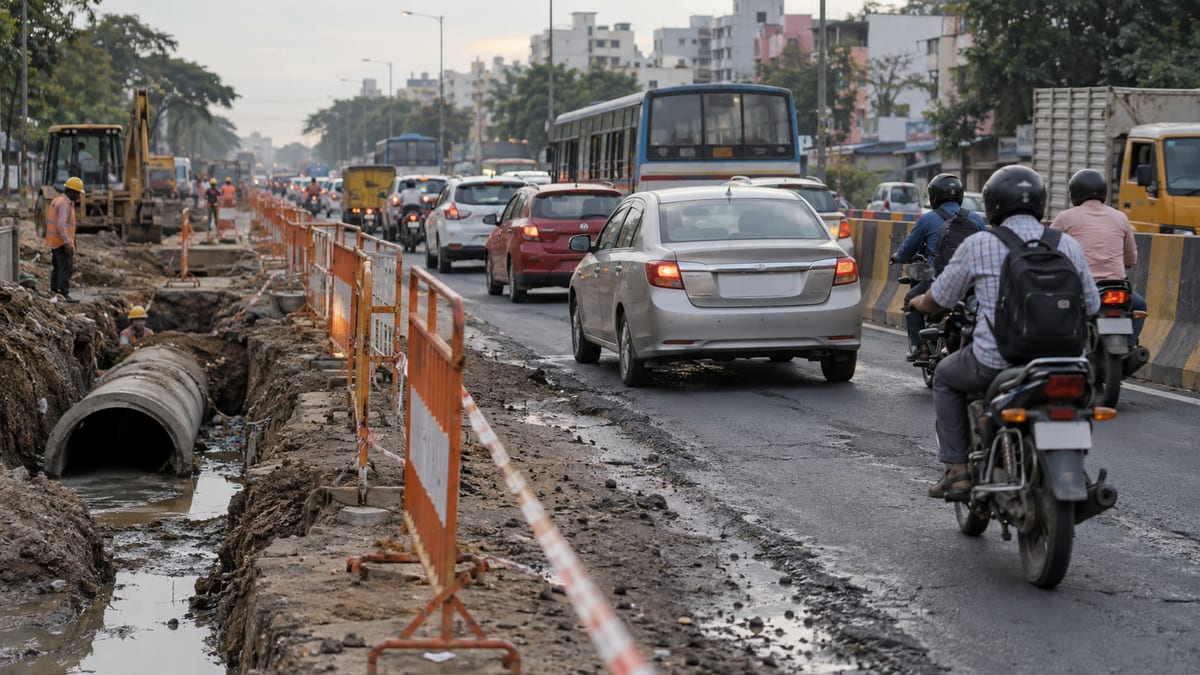 Editorial illustration generated for FuelPrice; not an official project photograph.
Why the delay is persisting
The ongoing work involves underground sewerage connections for neighbourhoods including Selaiyur, Valmiki Street and parts of Chromepet. The road reports say the work has been under way for more than three months, while parts of the carriageway have been dug up or left as a muddy, uneven surface.
The corridor was originally about 80 feet wide, but only about 40 feet is usable at several points, according to The Times of India. That restriction forces cars, buses and motorcycles into a smaller moving lane, leaving little room for safe overtaking or recovery when traffic builds up. Mirror Now reported that the road carries roughly 1,000 vehicles per hour, making even a short narrowing capable of creating a long queue.
Residents also told the outlets that pedestrians lack a continuous pavement and a dedicated crossing facility on the stretch. The combination of excavation, uneven edges, roadside parking and mixed traffic is especially difficult for riders and people walking to or from nearby homes, shops and the railway station.
What the delay means for drivers and riders
For a commuter who previously crossed the stretch in about 15 minutes, a nearly 40-minute peak trip means roughly 25 extra minutes on the same 3.5-km link. The practical effect is not just a later arrival: stop-and-go movement can make fuel use, heat exposure and fatigue worse, particularly for people repeating the journey twice a day.
Drivers should avoid using the excavated or muddy edge to overtake, keep a safe gap behind buses and follow the temporary barricades. Two-wheeler riders need to be particularly careful where the usable road meets the lower, broken or wet edge. The reports describe the construction areas as barricaded, but they also record complaints about skidding and difficult pedestrian movement.
If the slower journey changes your regular commute or requires a longer alternative, the road-trip planner can help compare departure timing and route options. For a weekly commute calculation, use the fuel cost calculator with your own vehicle, mileage and fuel-price assumptions rather than treating the delay as a fixed cost for every driver.
What commuters can check now
- Allow a peak-hour buffer: The reported 40-minute travel time is a peak-period observation, so the delay may vary with the hour, rain, bus movement and queue length.
- Keep the work zone visible: Slow before barricades, avoid sudden lane changes and do not enter an excavated section simply because the main lane is congested.
- Plan station and school trips early: The affected road connects a railway station and dense residential areas, so a small delay can affect a wider trip than the road segment itself.
- Recheck the surface after rain: A muddy shoulder or uneven road edge can become harder for motorcycles and pedestrians even when vehicles are still moving.
What happens next
Metrowater officials told The Times of India and Mirror Now that the sewerage project was about 75% complete and that the remaining work was expected to be finished by the middle of October. A highways divisional engineer said the work areas had been barricaded and that the department planned to relay the road and repair the damaged patches once the underground work ends.
That mid-October timeline is an official expectation, not a confirmed reopening date. Commuters should therefore watch for a separate update on resurfacing and traffic conditions rather than assuming that the end of trenching will immediately restore the earlier travel time.
Reader takeaway
The immediate change on the Velachery–Tambaram High Road is a time-and-safety problem caused by restricted road space, not a new toll or fuel-price rule. Until the work is finished and the surface is repaired, adding time to the trip, staying within the barricaded lane and checking the route before leaving are the most useful precautions.