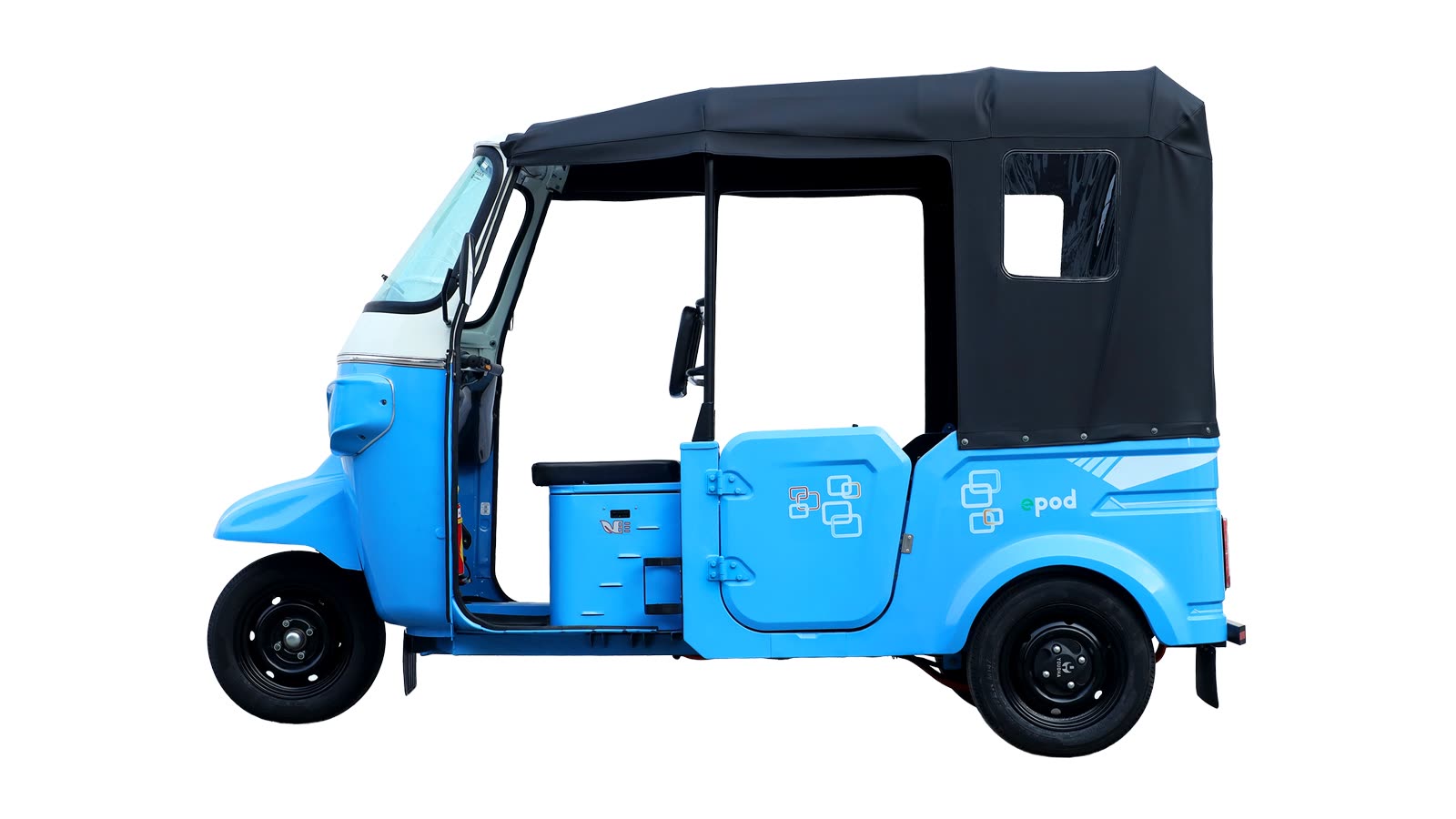
Youdha has rolled out its 1,000th ePod electric three-wheeler as it prepares to widen its cargo and passenger EV portfolio, dealer and service network, and presence in Southern India. The milestone gives commercial-vehicle operators a fresh signal about the brand’s scale, but it does not by itself confirm a new model, a launch date or a guaranteed operating-cost saving.
Key takeaways
- Youdha, the electric commercial-mobility brand of Zuperia Auto, has announced the rollout of its 1,000th ePod electric three-wheeler.
- The company says its next phase will cover cargo and passenger EVs, stronger dealer and service support, and entry into Southern India.
- The ePod is an L5 passenger electric three-wheeler; Youdha’s current product page lists an 11.8 kWh LFP battery, a 6 kW motor and up to 227 km of claimed range.
- No specific Southern India cities, expansion date, sales target or new-model timeline has been announced in the latest reports.
What Youdha announced
HT Auto reported the 1,000th ePod rollout on 9 Oct 2026, while ET Auto carried the company’s milestone announcement on 10 Oct. Both reports identify Youdha as a brand of Zuperia Auto Private Limited and describe the ePod as a commercial last-mile mobility product.
Youdha said the 1,000-unit milestone is the base for a broader growth phase. Its stated priorities are to expand the product portfolio across cargo and passenger applications, strengthen its dealer and service network, deepen its presence in key markets and enter Southern India. The company is also exploring opportunities outside India, although neither report gives a named overseas market or a timetable.
That distinction matters for readers who operate a vehicle for daily income. A production milestone can indicate that a product has moved beyond a very small initial rollout, but it does not guarantee parts availability in every city, a particular level of resale value or uninterrupted service support. Those questions depend on the network that follows.
What the ePod offers on paper
Youdha’s official ePod product page describes the vehicle as an L5 passenger electric three-wheeler for commercial and last-mile use. It lists an 11.8 kWh LFP battery, a 6 kW PMSM motor and up to 227 km of range under standard test conditions. HT Auto’s earlier launch coverage also identified the ePod as an L5 electric passenger three-wheeler with an 11.8 kWh battery, a 6 kW motor and a claimed 227 km range.
The 227 km figure is therefore a claimed or test-condition range, not a promise that every route will deliver that distance. Passenger load, stop-and-go traffic, road gradient, weather, tyre pressure, battery condition and the use of auxiliary equipment can all change the usable distance. The practical question for an operator is whether the vehicle can complete the normal shift with a charging margin, not whether its brochure number is the highest in the segment.
The latest announcement is about the 1,000th rollout and future expansion; it is not a fresh ePod price revision or a confirmed launch of a new cargo model. Keeping those events separate helps buyers and fleet owners avoid treating a company growth statement as a product-order announcement.
The operating-cost question for commercial users
Electric three-wheelers are often considered for their potential energy and maintenance advantages, but the result depends on the duty cycle. A vehicle charged at a home or depot tariff has a different cost profile from one charged at a public station. Daily distance, payload, electricity tariff, charging losses, battery warranty, service intervals and downtime all matter alongside the purchase price.
Operators comparing an electric three-wheeler with a petrol or CNG alternative can use the fuel cost calculator to establish a conventional-fuel baseline. That comparison should use the vehicle’s actual route and local fuel rate; it should not be presented as a guaranteed saving from the ePod.
Charging access is equally important. The EV charging directory can help readers identify the public-charging context around a route, but a directory listing is not the same as a confirmed commercial-vehicle charging arrangement. Before counting on public charging, an operator needs to check connector compatibility, operating hours, payment method, queue risk and whether the station can accommodate the vehicle.
What operators should check as Youdha expands
- Route fit: compare the normal shift distance and load with usable range rather than the headline test figure. Include a reserve for traffic, weather and detours.
- Charging routine: check where the vehicle will charge between shifts, how much time the vehicle may be unavailable and whether a second shift is realistic.
- Service reach: ask for the nearest authorised workshop, expected parts lead times, roadside support and the process for battery or motor-related faults.
- Commercial configuration: confirm whether the required passenger or cargo body, payload rating, registration category and local permit requirements match the intended work.
- Total ownership cost: compare the purchase price, financing terms, insurance, electricity, tyres, maintenance and downtime over the expected use period. Actual offers and running costs vary by profile and location.
For route-dependent businesses, the road-trip planner can be used to map distance and stops before comparing an EV duty cycle with a conventional vehicle. The useful output is not a single “best” powertrain; it is a clearer picture of how the vehicle would fit the operator’s own kilometres, charging windows and service access.
Expansion is a plan, not a delivery schedule
Youdha’s Southern India plan is the most important forward-looking part of the announcement, particularly for operators who have been waiting for more electric commercial-vehicle choices outside the company’s current markets. However, the latest reports do not name the first states or cities, identify the dealers that will be added or set a date for entry. Those details will need a later company announcement.
The same applies to the promised cargo and passenger portfolio expansion. The company has stated the direction of travel, but it has not disclosed new model names, specifications, prices or launch dates in the milestone coverage. Until those details are confirmed, the announcement should be read as a business expansion plan rather than a booking opportunity.
What to watch next
The practical follow-up signals are the publication of a Southern India dealer list, service-centre additions, new cargo or passenger vehicle specifications and any confirmed production or delivery schedule. Fleet operators can also watch for evidence that support capacity is growing alongside vehicle volumes. For a commercial EV, the availability of service and charging can be as consequential to daily earnings as the vehicle’s battery and motor specifications.
Youdha’s 1,000th ePod rollout is a verifiable company milestone and a sign that the brand wants to move into a larger phase of India’s electric three-wheeler market. The reader takeaway is measured: the company has outlined expansion, while the cost, range and support questions still need to be tested against each operator’s route and local infrastructure.
Sources
- HT Auto — “Youdha rolls out 1,000th ePod electric three-wheeler” (9 Oct 2026)
- ET Auto — “Youdha rolls out 1,000th ePod electric three-wheeler, eyes southern India expansion” (10 Oct 2026)
- Youdha Auto — “Youdha ePod” product specifications (accessed 10 Oct 2026)
- HT Auto — “Youdha launches EPOD electric three-wheeler, sets ₹1,000 crore revenue target by 2030” (18 Jul 2025)