After a car insurance claim, the next renewal is not simply last year’s policy with a new date. For most own-damage or comprehensive policies, a claim can remove the No Claim Bonus (NCB) on the own-damage component, while the new quote also reflects the car’s Insured Declared Value (IDV), deductibles, add-ons, claim record and insurer terms.
This guide explains what to compare before renewing after a claim, how the NCB math works, and which documents and policy lines deserve a second look. It also separates a personal renewal quote from industry-level premium data, so a sector report is not mistaken for a blanket price hike.
Key takeaways
- NCB is a discount on the own-damage premium, not on the third-party premium. The standard slab rises from 20% after one claim-free year to a maximum of 50% after five claim-free years.
- When a claim is made or remains pending under the expiring policy, the next renewal can show zero NCB unless an applicable protection add-on or policy term says otherwise.
- A reported 16% year-on-year rise in motor own-damage premium income during the first half of FY2026–27 is an industry measure, not an automatic 16% increase in your renewal quote.
- Compare IDV, own-damage premium, third-party premium, deductibles, add-ons, taxes and fees as separate lines; a lower total can also reflect lower cover.
- IRDAI says motor insurance should be renewed before the due date, a lapsed policy may need inspection, and a comprehensive policy lapsed for more than 90 days can lose accrued NCB.
Why renewal after a claim needs a separate check
A claim changes the history the insurer sees at renewal, but it does not answer every question about the next policy. The amount paid, whether the claim is closed or pending, the type of cover used, the car’s current IDV and the selected add-ons all sit in different parts of the quote.
The immediate trigger for this guide is the insurance market’s latest pricing signal. On 23 October 2026, ANI reported an Emkay estimate that motor own-damage gross direct premium income grew about 16% year on year in the first half of FY2026–27, while motor third-party premium income grew about 10%. That report describes the size and mix of insurer business, supported partly by new vehicle sales and competitive pricing. It does not announce a new tariff or prove that any individual policy has become 16% more expensive. FuelPrice’s motor-insurance pricing report explains that distinction.
- What the claim can affect: NCB, claim history, underwriting questions and the amount you may have to pay yourself through deductibles or non-covered items.
- What it does not decide by itself: the correct IDV, the suitability of an add-on, the third-party premium, or whether another like-for-like quote has the same cover.
- What to avoid: comparing only the final payable amount when one quote has a lower IDV, fewer add-ons or a higher deductible.
How NCB changes the renewal math
IRDAI’s motor-insurance guidance describes NCB as a benefit for not making claims during the previous policy period. It is applied to the own-damage premium, not the third-party liability premium. IRDAI also says that when a claim is lodged, the NCB is lost in the subsequent policy period. HDFC ERGO and ICICI Lombard publish the same standard slab sequence, so the table below is cross-checked against an official regulator source and two insurer sources accessed in October 2026.
| Claim-free record before renewal | NCB on own-damage premium | Illustrative saving on ₹20,000 OD |
|---|---|---|
| Claim in the expiring policy | 0% | ₹0 |
| One claim-free year | 20% | ₹4,000 |
| Two consecutive claim-free years | 25% | ₹5,000 |
| Three consecutive claim-free years | 35% | ₹7,000 |
| Four consecutive claim-free years | 45% | ₹9,000 |
| Five or more consecutive claim-free years | 50% | ₹10,000 |
The percentages are the published NCB slabs as of October 2026. The last column is a simple illustration using a ₹20,000 own-damage component; it is not a market quote and does not include third-party premium, GST, add-ons, fees or deductibles.
Worked rupee example: Assume, only for understanding and as of October 2026, that a renewal quote contains ₹20,000 of own-damage premium and ₹7,500 of third-party premium. With a 45% NCB, the discount is ₹20,000 × 45% = ₹9,000. Before GST, add-ons and other disclosed charges, the illustrative total is ₹20,000 − ₹9,000 + ₹7,500 = ₹18,500. If a claim resets the NCB to 0%, the equivalent becomes ₹27,500, so the difference is the lost discount rather than a separate 16% surcharge.
Use the NCB line in the quote as a check, not as a number to fill in from memory. If the policy has been moved to another insurer, the new insurer may ask for the expiring policy, renewal notice or NCB certificate. A wrong declaration can create a mismatch during a later claim. For a broader like-for-like method, see this guide to comparing car insurance renewal quotes.
What to compare besides NCB
IDV: the total-loss and theft reference point
IRDAI describes IDV as the sum insured for the vehicle and says it should reflect the current market value. At renewal, check whether the quoted IDV is sensible for the car’s age, condition and market rather than accepting the lowest number because it reduces the visible premium.
- Write down the old IDV and the new IDV before comparing quotes.
- Ask what happens to the payable amount if the car is stolen or treated as a total loss; the premium alone does not answer that question.
- Check whether declared accessories are included or need separate identification in the schedule.
Own damage, third party and deductibles
Keep the two main components separate. Own-damage cover concerns loss or damage to the insured car under policy terms; third-party cover addresses legal liability to others. NCB does not reduce the third-party premium. Also check the compulsory and voluntary deductible, because a quote with a higher excess may shift more of a future repair bill to the owner.
Add-ons and exclusions
A post-claim renewal is a useful time to audit add-ons instead of carrying every option forward. Check the covered event, part exclusions, claim limits, waiting or eligibility conditions, and whether the add-on applies to the type of damage that led to the claim. FuelPrice’s guide to car insurance add-ons at renewal explains how zero depreciation, engine protection and roadside assistance differ.
- Zero depreciation: read the parts and age conditions, not just the label.
- Engine or consumables protection: confirm the excluded causes and documentation requirements.
- Roadside assistance: check the service limits, distance restrictions and call-out conditions.
- NCB protection: treat it as a product-specific add-on; read the permitted claims and exclusions instead of assuming it protects every future claim.
Documents and policy lines to check before payment
IRDAI’s motor-insurance policy-holder guidance lists a policy schedule, registration certificate, claim form, repair estimate and repair invoice among common claim documents, with extra requirements for theft claims. It also states that a valid PUC certificate is mandatory on the date of insurance renewal. Keep the documents together even if the claim has already been settled, because the renewal record and the repair record answer different questions.
- Note the expiry date and start the comparison before the policy lapses.
- Download the latest policy schedule, claim settlement or closure communication, repair invoice and payment receipt.
- Check whether the claim is marked closed, pending, rejected or withdrawn; ask for clarification if the quote shows a different claim status.
- Read the NCB percentage and confirm whether it is based on the expiring policy, not an older renewal.
- Compare IDV, own-damage premium, third-party premium and deductibles in separate rows.
- Review each add-on’s schedule, limits and exclusions; remove nothing or add nothing based only on the headline price.
- Keep a valid PUC and the RC details ready, and check that registration, address and vehicle variant are correct.
- Save the final proposal, payment receipt, policy wording and insurer grievance contact after renewal.
Use the car insurance policy-document guide when a schedule uses unfamiliar abbreviations. If the underlying claim process is still unclear, the claim documents and settlement guide covers the difference between cashless and reimbursement handling.
If the policy has already expired
Do not assume that an expired policy continues to provide cover while a renewal payment is being arranged. IRDAI’s consumer guidance says there is no grace period for paying the motor premium; even a one-day lapse can require vehicle inspection. It also says that if a comprehensive policy remains lapsed for more than 90 days, the accrued NCB is lost. Insurer processes and inspection requirements can vary, so read the renewal instructions and keep the lapse period clear in the record.
- Ask whether an inspection is required before the new policy starts.
- Do not backdate a claim, renewal or NCB declaration.
- Keep the previous policy and any NCB proof available if you are changing insurers.
Frequently asked questions
Does every car insurance claim remove NCB?
IRDAI’s general motor-insurance guidance says that if a claim is lodged, NCB is lost in the subsequent policy period. NCB protection add-ons can have product-specific exceptions, while a matter handled entirely under another party’s third-party cover may be recorded differently; confirm the treatment with the insurer rather than assuming it.
Is the reported 16% motor OD growth a 16% renewal hike?
No. The 16% figure reported on 23 October 2026 is year-on-year growth in motor own-damage premium income for the sector in the first half of FY2026–27. It can reflect new vehicle sales, policy mix and the volume of business; it is not a regulated increase applied to every owner.
Does NCB reduce the third-party part of a policy?
No. IRDAI, HDFC ERGO and ICICI Lombard describe NCB as a discount on the own-damage component. The third-party premium remains a separate line in the quote.
Can I compare another insurer after making a claim?
You can ask for another quote, but the claim history and NCB position still need to be disclosed accurately. Compare the new quote with the same IDV, deductibles, add-ons and third-party cover, and keep the old policy documents available for verification.
Sources
- Insurance Regulatory and Development Authority of India, “Non-Life Insurers: motor-insurance policy-holder guidance” — accessed 24 Oct 2026
- Insurance Regulatory and Development Authority of India, “Motor Insurance — Policy Holder” — accessed 24 Oct 2026
- HDFC ERGO, “No Claim Bonus (NCB) in Car Insurance” — accessed 24 Oct 2026
- ICICI Lombard, “Buy/Renew Car Insurance Policy Online” — accessed 24 Oct 2026
- The Tribune/ANI, “India’s general insurance industry to see modest growth in FY27 amid pricing pressures: Report” — 23 Oct 2026
- Emkay Global Financial Services, “General Insurance Sector Report: Health and Motor Steer Growth; Fire and Crop a Drag” — 23 Oct 2026
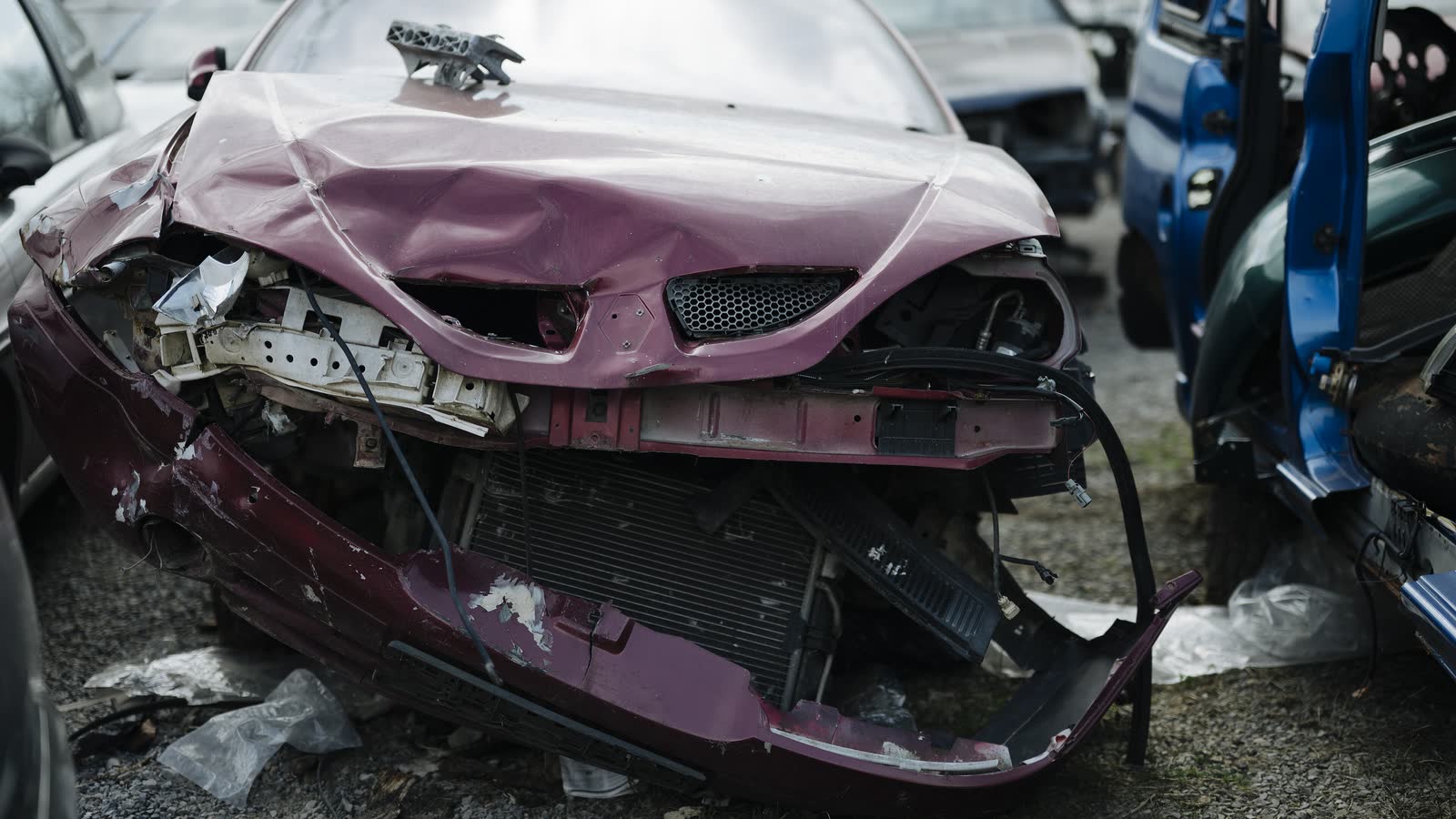
- Wikimedia Commons, “Car wreck sits in junkyard among other abandoned vehicles with damage to front end and engine area in broad daylight” — CC BY 2.0 image source, accessed 24 Oct 2026
This article is for general information only and is not financial, insurance or legal advice.