Commercial vehicle insurance is not only a compliance document for a truck, taxi, van, bus or three-wheeler: the policy also decides which accident, theft and vehicle-repair costs can reach the owner or operator. This guide explains how to compare liability-only, package and own-damage cover, read IDV and NCB, and keep permit, fitness and claim records ready at renewal.
Key takeaways
- Third-party liability is the legal baseline for a vehicle used in a public place; it does not by itself pay for damage to the insured vehicle.
- A package policy combines third-party liability with own-damage protection, while a standalone own-damage policy must sit alongside valid third-party cover.
- IDV is the policy's total-loss reference value. Official insurer schedules commonly use age-based depreciation from 5% to 50% up to five years, subject to product terms.
- NCB is a discount on the own-damage part, not a discount on third-party liability. Current policy documents show a 20% to 50% range for one to five claim-free years.
- At renewal, compare vehicle class, GVW, use, permit, fitness, driver details, IDV, deductible, add-ons and claim exclusions together.
What commercial vehicle insurance covers
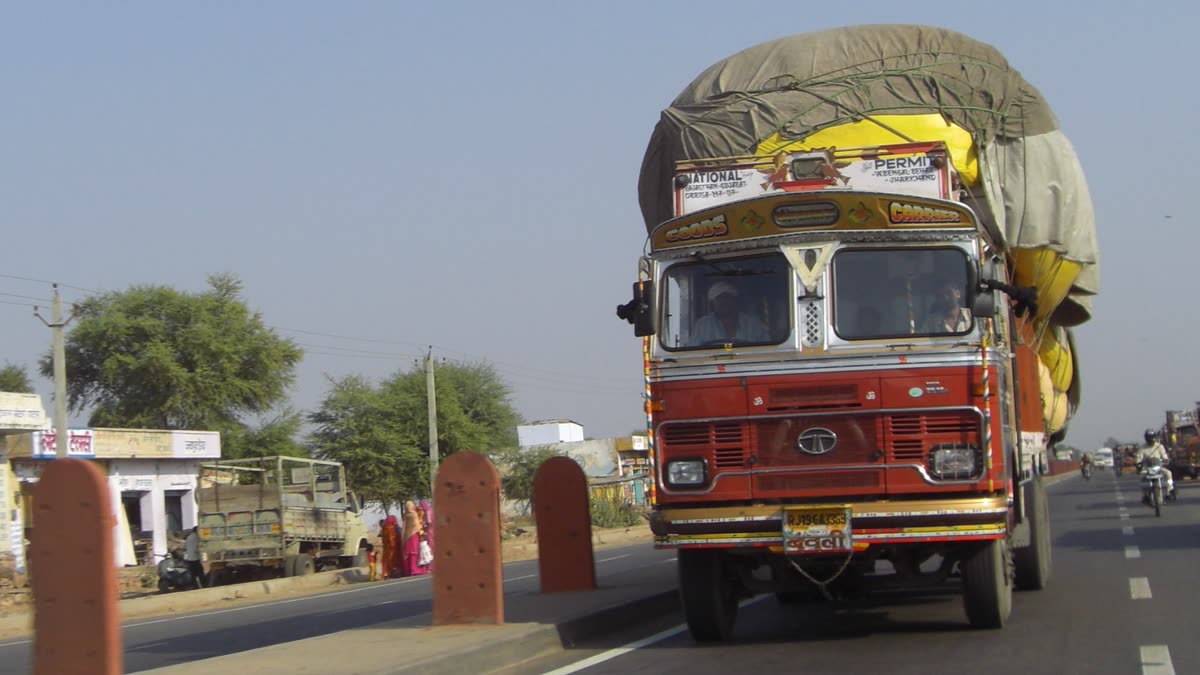
Commercial vehicles earn or support income while moving: a delivery van carries goods, a taxi carries passengers and a truck may be away from its home state for days. A policy gap can therefore affect both the vehicle and the work built around it. A 24 November 2026 ET Auto report on rising online commercial-vehicle insurance adoption, led by smaller commercial vehicles and three-wheelers, is a useful reminder that a digital quote is only the starting point. The cover has to match the vehicle's registered class and actual use.
Section 146 of the Motor Vehicles Act requires insurance for a motor vehicle used in a public place, and Section 147 sets the statutory third-party liability scope. The law also identifies the owner of goods or an authorised representative and passengers of a transport vehicle within the prescribed liability framework, subject to the Act and policy terms. Insurance is not a substitute for a permit, fitness certificate or lawful driver.
| Policy option | What it is designed to cover | What to check before renewal |
|---|---|---|
| Liability-only | Third-party death, bodily injury and property-damage liability within the statutory and policy framework. | Vehicle damage, theft, fire, driver and employee liabilities are generally outside the own-damage section; verify selected extensions. |
| Package policy | Third-party liability plus loss of or damage to the insured vehicle from covered events such as accident, theft, fire and natural calamities. | IDV, compulsory and voluntary deductible, depreciation rules, use restrictions and add-on limits. |
| Standalone own-damage | Own-damage protection for the vehicle, normally used with a separate valid third-party policy. | Whether the third-party policy is active, both periods align, and which risks and accessories are listed. |
New India Assurance describes its commercial liability-only policy as third-party protection and its package policy as vehicle loss or damage in addition to liability. The Motor Vehicles Act is the primary source for the statutory baseline; the insurer's filed wording controls detailed exclusions, deductibles and extensions for the selected product.
Cover details that need a separate check
- Legal liability to paid drivers, employees or permitted passengers may require an extension or a specific section in the policy.
- Goods, tools, body modifications and accessories may need to be declared or separately covered.
- For electric commercial vehicles, check whether battery, motor and charger protection is included, excluded or available only as an add-on.
- Roadside assistance, towing or daily-allowance benefits can have distance, waiting-period, garage or claim-count conditions.
How IDV affects a commercial vehicle claim
Insured Declared Value, or IDV, is the sum insured used for a total-loss or constructive-total-loss assessment. It is not a promise that every repair bill will be paid up to that amount. For a partial-loss claim, the insurer applies the policy's parts-depreciation, deductible and exclusion rules. For a total-loss assessment, IDV is the important ceiling to compare with replacement economics.
As of November 2026, the age-based schedules published by New India Assurance and HDFC ERGO show the following depreciation pattern for fixing IDV. The schedule applies to the total-loss or constructive-total-loss reference and is not the same as depreciation applied to every part in every repair claim.
| Vehicle age at renewal | Depreciation used for IDV | Illustrative IDV from a ₹10,00,000 listed price |
|---|---|---|
| Not exceeding 6 months | 5% | ₹9,50,000 |
| More than 6 months to 1 year | 15% | ₹8,50,000 |
| More than 1 year to 2 years | 20% | ₹8,00,000 |
| More than 2 years to 3 years | 30% | ₹7,00,000 |
| More than 3 years to 4 years | 40% | ₹6,00,000 |
| More than 4 years to 5 years | 50% | ₹5,00,000 |
The rupee column is a worked illustration using an assumed listed price, not a quote or a prediction of resale value. Vehicles beyond five years, discontinued models and separately fitted accessories can be handled differently under the product wording. New India Assurance and Future Generali also state that a vehicle may be treated as a constructive total loss when aggregate retrieval and repair cost exceeds 75% of IDV, subject to policy terms.
Worked NCB example
Assume an online renewal quote shows an own-damage premium of ₹30,000 before taxes and add-ons, and the policy schedule confirms a 20% NCB. The calculation is ₹30,000 × 20% = ₹6,000 discount, leaving ₹24,000 for the own-damage portion before taxes, add-ons and deductible effects. This is an illustrative calculation for November 2026, not a market premium. NCB does not reduce the third-party portion.
Official commercial-vehicle policy documents from HDFC ERGO, Tata AIG and United India show the following common NCB schedule as of November 2026. The percentage applies to own-damage premium, subject to the policy wording and renewal conditions.
| Claim-free period | NCB shown in policy documents | Where it applies |
|---|---|---|
| Preceding full year | 20% | Own-damage premium |
| Two consecutive years | 25% | Own-damage premium |
| Three consecutive years | 35% | Own-damage premium |
| Four consecutive years | 45% | Own-damage premium |
| Five consecutive years | 50% | Own-damage premium |
NCB normally follows the insured's claim-free entitlement, not simply the vehicle. When a vehicle is sold or insurance is moved to another insurer, retain the renewal notice or NCB confirmation required by the policy. HDFC ERGO and United India documents state that renewal within 90 days of expiry is relevant to retaining the displayed NCB; check the exact condition in the selected product.
Documents to keep ready at renewal
For an online renewal, the form may be quick but the information still needs to be accurate. The Ministry of Road Transport and Highways has clarified that registration, insurance, fitness and permit documents can be produced in electronic form when required. Keep physical or digital copies that can be opened when the vehicle is away from the office.
- Registration certificate with the correct vehicle class, engine and chassis details.
- Current and previous insurance policy, renewal notice and NCB proof.
- Valid permit, route or national-permit information where applicable, plus the fitness certificate.
- Driver's licence and driver or employee details requested in the proposal.
- PUC certificate, tax or challan records where required by the state or insurer's process.
- For a modified body, special equipment, goods carrier or electric vehicle, invoices, declarations and battery or charger details relevant to the cover.
Do not describe a private-use vehicle as commercial or a goods vehicle as a passenger vehicle to obtain a different price. A mismatch between the policy schedule, permit and actual use can create a coverage dispute.
Commercial vehicle claim checklist
After an accident, theft or other insured event, the useful sequence is documentation, notification and evidence. A claim is decided under the policy terms; this checklist helps preserve the information the insurer may request.
- Make the scene safe, arrange medical help where needed and follow the police-report requirement for the incident.
- Notify the insurer through the channel and time limit in the policy. Record the claim number and the reference of the person receiving the intimation.
- Photograph the vehicle, registration plate, road position, visible damage, load and surrounding conditions without obstructing traffic.
- Keep the policy, RC, driving licence, permit, fitness certificate, FIR where relevant, repair estimate and final invoice available. Commercial-vehicle policy documents commonly list permit and fitness records as additional claim documents.
- Do not authorise major repairs, dismantling or disposal of damaged parts before survey or insurer instruction unless an emergency requires it and the reason is recorded.
- Check the survey report, depreciation, deductible, salvage treatment, towing charge and add-on decision against the policy schedule before accepting the settlement.
Budget insurance with the vehicle's actual route
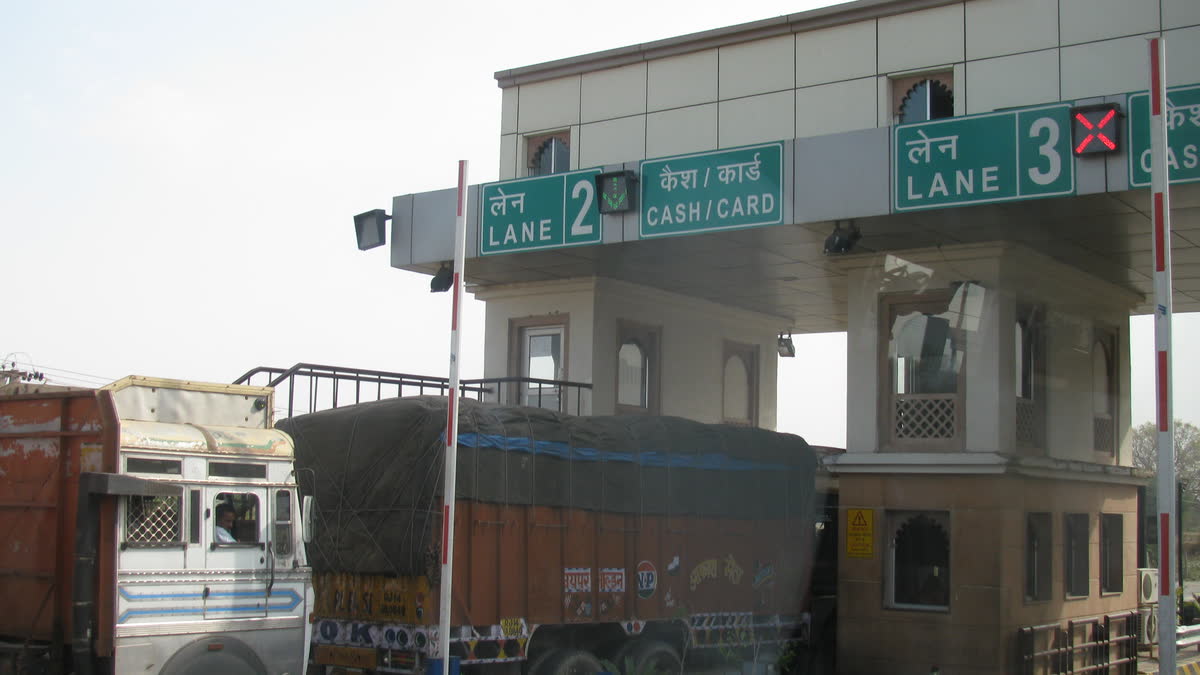
Insurance is one part of a commercial vehicle's running-cost sheet. Use the Fuel Cost Calculator for regular fuel spend, the toll charges calculator for route costs, the road-trip planner for longer work trips and live fuel prices when updating a fleet budget.
This is not a reason to select the lowest premium. It is a way to see the trade-off: an excluded repair, an uncovered accessory or an invalid permit can cost more than the difference between two quotes, while an unnecessary add-on can raise recurring cost without matching the vehicle's use.
What to check before paying the renewal premium
- Match registration class, GVW, seating or carrying capacity and declared use with the RC and permit.
- Compare liability-only, package and standalone own-damage sections line by line rather than comparing only the final payable amount.
- Confirm IDV, accessory values, compulsory deductible and any voluntary deductible.
- Verify NCB percentage, claim history, policy expiry and the evidence needed to transfer NCB.
- Read exclusions for overloading, unauthorised use, unlicensed drivers, expired permit or fitness, alcohol, mechanical breakdown and wear and tear.
- List add-ons separately and note their limits, waiting periods, claim counts and excesses, especially for paid drivers, goods, towing and EV components.
- Download the policy schedule, customer information sheet and receipt; store them with RC, permit and fitness records.
Frequently asked questions
Is third-party insurance enough for a commercial vehicle?
It is the statutory starting point for use in a public place, but it does not normally pay for damage to the insured vehicle. The vehicle's age, finance status, downtime exposure and ability to absorb repair or theft loss determine how much own-damage protection needs to be compared.
Does NCB reduce the entire commercial vehicle insurance premium?
No. The policy documents cited above apply NCB to the own-damage premium. Third-party liability, taxes, add-ons and other charges are calculated separately, and the final payable amount varies by vehicle, insurer and profile.
What is the difference between IDV and the vehicle's resale price?
IDV is the sum insured used under the policy for a total-loss or constructive-total-loss assessment. Resale value is a market negotiation and can differ; for a vehicle beyond five years or an obsolete model, the insurer's wording may require an agreed value.
Can a commercial vehicle claim be affected by an expired fitness certificate?
It can become a coverage issue because fitness and permit records are part of the operating and claim context for transport vehicles. The exact outcome depends on the incident, policy wording and applicable law, so keep those documents current and disclose the facts accurately.
Sources
- ET Auto — Online CV insurance adoption rises 46% in October, 3Ws drive demand: Report (24 Nov 2026).
- India Code — The Motor Vehicles Act, 1988 (accessed 25 Nov 2026).
- MoRTH — Production of transport related documents in an electronic form (19 Nov 2018).
- The New India Assurance Company — Commercial Vehicle Insurance (accessed 25 Nov 2026).
- HDFC ERGO — Commercial Vehicle Insurance (accessed 25 Nov 2026).
- Tata AIG — Auto Secure Commercial Vehicle Package Policy wording (14 Oct 2026).
- Future Generali — Future Secure Commercial Vehicle Package Policy prospectus (accessed 25 Nov 2026).
- Reliance General — Commercial Vehicle Package Policy Customer Information Sheet (1 Apr 2025).
- Wikimedia Commons — Indian truck-Full loaded.JPG (6 Dec 2009; photograph by Diego Delso, CC BY-SA 3.0).
This article is for general information only and is not financial, insurance or legal advice.