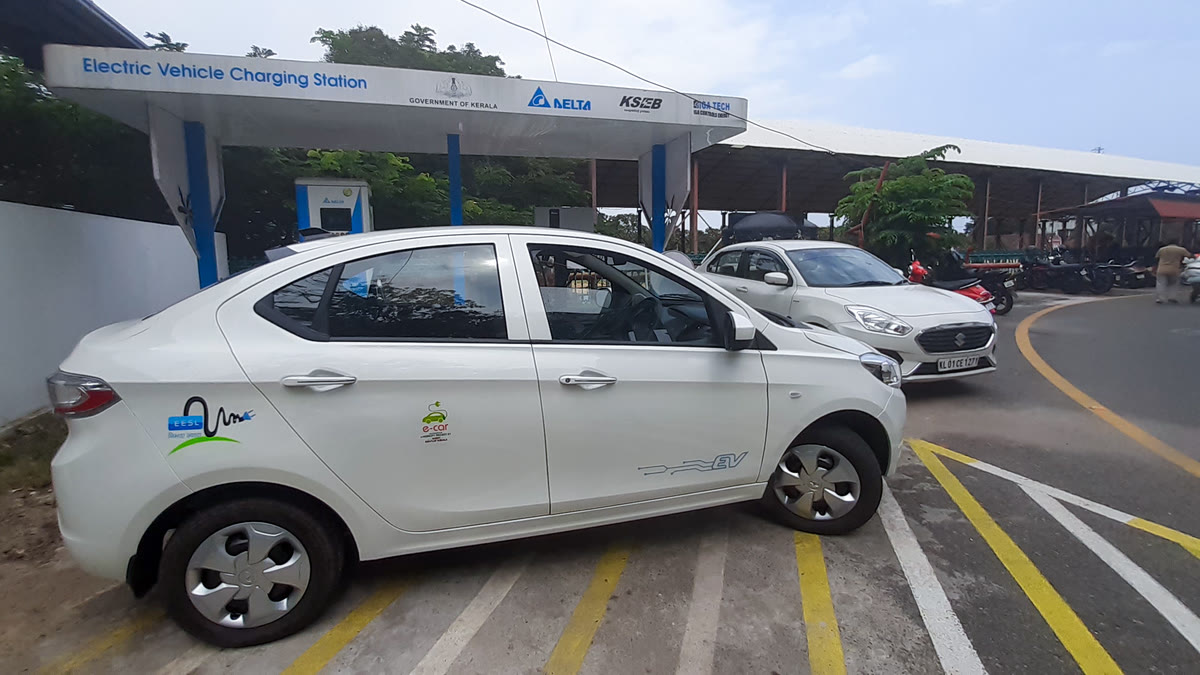
Electric cars in India do not have a nationwide exemption from National Highway tolls. What you pay depends on the road operator, vehicle class and a corridor-specific notification—not simply on the green number plate—so the distinction matters when you compare an EV's total trip cost.
This guide explains the central rule, the separate treatment of electric two-wheelers, Maharashtra's documented corridor waiver, FASTag pass options and a practical way to budget tolls alongside charging. The rule position and dated prices below are checked as of 29 Nov, 2026; an individual plaza can still have its own notified fee.
Key takeaways
- A private electric car, jeep or van has no blanket National Highway toll waiver in the central fee rules.
- Electric two-wheelers are generally not charged user fee on National Highways and National Expressways because the two-wheeler category is exempt—not because the vehicle is electric.
- Maharashtra's 2025 EV policy provides a 100% toll exemption for passenger EVs on three named corridors, subject to the relevant notifications.
- NHAI's FASTag Annual Pass is separate: ₹3,075 for FY 2026–27, valid for one year or 200 crossings, whichever comes first, on designated NH/NE plazas.
- Before a trip, check the road owner, vehicle category, notification date, FASTag status, covered plazas and return-trip crossing count.
The short answer: do EV cars pay toll tax?
Yes, an electric car normally pays the applicable toll when it uses a tolled National Highway section. The Ministry of Road Transport and Highways told the Lok Sabha in an answer dated 23 Mar, 2023 that the National Highway Fee Rules, 2008 had no provision for an electric-vehicle exemption. NHAI's clarification dated 16 Dec, 2019 says user-fee exemptions come from specified rule categories, rather than from a general request by a road user.
A Jan 19, 2026 explanation of NHAI's position by The Economic Times describes Rule 11 as a list of specific exempt categories, such as certain constitutional, defence, emergency and highway-maintenance vehicles. A private EV car is not automatically included. In practical terms, an EV car without a route-specific waiver is treated according to the applicable car, jeep or van class at that fee plaza.
This is different from road tax, registration fees or purchase incentives. A state can reduce a state tax for EVs without changing the toll rule on every National Highway. For a route-specific estimate, use the FuelPrice toll-charge calculator and verify the operator's current notice for any concession.
Why vehicle class and road ownership matter
Private electric cars and SUVs
For a private electric car or SUV, check whether the road is an NHAI National Highway, a state-controlled road, an expressway under a separate concession, and whether a current notification covers that exact corridor. The battery, motor power and green registration plate do not by themselves create a central toll discount.
- NHAI National Highway: expect the regular notified fee for the vehicle class unless a pass or exemption covers the journey.
- State or private expressway: read that road's notification and operator terms; a central National Highway rule may not apply.
Electric scooters and motorcycles
Electric two-wheelers are a separate case. PIB and NHAI clarified on 21 Aug, 2025 that no user fee is levied from two-wheelers on National Highways and National Expressways. Rule 4(4) is the reason: the exemption is tied to the two-wheeler category, not to electric power.
That does not make every road toll-free for a scooter. Business Standard's 27 Jun, 2025 explanation notes that private or state-managed expressways can sit outside the 2008 National Highway fee rules and may set their own terms.
Electric buses and commercial vehicles
Do not transfer a private-car concession to a commercial EV. Eligibility can depend on whether the vehicle is a passenger car, bus, commercial vehicle or another class. The NHAI Annual Pass is published for eligible non-commercial car, jeep and van use; it is not a general commercial-fleet waiver.
Where EV toll waivers do exist
The clearest current example is Maharashtra. Its Electric Vehicle Policy 2025 records a 100% toll-tax exemption for passenger vehicles on the Yashwantrao Chavan Mumbai–Pune Expressway, the Hindu Hrudaysamrat Balasaheb Thackeray Maharashtra Samruddhi Mahamarg and the Atal Bihari Vajpayee Sewri–Nhava Sheva Atal Setu. The policy is dated 23 May, 2025, and the state's later notification for the Samruddhi Mahamarg states that the e-4W and eligible e-bus exemption took effect from 23 Aug, 2025.
This is a route benefit, not a national EV entitlement. A trip can move from a Maharashtra state-controlled corridor to an NHAI section, or into another state's road network, and the toll treatment can change. Check the notification's scope, vehicle category and effective date for the actual road segment.
| Situation | Rule or dated amount | What an EV driver should understand |
|---|---|---|
| Private EV car on a regular NHAI National Highway | No blanket EV waiver in the central fee material as of 29 Nov, 2026 | The applicable car/jeep/van fee normally remains payable. |
| Electric two-wheeler on an NHAI National Highway or National Expressway | ₹0 user fee under the two-wheeler exemption clarified on 21 Aug, 2025 | The zero toll follows the two-wheeler class, not the battery. |
| Passenger EV on the three named Maharashtra corridors | 100% toll exemption recorded in the policy dated 23 May, 2025 | Apply only on the covered corridors and vehicle categories in the operative notification. |
| Eligible non-commercial EV car, jeep or van using designated NH/NE plazas | ₹3,075 for FY 2026–27; one year or 200 crossings, whichever is earlier, from 1 Apr, 2026 | The NHAI Annual Pass is a prepaid pass, not an EV-specific exemption. |
The table compares the rule mechanisms, not a single nationwide toll rate. Plaza fees vary by road section and vehicle class, while a waiver or pass changes collection only within its stated scope.
FASTag passes are different from an EV exemption
NHAI's Annual Pass can make a private EV's covered crossings easier to budget, but it does not exist because the vehicle is electric. NHAI's 15 Mar, 2026 press release and the Ministry's 22 Jul, 2026 release state that the FY 2026–27 price is ₹3,075, covering one year or 200 toll-plaza crossings, whichever is earlier. Rajmargyatra's terms define one crossing as one unidirectional passage; a round trip through the same plaza counts as two crossings.
- It is for eligible non-commercial car, jeep and van use with a valid FASTag linked to the vehicle registration number.
- It applies only to designated National Highway and National Expressway fee plazas, not automatically to every state or private toll road.
- After the pass ends, the FASTag continues as a regular FASTag, subject to normal account and toll rules.
- A corridor-specific EV waiver is a notified exemption; the Annual Pass is a prepaid product with eligibility and coverage limits.
Worked rupee example: compare the crossings
Use this only as an illustration, not as a quoted toll for any particular plaza. Assume an eligible private EV car would be charged ₹150 for each one-way crossing on the covered plazas it uses. Twenty crossings would cost 20 × ₹150 = ₹3,000. Twenty-one crossings would cost 21 × ₹150 = ₹3,150, compared with the dated Annual Pass price of ₹3,075 for FY 2026–27.
The arithmetic crossover in this example is 21 one-way crossings, but the result cannot be applied to every route. Check covered plazas, vehicle eligibility, the one-year expiry and whether a round trip counts as two crossings. The comparison is not needed on a corridor where a current EV waiver already reduces the toll to zero.
How to budget an EV road-trip toll bill
Keep toll and charging as separate lines. A toll waiver does not make charging free, and a lower charging cost does not remove a toll obligation. Use the route first, then calculate each cost from current information:
- Use the FuelPrice road-trip planner to compare the route and identify major road segments.
- Check each segment in the toll-charge tool and note the vehicle class, one-way fee and return-trip treatment.
- Use the EV charging directory for possible stops, then confirm connector and operating details with the station operator.
- Estimate charging from usable battery, real-world consumption and the selected provider's price; for a mixed convoy, use the fuel-cost calculator for petrol or diesel vehicles.
The useful output is charging plus tolls plus parking and other trip expenses. The national EV rule answers only the toll part, and even that answer can change when the road operator changes.
What to check before an EV highway trip
- Map the road owner. Mark NHAI, state-controlled, privately operated and special bridge or expressway segments.
- Confirm the vehicle category. Check private or commercial status, car versus two-wheeler, and bus or goods-vehicle classification.
- Find the current notification. Verify the corridor name, covered vehicle, effective date and whether the waiver is still in force.
- Check pass scope. Confirm eligible plazas, validity, crossing limits, registration-number mapping and excluded roads.
- Check FASTag. Make sure it is affixed, active, linked to the correct vehicle and funded for non-covered tolls.
- Count both directions and save evidence. A return can create two crossings; keep the notification, pass confirmation and transaction messages for any dispute.
Common mistakes to avoid
- Confusing an EV road-tax or registration-fee concession with a toll exemption.
- Assuming a green number plate is a nationwide FASTag exemption.
- Applying a Maharashtra corridor waiver to an NHAI plaza outside the named roads.
- Relying on a dealer, social post or old route screenshot instead of the current operator or government notification.
Frequently asked questions
Do electric cars pay toll on National Highways?
Usually, yes. A private electric car pays the applicable fee for its vehicle class unless a valid route-specific exemption or pass covers that road. The central National Highway material does not create a blanket EV-car waiver.
Are electric scooters exempt from toll?
On National Highways and National Expressways covered by the central rules, two-wheelers do not pay user fee under the clarified exemption. That result comes from the vehicle category, and a private or state-managed expressway can have a separate rule.
Does the FASTag Annual Pass make an EV toll-free everywhere?
No. For FY 2026–27, the published price is ₹3,075 for eligible non-commercial cars, jeeps and vans, with one year or 200 covered crossings, whichever comes first. It applies only to designated NH/NE plazas and is separate from a corridor-specific EV waiver.
Is the Maharashtra EV toll waiver valid across India?
No. The policy names three corridors and the operative notifications determine the covered vehicles and dates. An EV driver leaving those corridors needs to check the next road operator's rules separately.
This article is for general information only and is not financial, insurance or legal advice.
Sources
- Lok Sabha, Answer to Unstarred Question No. 3785: Wayside Amenities on National Highways, 23 Mar, 2023
- NHAI, Clarification on extant rules and guidelines on exemptions from user fee, 16 Dec, 2019
- Maharashtra Transport Department, Maharashtra Electric Vehicle Policy 2025, 23 May, 2025
- Maharashtra State Road Development Corporation, Toll Exemption for EVs on the Nagpur–Mumbai corridor, 22 Aug, 2025
- PIB and NHAI, No user fee for two-wheelers on National Highways and National Expressways, 21 Aug, 2025
- Business Standard, No toll tax for two-wheelers on national highways: Govt clears the air, 27 Jun, 2025
- The Economic Times, NHAI explains toll fee rule: Who is exempt and who can get discounts, 19 Jan, 2026
- NHAI, NHAI to Revise FASTag Annual Pass Fee from 1st April 2026 for FY 2026–27, 15 Mar, 2026
- PIB and MoRTH, FASTAG Based Toll Collection and Digital Tolling System, 22 Jul, 2026
- NHAI Rajmargyatra, Annual Toll Pass Terms and Conditions, accessed 29 Nov, 2026
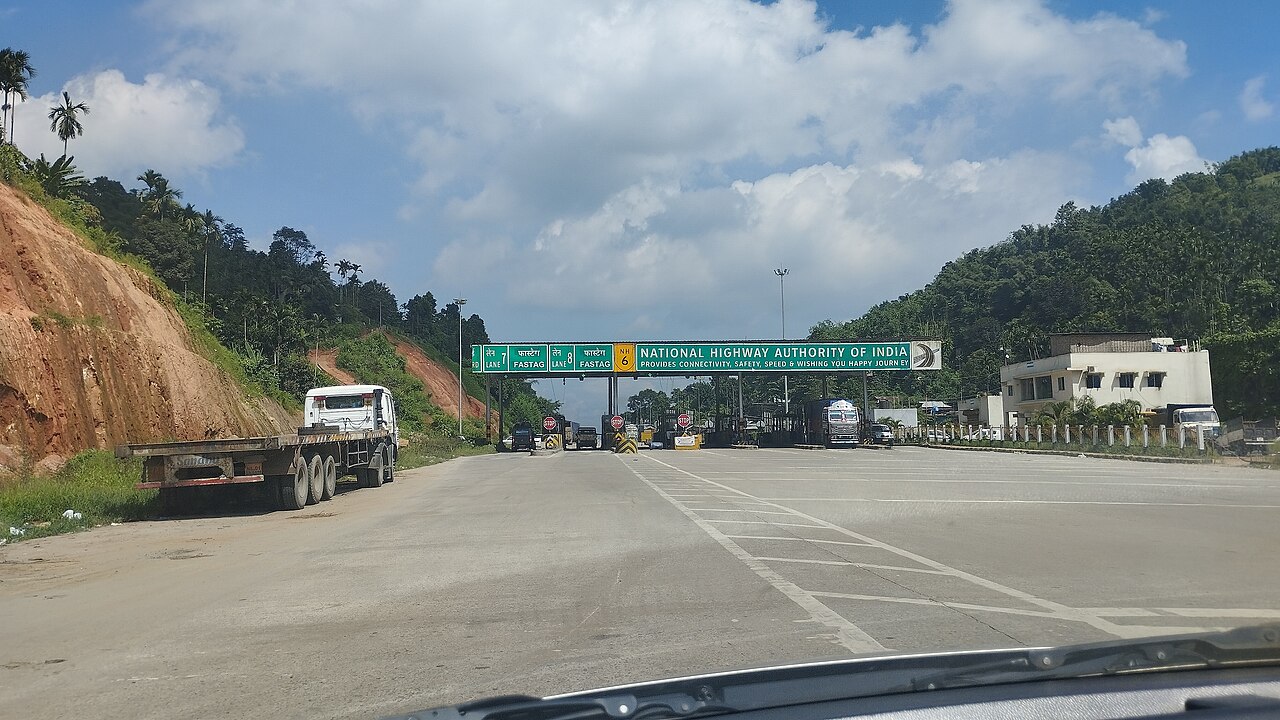
- Image credit: Wikimedia Commons, National Highway 6 Toll Plaza by Arindambasu2, CC BY-SA 4.0, accessed 29 Nov, 2026