Traffic challans do not automatically raise a car insurance premium under a live nationwide rule in India as of November 2026. Reports say the Ministry of Road Transport and Highways is considering a system that would use offences recorded in the previous year when pricing future motor-insurance renewals, but no effective date, offence-wise surcharge or final rate table has been published in the reporting reviewed for this guide.
This guide separates that reported proposal from the rules that apply today. It also explains how a challan differs from an insurance claim, how No Claim Bonus (NCB) is calculated, and what to verify before renewing a policy.
Key takeaways
- A traffic challan and an insurance claim are different records. A challan does not, by itself, reset the standard NCB schedule today.
- Third-party motor insurance is mandatory under the Motor Vehicles Act. Own-damage cover and add-ons are separate parts of a policy.
- NCB is a discount on the own-damage portion, not on the third-party portion. The standard slab rises from 20% after one claim-free year to 50% after five.
- The traffic-linked premium idea is reported as a proposal. The 25 November 2026 reports do not set a nationwide start date or an offence-wise premium table.
- At renewal, compare the separate third-party, own-damage, NCB, IDV, deductible, add-on and tax lines instead of judging only the final total.
Why traffic-linked insurance pricing is in the news
On 25 November 2026, The Times of India reported that the road transport ministry was working on a plan to link future premiums with traffic offences recorded against vehicle owners in the preceding year. The Economic Times reported the same proposal in the context of wider measures such as longer single-premium policies and better insurance compliance. Both reports describe an idea under consideration, not a premium rule already applied by every insurer.
The important distinction is between a reported policy direction and a notified pricing mechanism. The current reports do not say which offences would attract a surcharge, how a contested challan would be handled, whether the record would follow the owner or the vehicle, or how much a renewal would change. Until those details are notified, a driver should not treat a news report as a new tariff.
For the dated development, see the report on the proposed traffic-linked motor premium. The lasting question is how such a model would sit alongside the existing insurance records that already affect a renewal quote.
Challan, claim and policy: three records that should not be mixed up
1. A traffic challan is an enforcement record
A challan records an alleged or established traffic offence under the relevant enforcement process. The 2026 proposal discussed in news reports would use an offence history as a future rating input. It does not mean that every challan currently appears as a separate charge on a motor policy.
2. An insurance claim is a request for a covered loss
A claim is made when the policyholder asks the insurer to pay for an insured loss, such as own-vehicle damage under an own-damage section. NCB is tied to claims made or pending under the policy wording. This is why a challan is not the same event as a claim: one is a traffic-enforcement record and the other is an insurance transaction.
3. A policy record shows legal cover and selected protection
Section 146 of the Motor Vehicles Act, 1988 requires a vehicle used in a public place to have third-party insurance. Section 196 sets the penalty for driving uninsured at a fine of ₹2,000 for a first offence and ₹4,000 for a subsequent offence, with imprisonment also provided for in the section, as of November 2026.
That legal minimum is not the same as comprehensive protection for the car. The difference between third-party, own-damage and personal-accident cover matters at renewal because each section responds to a different risk.
| Record or cover | Position as of November 2026 | Verified number or timing | What to check |
|---|---|---|---|
| Third-party insurance | Mandatory for vehicles used in public places | Section 196: ₹2,000 first offence; ₹4,000 subsequent offence | Validity dates and vehicle details on the certificate |
| Own-damage cover | Protects the insured vehicle subject to policy terms | NCB applies to this portion, not the third-party portion | IDV, deductible, exclusions and add-ons |
| Traffic-linked premium | Reported proposal, not a published nationwide tariff | Reports refer to offences in the previous year; no surcharge slab is stated | Ask for the rule and calculation if a future quote shows a new line |
| Longer single-premium cover | Separate proposal mentioned in the same reporting | Four years for cars and six years for two-wheelers were reported as possible terms | Do not treat a proposed term as an available policy unless the insurer confirms it |
How NCB changes a renewal quote
The standard No Claim Bonus schedule is based on claim-free policy years. IRDAI-hosted motor policy wording and current insurer guidance describe NCB as a discount on the own-damage premium, with a maximum of 50%. It does not reduce the third-party premium.
The following slabs are the commonly published schedule as of November 2026. Policy terms, product design and add-on conditions can differ, so the schedule on the expiring policy and the renewal quote remains the reference for a particular vehicle.
| Consecutive claim-free years | NCB discount on own-damage premium | Where it applies |
|---|---|---|
| 1 year | 20% | Own-damage portion only |
| 2 years | 25% | Own-damage portion only |
| 3 years | 35% | Own-damage portion only |
| 4 years | 45% | Own-damage portion only |
| 5 years | 50% | Maximum commonly published slab |
Worked example: why the total premium is not reduced by the NCB percentage
Consider an illustrative November 2026 renewal quote with an own-damage premium of ₹18,000 and a third-party premium of ₹6,000. If the policyholder has three consecutive claim-free years, the 35% NCB applies only to ₹18,000:
- NCB discount: ₹18,000 × 35% = ₹6,300.
- Own-damage premium after NCB: ₹18,000 − ₹6,300 = ₹11,700.
- Illustrative subtotal before GST and add-ons: ₹11,700 + ₹6,000 = ₹17,700.
The figures are a worked example, not a market quote. Actual premiums vary with the vehicle, location, insurer, IDV, deductibles, selected covers, claims and applicable taxes. A traffic challan does not enter this NCB arithmetic under the standard claim-based schedule. If a future traffic-linked model is notified, any new charge would need to be read separately from the NCB line.
What the earlier traffic-point model proposed
This idea is not entirely new. In an official Lok Sabha answer, the government said an IRDAI working group had recommended a framework using traffic-violation points based on the frequency and severity of offences. A January 2021 review by PRS Legislative Research described the proposal as ranging from 10 points for wrong parking to 100 points for drunk driving, with the history affecting premium for two years.
Those figures describe an earlier recommendation, not a live tariff. They are useful for understanding the mechanism, but they should not be used to calculate a current renewal premium. The 2026 reports refer more generally to the previous year's offences and do not confirm that the earlier point values will be adopted.
If a traffic-linked model is formally introduced, the useful questions will be practical:
- Is the record attached to the registered owner, the vehicle, or the named driver?
- Are paid, unpaid, disputed and court-decided challans treated differently?
- What look-back period and offence categories apply?
- Will the premium appear as a separate, explainable line on the renewal quote?
- What correction or appeal route exists when the record is wrong?
Renewal checklist for car owners
Use this checklist before accepting a renewal quote. It is designed to keep a future traffic-pricing change from obscuring the parts of a policy that already matter.
- Check the expiry date. Confirm that third-party and own-damage dates are shown correctly. A valid policy document is more important than relying on an old SMS or email.
- Verify the vehicle and owner details. Match the registration number, engine or chassis details and contact information with the RC and the expiring schedule.
- Check challans through an official channel. If a future insurer quote refers to a violation, keep the challan number and payment or court record so an incorrect match can be questioned.
- Confirm the NCB. Compare the claimed NCB with the previous policy schedule or NCB certificate. A wrong declaration can create a dispute at renewal or claim time.
- Separate the cover layers. Read third-party, own-damage, personal-accident and add-on amounts separately. Do not assume a lower total means the same protection.
- Review IDV and deductible. A lower IDV can reduce a quote but changes the amount considered in a total-loss or theft settlement. A voluntary deductible changes what the owner pays on an eligible claim.
- Read every new line item. If a future quote contains a traffic-related premium, ask the insurer to identify the notification, offence period, calculation and correction process in writing.
- Budget the annual ownership cost. Insurance is one part of the vehicle budget; a fuel-cost calculator can show how a regular commute or road trip compares with the annual premium and other running costs.
For owners comparing a one-year renewal with a longer policy, the multi-year versus annual motor insurance guide explains how premium timing, NCB and renewal dates differ. For the separate legal consequences of an expired or missing policy, see the motor-insurance penalty and validity checklist.
Frequently asked questions
Does a traffic challan cancel my No Claim Bonus?
Not under the standard claim-based NCB schedule. A challan is not the same as an own-damage insurance claim, so it does not by itself reset the NCB percentage. The policy wording and the facts of any actual claim still control the renewal outcome.
Is traffic-linked car insurance pricing a rule in India now?
As of November 2026, the reports used for this guide describe it as a proposal under consideration. They do not publish an effective date or an offence-wise surcharge table. A vehicle owner should rely on the insurer's issued quote and the applicable notification, not on a headline alone.
Does third-party insurance pay to repair my own car?
Third-party cover addresses the policyholder's legal liability to other people and property, subject to the law and policy terms. Damage to the insured car is handled under an own-damage or package section when that cover applies.
Can paying a challan reduce my insurance premium?
There is no universal current rule that converts payment of a challan into an insurance discount. Paying a valid challan resolves the traffic matter under the applicable process, while NCB is calculated from claim history. Any future traffic-linked pricing would need its own notified conditions.
How do I calculate NCB on a renewal quote?
Apply the NCB percentage to the own-damage premium only, then add the third-party premium, selected add-ons and taxes. In the illustrative example above, 35% of ₹18,000 is ₹6,300; it is not 35% of the combined ₹24,000 premium.
Sources
- The Times of India — Government may link motor insurance premiums to traffic violations — 25 Nov 2026
- The Economic Times — Traffic violators to pay more for motor insurance premium? — 25 Nov 2026
- Government of India, Lok Sabha — Linking of Insurance Premium with Traffic Violations — 23 Mar 2020
- PRS Legislative Research — IRDAI seeks feedback on linking motor insurance premium with traffic violations — Jan 2021
- India Code — The Motor Vehicles Act, 1988 — accessed 28 Nov 2026
- IRDAI-hosted motor policy wording — IDV and No Claim Bonus schedule — accessed 28 Nov 2026
- HDFC ERGO — No Claim Bonus in Car Insurance — accessed 28 Nov 2026
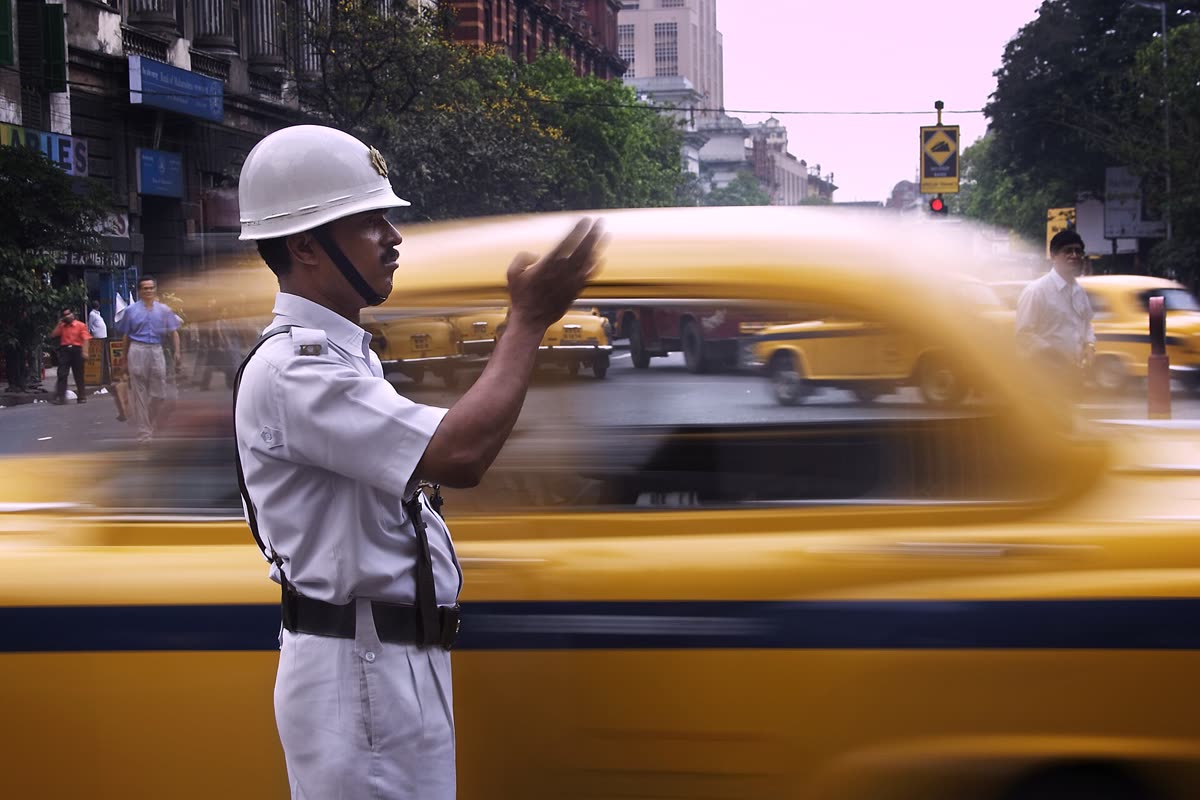
- Image: India - Kolkata traffic cop - 3661.jpg, Jorge Royan, Wikimedia Commons, CC BY-SA 3.0 — accessed 28 Nov 2026
This article is for general information only and is not financial, insurance or legal advice.