EV cars under ₹10 lakh are now a real city-car option in India, but a sub-₹10-lakh ex-showroom price is not the same as an on-road budget or a low monthly cost. As of November 2026, the useful comparison is between the vehicle’s final price, usable range, charging access, seating and the kilometres it will cover.
This guide explains the current examples, shows the charging-cost maths and gives a practical checklist for comparing a small EV with a petrol car without treating a claimed range or a starting price as a promise.
Key takeaways
- Prices below are ex-showroom figures checked in November 2026; registration, insurance, taxes and local charges can push the on-road amount above ₹10 lakh.
- The Tata Tiago EV is a five-seat hatchback with 19.2 kWh and 24 kWh battery options. The MG Comet EV is a four-seat city car; MG lists 17.4 kWh while Autocar India lists 17.3 kWh, so confirm the final variant sheet.
- Certified range is measured under test conditions. Use the manufacturer’s practical estimate or an independent test figure for trip planning.
- Home charging usually determines the running-cost advantage. Public charging availability, tariff and waiting time can change the result.
- Compare the exact variant, charger, battery warranty, insurance, financing, service and on-road quote—not only the entry price.
What the ₹10-lakh label actually means
Most price lists use ex-showroom pricing. That is the vehicle price before several items that are payable at registration or delivery. A buyer comparing a strict ₹10-lakh on-road ceiling must therefore leave room for:
- road tax, registration and any state-specific incentive or waiver;
- insurance, mandatory statutory charges and tax collection where applicable;
- dealer-installed accessories, handling or documentation charges, if quoted;
- home-charger installation, wiring, earthing and any electrical upgrade; and
- loan interest, if the vehicle is financed, plus the effect of any battery-subscription plan.
Manufacturers also change prices and offers. The Tata.ev price page says its prices can change and that the final price is the one applicable at invoicing and delivery. The MG page similarly says ex-showroom prices can vary by region. Treat the table below as a dated comparison, then request a written quotation for the exact city and variant.
Current EV examples under ₹10 lakh
| Example | Ex-showroom price | Battery and seats | Certified range | Practical reading |
|---|---|---|---|---|
| Tata Tiago EV | ₹6.99–10.09 lakh | 19.2 or 24 kWh; 5 seats | 226–285 km | Tata’s C75 estimates are about 160–170 km for the smaller pack and 205–215 km for the 24 kWh pack. |
| MG Comet EV | ₹7.90–10.17 lakh | 17.4 kWh (MG); Autocar lists 17.3 kWh; 4 seats | 230 km | Autocar India recorded about 193 km in its tested-range data; MG describes it as a compact city EV. |
The prices and specifications in this table are manufacturer and Autocar India figures checked on 13 November 2026. The MG page displays ₹7,89,800–₹10,16,800 while Autocar rounds the same range to ₹7.90–10.17 lakh; the small difference is rounding. The certified numbers are not directly comparable with a single real-world test: temperature, traffic, speed, air-conditioning, passengers and tyre pressure all affect energy use. The table is an evidence-led starting point, not a ranking.
What the two formats mean for a buyer
- Tiago EV: the five-seat layout and the 24 kWh option make it the more relevant comparison for a small family car, but the larger-battery variants can sit close to or above a strict on-road budget.
- Comet EV: the compact body and four-seat layout suit urban errands and tight parking. MG’s current product page says it does not support DC fast charging, so a buyer who regularly drives between cities must examine the AC-charging limitation before comparing it with a larger car.
- Battery-as-a-Service: a lower upfront price can come with a separate per-kilometre battery charge or a second finance arrangement. Compare the full monthly and multi-year payment, not the headline entry price.
How to calculate EV charging cost per kilometre
The simple energy formula is:
charging cost per kilometre = electricity used for the trip × tariff ÷ kilometres travelled
For a more useful estimate, use the energy capacity and a practical range rather than the brochure range. Here is an illustrative example, not a tariff quote or a savings promise:
- Assume a 24 kWh battery and a home tariff of ₹8 per kWh.
- A full battery-energy estimate is 24 × ₹8 = ₹192.
- Using a practical range of 205–215 km, the energy cost is roughly ₹0.89–₹0.94 per km before charging losses.
- At 1,000 km a month, that is about ₹890–₹940 in energy cost before losses, fixed charges and public-charging fees.
Actual electricity billed at the meter can be higher than the battery’s nominal kWh because charging has losses. Public charging can also have a different tariff or a time-based fee. Put your own monthly kilometres and electricity rate into the fuel-cost calculator as a comparison exercise, while treating its result as an estimate.
For context only, a petrol example using ₹100 per litre and 18 km per litre gives ₹5.56 per km, or about ₹5,556 for 1,000 km. Those are deliberately transparent assumptions; replace them with the current fuel prices in the relevant city and the vehicle’s observed mileage. Lower energy cost does not automatically mean lower total ownership cost because the purchase price, insurance, loan, tyres, service and resale value also matter.
Charging access is the practical filter
Before comparing claimed range, check where the car will charge on an ordinary week. A small EV is easiest to use when it can be plugged in at a private parking spot overnight. If the car must depend on public charging, the route, operator, connector, payment app and charger uptime become part of the ownership decision.
- Home charging: Tata’s published Tiago.ev FAQ lists about 6.9 hours for a 19.2 kWh pack and 8.7 hours for a 24 kWh pack on a 3.3 kW AC setup. MG lists about 7 hours with its 3.3 kW AC charger and about 3.5 hours with a 7.4 kW AC fast charger for the Comet EV.
- Fast charging: Tata says the current Tiago.ev supports a 30 kW DC fast charger and a 10–80% charge in about 35 minutes. MG’s current Comet EV page says the model does not support DC fast charging.
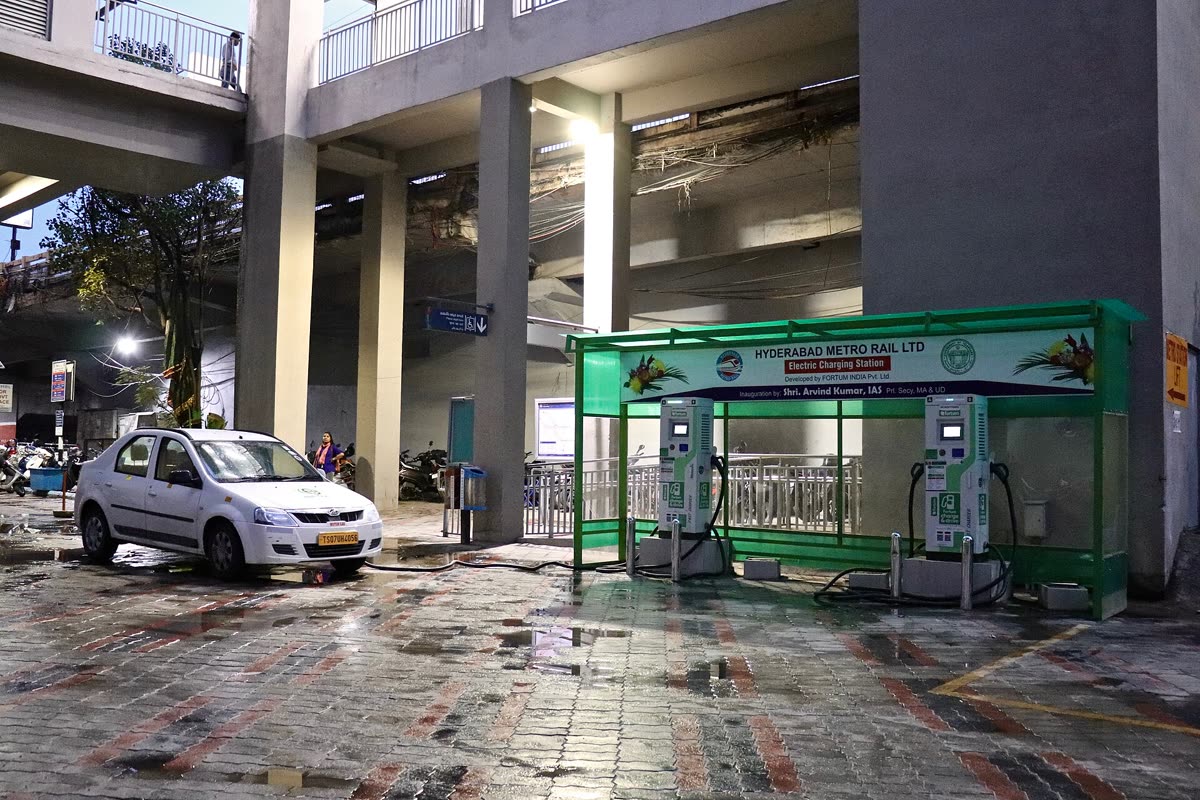
- Public network: the Ministry of Heavy Industries said ₹851 crore had been approved by 28 September 2026 for 8,147 public chargers through three oil marketing companies and 10 states. Approved chargers are not the same thing as operational stops on your route, so check the live location and status before leaving.
Use the state-wise EV charging directory to check stations near home, work and the routes you actually drive. A nearby charger is useful only if its connector, power level, access hours and payment process fit the car and your routine.
Range is a trip-planning number, not a guarantee
A certified 226 km, 285 km or 230 km figure is produced under controlled test conditions. It helps compare variants, but it should not be treated as the distance available in every season or on every highway. A loaded car travelling quickly with the air-conditioner running can use energy faster than a lightly loaded car moving through city traffic.
For a long drive, map charging stops before departure and leave a margin for a closed station, a queue, rain, diversion or a slower-than-expected section. The road-trip planner can help estimate route distance and time; combine it with a charger check rather than assuming that one charger will always be available.
- Ask whether the quoted range is ARAI/MIDC, an internal practical estimate or an independent test.
- Check the battery size and charging curve, not only the maximum range.
- Confirm whether DC fast charging is standard, optional or unavailable.
- Test the rear seat, boot and ground clearance with the people and luggage the car will actually carry.
What to check before paying a booking amount
- Get the final price in writing. Ask for the exact variant, city, ex-showroom price, road tax, registration, insurance, charger, accessories and delivery charges, each shown separately.
- Confirm the battery and range. Check whether the quotation is for the 19.2 kWh or 24 kWh Tiago EV, or which Comet EV variant, and record the manufacturer’s certified figure and practical estimate.
- Inspect charging at home. Confirm parking permission, cable routing, socket location, earthing and whether the installation needs an electrical-load change.
- Test the real use case. Take a drive with the intended passengers. Check visibility, rear access, boot space, seat comfort, turning space and the charger cable’s storage.
- Verify the trip routes. Search the stations near work, family destinations and the two routes used most often. Do not count an approved or listed charger as a guaranteed live charger.
- Read battery and BaaS terms. Check first-owner coverage, transfer rules, kilometre limits, subscription charges, charging exclusions and what happens on resale.
- Compare running cost with fixed cost. Include insurance, service, tyres, loan interest and any charger installation rather than comparing electricity with petrol alone.
- Keep the dated quote. Manufacturer prices and benefits can change between booking, invoicing and delivery; the paperwork should show which terms apply.
FAQ
Can an EV under ₹10 lakh cost more than ₹10 lakh on road?
Yes. The advertised figure is normally ex-showroom. Registration, road tax, insurance, local fees, accessories and charger work can move the final payable amount above the threshold, and state treatment differs.
Which has the longer claimed range: Tiago EV or Comet EV?
In the dated comparison above, the Tiago EV’s 24 kWh version has a 285 km certified range, while the Comet EV is listed at 230 km. The figures come from different vehicles and testing conditions, so daily use still depends on speed, traffic, temperature and charging habits.
Is the MG Comet EV suitable for highway travel?
It can be driven on a highway, but its four-seat layout, compact city-car positioning and lack of DC fast charging make the route and charging plan especially important. A buyer who expects frequent intercity trips should verify AC-charger access and stop time on the exact corridor.
How much does it cost to charge an EV at home?
Multiply the energy drawn from the meter by the applicable electricity tariff, then divide by the distance achieved. The worked example in this guide uses ₹8 per kWh only to show the maths; the actual bill depends on the state tariff, household slab, charging losses and monthly fixed charges.
Sources
- Tata.ev, “Tiago.ev: Features, Range and Technology” — checked 13 Nov, 2026
- Tata.ev, “Tiago.ev Next Gen FAQ: Range, Charging and Battery Warranty” — checked 13 Nov, 2026
- Autocar India, “Which Tata Tiago EV variant should you buy?” — 28 May, 2026
- JSW MG Motor India, “MG Comet EV: Price, Range and Features” — checked 13 Nov, 2026
- Autocar India, “MG Comet (2026): Price, Range and Expert Review” — checked 13 Nov, 2026
- Press Information Bureau, “PM E-DRIVE Scheme” factsheet — 1 Oct, 2026
- DD News, “PM E-DRIVE accelerates India’s electric mobility push” — 11 Nov, 2026
- Wikimedia Commons, “Electric car charging station in Begumpet, Hyderabad” — photograph by iMahesh, CC BY-SA 4.0