A 10 Nov 2026 Chandigarh consumer commission order, reported independently by The Times of India and Outlook Money, put a familiar renewal problem in focus: a wrong date entered from an old motor policy can complicate a later claim even when the correct policy copy was available. The lasting lesson for Indian car owners is practical—check the dates and identifiers on the proposal, policy schedule and digital record before treating a renewal as complete.
This guide explains what to compare, how the No Claim Bonus (NCB) is calculated, why a 90-day NCB window is not a licence to drive without active cover, and what written trail to keep if a policy contains an error. It is a document-checking guide, not a recommendation to buy any particular cover.
- Policy dates are contractual details: compare the current policy period with the previous policy, receipt and proposal form.
- Online status is a useful cross-check: MoRTH says insurance validity is reflected through VAHAN-linked mParivahan and eChallan records.
- NCB applies to own-damage premium: the standard slabs run from 20% after one claim-free year to a maximum 50% after five claim-free years, as of Nov 2026.
- Do not confuse NCB retention with cover: a standard 90-day window can protect NCB eligibility, but it does not make an expired policy active or provide retroactive claim cover.
- Correct errors in writing: keep the old policy, proposal, payment receipt, new schedule, endorsements and insurer correspondence together.
Why policy dates matter at renewal and claim time
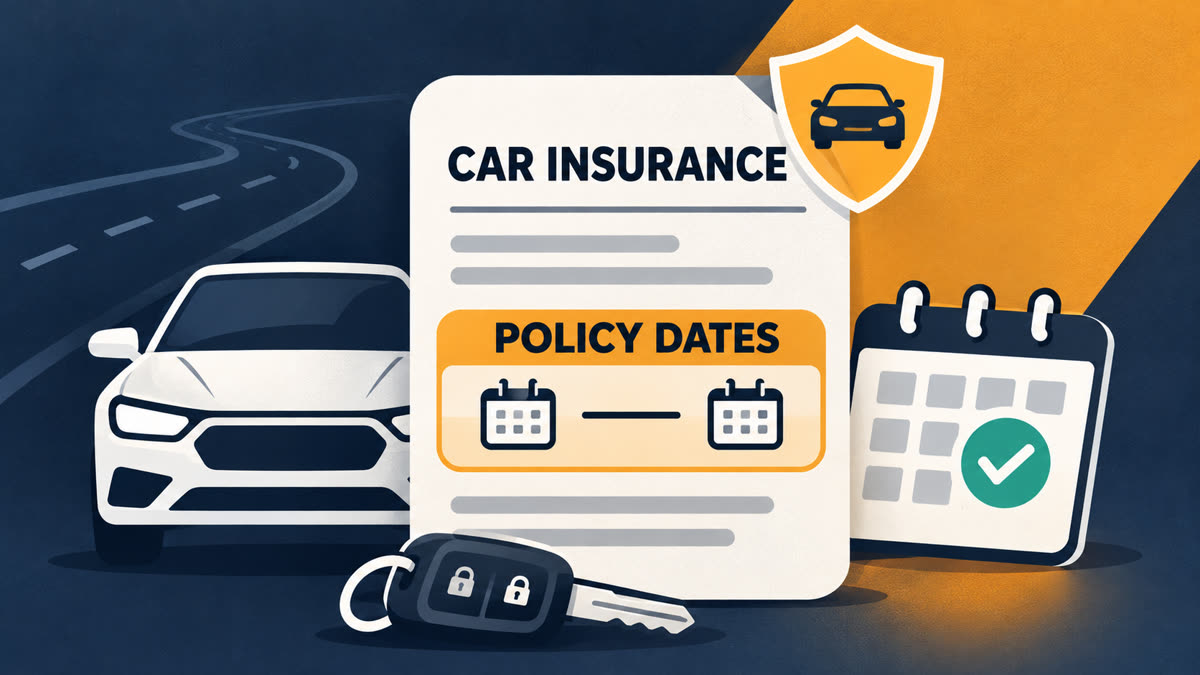
A motor policy is a dated contract. Its schedule identifies the vehicle, cover sections, insured declared value (IDV), premium and exact period of insurance. A date typed into a renewal form can affect continuity, NCB eligibility, inspection and how a reported loss is assessed.
In the Chandigarh dispute, the commission found that the insurer already had an earlier policy showing the correct period even though the proposal form contained different dates. That decision was fact-specific; it does not mean every incorrect declaration will be ignored. The full background is in FuelPrice's report on the policy-date claim dispute.
- Current policy period: establishes when the newly issued cover begins and ends.
- Previous policy and proposal: support continuity, NCB and what was declared before issuance.
- Schedule and endorsements: show what the insurer actually issued, including later corrections.
1. Read the policy schedule before you renew
Open the complete policy schedule rather than relying only on a payment screen, SMS or a short certificate. Use the following point-by-point check:
- Current period of insurance: note the start date, start time if shown, expiry date and expiry time. Do not assume that the payment date is the same as the risk start date.
- Previous policy period: copy the dates from the old schedule or renewal notice. Do not reconstruct them from memory or from a reminder message.
- Vehicle identifiers: match the registration number, make and model, engine number and chassis number with the RC and previous policy. A mismatch can create a separate correction problem even when the date is right.
- Cover sections: identify third-party liability, own damage, personal accident and any selected add-ons. The NCB is relevant to the own-damage section, not every line of the premium.
- IDV and deductibles: check the IDV, compulsory deductible and any voluntary deductible. A lower total quote can reflect a different IDV, deductible or add-on set, not only a different insurer price.
- NCB declaration: check the percentage shown, the claim-free period it represents and whether the insurer has asked for a renewal notice or NCB confirmation.
Download the policy PDF and premium receipt after payment. Keep the previous policy beside it so that a future claim file does not depend on an old email inbox or a partially completed renewal screen.
2. Check the same details online
The Ministry of Road Transport and Highways has said that insurance and renewal data are uploaded to the VAHAN database and that validity is reflected in mParivahan and eChallan records. The government guidance also recognises electronic records from mParivahan and DigiLocker for document validation. Use those records as a second check, while treating the issued policy schedule as the place to read cover terms and endorsements.
- Open mParivahan or the authorised VAHAN-linked service: enter the registration details and note the insurance validity shown for the vehicle.
- Compare the date: check the online expiry against the issued policy PDF. If the dates differ, do not silently choose the one that is convenient.
- Check the insurer portal or app: download the full schedule, receipt and any endorsement or inspection approval linked to the renewal.
- Create an evidence trail: save screenshots, email the insurer with the exact mismatch and keep the ticket or reference number.
For a long drive, the same document check belongs alongside your fuel and route budget. The road-trip planner can help organise the journey, but it cannot replace checking whether the insurance period is active.
3. Understand NCB before accepting a renewal quote
NCB is a discount on the own-damage portion of a motor premium when the qualifying policy period ends without a claim or pending claim. The standard schedule published in motor-policy wordings and insurer FAQs is shown below. The figures are presented as of Nov 2026 and are not a promise of a particular renewal premium.
| Completed claim-free policy years | Standard NCB on own-damage premium | What to verify at renewal |
|---|---|---|
| 0 | 0% | Do not claim a discount without proof |
| 1 | 20% | One full preceding year without a claim |
| 2 | 25% | Two consecutive claim-free years |
| 3 | 35% | Three consecutive claim-free years |
| 4 | 45% | Four consecutive claim-free years |
| 5 or more | 50% maximum | Confirm the cap and the supporting record |
New India Assurance and ICICI Lombard both publish this 20%/25%/35%/45%/50% structure, while the Department of Consumer Affairs consumer guide describes the 20% to 50% range. The discount is on own damage, so it does not automatically reduce the third-party liability portion or every add-on. When changing insurers, a renewal notice, NCB letter or other accepted proof may be needed to transfer the earned percentage.
- Base: confirm which own-damage premium receives the percentage.
- History: check claims, pending claims and any NCB-protection terms.
- Quote: compare IDV, deductibles, add-ons and taxes before comparing totals.
Worked example, illustrative as of Nov 2026: suppose a renewal quote shows an own-damage premium of ₹10,000 before other components and the applicable NCB is 45%. The calculation is ₹10,000 × 45% = ₹4,500 NCB, leaving ₹5,500 for that own-damage component before other policy items. If the applicable NCB were 0%, the difference in this simplified example would be ₹4,500. ICICI Lombard uses the same ₹10,000 and 45% structure in an illustrative FAQ example; actual quotes vary with the vehicle, location, IDV, cover, deductible, taxes and insurer underwriting.
4. What the 90-day NCB window does—and does not—mean
Standard private-car policy wording says NCB is allowed when the policy is renewed within 90 days of the previous policy's expiry. Current insurer guidance also describes 90 days as the window for retaining NCB or transferring it with evidence. This is an NCB rule, not a blanket extension of the expired policy.
- During an uncovered gap: do not assume a future renewal will pay for an accident that occurred before the new cover started.
- Before driving: confirm that the required third-party cover is active. Third-party insurance is mandatory for vehicles used on Indian roads.
- After a lapse: the insurer may require vehicle inspection before issuing or reinstating own-damage cover; HDFC ERGO's renewal guidance says claims cannot be raised until renewal is complete.
- For NCB: retain the old schedule, renewal notice and claim history so the new insurer can verify the percentage.
In short, “renewed within 90 days” and “covered continuously for the accident date” are different questions. A policyholder must check both.
5. If you find a date error, create a written correction trail
Use a consistent sequence instead of editing a downloaded PDF or relying on a verbal assurance:
- List the mismatch: write the date as shown in the old policy, the date entered in the proposal, the date on the new schedule and the date shown online.
- Attach the source documents: include the previous policy PDF, current policy, proposal confirmation, payment receipt and RC extract relevant to the correction.
- Contact the insurer through an official channel: ask for a corrected schedule or endorsement and state exactly which date must be amended.
- Ask for confirmation of impact: request written confirmation of the policy period, NCB percentage and whether any inspection or additional document is required.
- Re-check after issuance: compare the replacement schedule with the original request and then check the VAHAN-linked status again.
- If a loss occurs: notify the insurer promptly through the policy's claim process, preserve the scene and records as required, and keep every survey, repair and communication document.
- If the claim is rejected: request the written reason and policy clause first. Then use the insurer's grievance process and the escalation path in FuelPrice's car insurance complaint and Ombudsman guide.
6. Compare coverage, not only the total premium
A renewal quote is comparable only when IDV, deductibles, add-ons and NCB basis are comparable. A lower total can reflect lower IDV, a higher deductible or fewer add-ons.
- IDV and deductible: compare the insured value and the amount you would bear in a covered own-damage claim.
- Add-ons: check whether zero depreciation, engine protection, roadside assistance or return-to-invoice cover is included and separately priced.
- Documents: ensure the NCB shown matches the claim history and ask what is needed for any ownership or financier change.
For invoice protection, IDV and zero-depreciation differences, see FuelPrice's return-to-invoice insurance guide. For the running-fuel portion of a monthly budget, use the fuel cost calculator without hiding insurance, maintenance or toll costs.
7. Renewal checklist before you pay
- Find the current policy PDF, previous policy and latest NCB proof.
- Match registration, engine and chassis details with the RC and insurer record.
- Read the current and previous policy start and expiry dates exactly.
- Confirm the coverage sections, IDV, deductibles, add-ons and payment total.
- Check the NCB percentage against the claim history and supporting document.
- Use the insurer's official payment or renewal channel and save the receipt.
- Download the final schedule and any endorsement immediately after issuance.
- Check the insurance validity shown in the VAHAN-linked record and raise mismatches in writing.
- Store the documents in one folder with the insurer ticket number and correspondence.
Frequently asked questions
Can an insurer reject a claim because a previous-policy date was entered incorrectly?
It depends on the policy wording, the materiality of the error and the evidence available. The Chandigarh consumer commission's reported order was fact-specific: the insurer already held a copy showing the correct dates. It should not be read as a guarantee that every incorrect declaration will be overlooked.
Does the 90-day NCB window mean the car remains insured?
No. It concerns retention or transfer of NCB under the relevant policy wording. It does not create retroactive cover for an accident during an uninsured gap, so the active period must be checked separately.
Can NCB move to another insurer?
Yes, insurer FAQs say an earned NCB can be transferred when changing insurers, subject to proof such as a renewal notice, NCB letter or accepted declaration. Confirm the percentage and evidence requirements before the new policy is issued.
What should I do if mParivahan and the policy PDF show different dates?
Keep both records, do not assume one is correct, and ask the insurer to correct the record in writing. Save the complaint number, corrected schedule and the later online status check.
Sources
- The Times of India — Chandigarh policy-date claim report — 10 Nov 2026
- Outlook Money — United India policy-date claim report — 10 Nov 2026
- Ministry of Road Transport and Highways — Electronic validation of vehicle documents and insurance validity — 17 Dec 2018
- The New India Assurance Co. — Standard Form for Private Car Package Policy — accessed 11 Nov 2026
- ICICI Lombard — Frequently Asked Questions for Insurance Related Products — accessed 11 Nov 2026
- HDFC ERGO — Renew Expired Car Insurance Policy Online — accessed 11 Nov 2026
- Department of Consumer Affairs — Car Insurance: Package covers and add-on covers — 2015
This article is for general information only and is not financial, insurance or legal advice.