Petrol prices in India are built in layers: the product price charged to dealers, central excise, dealer commission and state VAT or local levies. This guide shows how those layers reach the pump, why the same crude headline can produce different city prices, and how to turn a dated rate into a useful trip budget. The practical rule is simple: use the price for your city and the real mileage of your vehicle, not a national headline, when estimating fuel spend.
Key takeaways
- Crude is only the starting point; the rupee-dollar rate, refining, freight, storage and product margins also affect the dealer price.
- Central excise is a Union-level per-litre layer, while VAT and local levies are set by states and can differ sharply.
- Petrol and diesel are currently outside the effective GST structure, so petrol is not priced with a single national GST rate.
- IOCL's Delhi build-up effective 01 Nov 2026 added ₹81.06, ₹4.47 and ₹16.59 per litre to reach a rounded pump price of ₹102.12.
- A reliable trip budget needs four inputs: distance, realistic mileage, dated city fuel price and tolls.
The short answer: what makes up a litre of petrol?
For a consumer, the pump price is the final result of an upstream product price plus distribution and tax layers. In simplified form:
Retail petrol price = product and refinery-linked price + logistics and marketing components + central excise + dealer commission + state VAT or local levies.
This is a guide to the mechanism, not a promise that every rupee will move immediately when crude, tax or currency conditions change. Oil marketing companies publish retail selling prices, and the price can also vary by outlet within a city. As of 04 Nov 2026, IndianOil says its daily petrol and diesel price changes take effect at 6 am and that its SMS price is indicative for a particular location.
For a live starting point, check the current petrol prices by city before doing the calculation.
1. Crude oil is the starting point, not the pump price
Crude oil is bought and processed into several products, including petrol, diesel, LPG, aviation fuel and petrochemicals. That is why dividing the price of one barrel by 159 litres does not produce the retail price of petrol: one barrel does not become petrol alone, and the refinery must allocate costs across different outputs.
India's crude-linked cost is influenced by the international product market, the exchange rate because crude is traded in US dollars, and the quality and availability of the crude grades refiners buy. The Indian Economic Service explains that parity pricing can include the product value, ocean freight, insurance, port dues and related import or export assumptions. After refining, inland freight, depot handling, storage, marketing and other operating costs help determine the price charged to dealers.
- Global input: crude and refined-product prices can rise or fall.
- Currency effect: a weaker rupee can make a dollar-priced input more expensive in rupee terms even when the dollar oil price is steady.
- Refinery effect: product yields, energy use and refinery margins matter because petrol is one output of a multi-product process.
- Distribution effect: transport from refinery to depot and outlet is part of getting a litre to the consumer.
2. The four retail layers drivers should understand
Product price charged to dealers
IOCL's price-build-up sheet uses the line “Price Charged to Dealers (excluding VAT).” It is not the same thing as a bare crude cost. It represents the upstream and oil-company side of the price before the state VAT line is added, and it can include central excise depending on how the dated sheet presents the components. Always read the labels on the specific build-up instead of treating this line as pure refinery cost.
Central excise duty
The Union government charges excise on petrol as a per-litre duty. It is separate from state VAT. A change in excise can influence the pump price, but it does not guarantee an equal change at the nozzle because OMC pricing, under-recoveries and other costs may offset it.
The mechanism was visible on 27 Mar 2026, when the PIB reported a ₹10-per-litre excise-duty reduction on petrol and diesel while saying retail pump prices would remain stable because the reduction partly offset OMC under-recoveries. The lesson for readers is that a tax headline and a pump-price movement are related, but they are not always identical or simultaneous.
Dealer commission
The dealer commission is the separate amount paid to the retail outlet for selling fuel. It helps support outlet operations such as staff, electricity, maintenance, handling and working capital. PPAC publishes commission schedules, while the dated IOCL build-up shows the average commission used for that Delhi example.
State VAT and local levies
State governments set VAT or sales-tax structures for petrol. Some use a percentage, some combine a percentage with a fixed amount, and some add a cess or other local levy. VAT can also be calculated on a base that includes other price layers and, in several jurisdictions, the dealer commission. This is the main reason two cities can show different pump prices even when the upstream product cost is similar.
3. Worked Delhi example: read the dated build-up
The following is a real, dated example rather than a timeless national rate. IOCL's Delhi price build-up effective 01 Nov 2026 lists the price charged to dealers excluding VAT at ₹81.06 per litre, average dealer commission at ₹4.47 per litre, VAT including VAT on dealer commission at ₹16.59 per litre, and a rounded retail selling price of ₹102.12 per litre.
| Line item | Delhi example | What it means |
|---|---|---|
| Price charged to dealers, excluding VAT | ₹81.06/litre | Upstream product and oil-company price shown by IOCL |
| Average dealer commission | ₹4.47/litre | Retail outlet commission in this dated build-up |
| VAT, including VAT on dealer commission | ₹16.59/litre | Delhi state tax layer in the sheet |
| Rounded retail selling price | ₹102.12/litre | Indicative Delhi pump price |
Math: ₹81.06 + ₹4.47 + ₹16.59 = ₹102.12 per litre. PPAC's official Delhi RSP update also recorded petrol at ₹102.12 per litre on 04 Nov 2026. Because prices are time-sensitive, do not carry this number into a later trip budget without checking the current city rate.
4. Why petrol prices differ between Indian cities
The upstream product may be similar, but state tax structures are not. PPAC's state-tax table, updated 03 Nov 2026, gives the following examples for petrol. These are tax formulas or rates, not a ranking of the final pump price.
| State or market | Petrol tax structure shown by PPAC | How to read it |
|---|---|---|
| Delhi | 19.40% VAT | Percentage-based state VAT |
| Mumbai, Thane and Navi Mumbai | 25% VAT + ₹5.12/litre additional tax | Percentage plus a fixed additional layer |
| Karnataka | 29.84% sales tax | Percentage-based state tax |
| Tamil Nadu | 13% + ₹11.52/litre | Percentage plus a fixed per-litre layer |
| Uttar Pradesh | 19.36% or ₹14.85/litre, whichever is higher | A percentage-or-minimum structure |
So the useful comparison is not “Which city has the national crude price?” It is “Which city, date and tax formula apply at the outlet where I will fill up?” The all-city petrol-price directory is the better reference for that check than a generic social-media price list.
5. Why a crude-price headline may not change your bill immediately
There are four common reasons for a delayed or smaller pass-through:
- Currency movement: a lower dollar crude price can be partly offset by a weaker rupee.
- Product-market movement: refiners buy and sell finished products, so petrol pricing is not a direct barrel-to-litre conversion.
- OMC recovery: a company may absorb part of a cost increase or use a later period to recover earlier under-recoveries.
- Tax decisions: a Union or state tax change can raise or lower the final price, but the timing and size of a retail revision depend on the full build-up.
This is why the most defensible statement is always dated and local: “the indicative price in this city was ₹X per litre on this date,” rather than “crude moved by Y, so petrol must move by Z.”
6. Turn the pump rate into your actual trip cost
The fuel-cost calculation is straightforward once the inputs are honest:
Fuel needed = trip distance ÷ real-world mileage
Fuel cost = fuel needed × city petrol price
Illustrative worked example: assume a 1,000 km round trip, 18 km/litre real-world mileage and a dated petrol price of ₹102.12/litre. Fuel needed is 1,000 ÷ 18 = 55.56 litres. Fuel cost is 55.56 × ₹102.12, or about ₹5,673. This is an assumption-based example, not a claim about every hatchback; traffic, load, tyre pressure, speed, air-conditioning and driving style can change mileage.
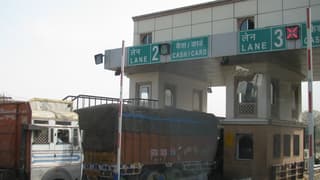
For your own trip, put the distance and mileage into the FuelPrice fuel-cost calculator. Then add tolls separately through the toll-charge calculator; tolls are not part of the fuel rate. If the route has several stops or alternative corridors, the road-trip planner can help you compare the complete budget, including distance and time.
What to check before you budget
- Write down the city, outlet area and date for the petrol price.
- Use a current price source; do not reuse last month's screenshot.
- Use your vehicle's observed mileage over several fills, not only the brochure claim.
- Calculate fuel as distance divided by mileage, then multiply by the dated price.
- Add tolls, parking, charging or other route costs as separate lines.
- For a return trip, include the full route distance and a buffer only if you label it as an assumption.
FAQs
Why is petrol more expensive in one city than another?
The biggest structural reason is the state tax layer. PPAC's current table shows that states can use different percentage rates, fixed per-litre amounts, cesses or minimum-tax formulas, so the same upstream product price can lead to different retail prices.
Is petrol included under GST in India?
Petrol is currently outside the effective GST structure. The GST Council and CBIC explain that motor spirit, high-speed diesel, crude, natural gas and aviation turbine fuel were kept outside GST pending a future date notified on the Council's recommendation; petrol is therefore priced through excise and state VAT or sales-tax layers.
Does a fall in crude oil always reduce petrol prices immediately?
No. Currency changes, refined-product prices, freight, OMC recovery decisions and taxes can change the pass-through. A dated city-level pump price is the number to use for a trip budget.
How do I calculate fuel cost for a road trip?
Divide the total distance by realistic mileage to estimate litres, then multiply litres by the petrol price for the city where you expect to fill up. Add tolls separately and use the FuelPrice calculator when you want a route-specific estimate.
Sources
- Indian Oil Corporation, “Price Buildup of Petrol at Delhi effective 01-Nov-26”, 01 Nov 2026.
- Indian Oil Corporation, “Petrol and Diesel Price”, accessed 04 Nov 2026.
- Petroleum Planning & Analysis Cell, “RSP of Petrol in Delhi as per IOCL outlet”, 04 Nov 2026.
- Petroleum Planning & Analysis Cell, “VAT/Sales Tax/GST Rates”, updated 03 Nov 2026.
- Petroleum Planning & Analysis Cell, “Dealers/Distributors Commission on Petrol, Diesel, PDS Kerosene & Domestic LPG”, updated 04 Nov 2026.
- Indian Economic Service, “Parity Pricing of petroleum products in India”, accessed 04 Nov 2026.
- Business Standard, “From crude to pump: How petrol is priced in India and who gets what share”, 15 May 2026.
- Press Information Bureau, “Government Slashes Excise Duty on Petrol and Diesel to Shield Consumers and OMCs from Global Oil Shock”, 27 Mar 2026.
- GST Council, “GST FAQ: commodities kept outside the purview of GST”, accessed 04 Nov 2026.
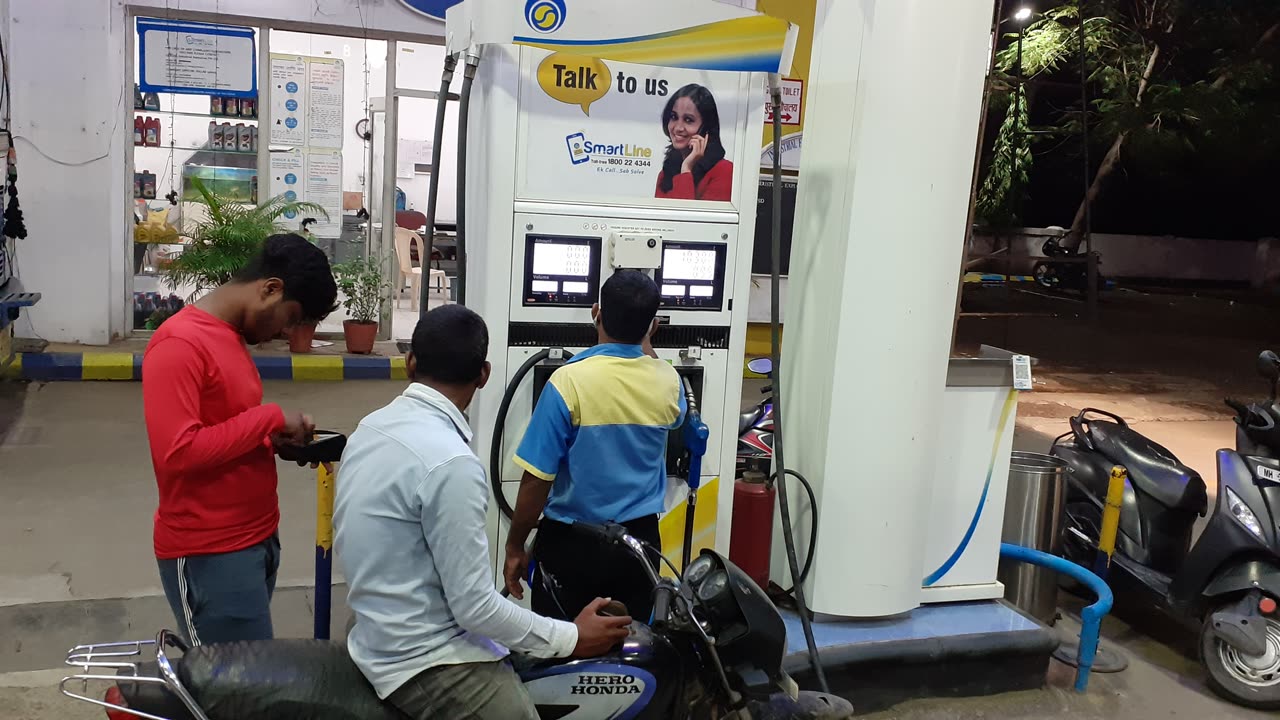
- Image credit: Ganesh Dhamodkar, “Bharat Petroleum Petrol Pump near Nagpur.jpg”, 26 Jun 2021, Wikimedia Commons, CC BY-SA 4.0.
This article is for general information only and is not financial, insurance or legal advice.