The shorter route is not always the cheaper route. This guide shows how to compare two Indian road routes using fuel consumed, tolls, travel time, route conditions and a clear rupee calculation, so you can choose with the right trade-off visible.
The most useful habit is to calculate the same origin, destination, vehicle, fuel price and journey direction for both options. Then check the live toll and traffic information immediately before leaving because a bypass, lane restriction or revised fee can change the result.
Key takeaways
- Compare total vehicle cost as fuel cost plus tolls, then separately consider the value of extra time.
- Use your car's real highway mileage, not only its brochure figure, and date the fuel price used in the calculation.
- Check tolls by route and vehicle class through NHAI's current route information before trusting an old screenshot or estimate.
- Include FASTag Annual Pass eligibility, local concessions, parking, permits and likely detours only when they apply to that route.
- Keep the cheapest calculation subordinate to road safety, road quality, rest opportunities and live conditions.
Why route comparison matters in India
Road distance, travel time and toll exposure can change when a bypass opens or a lane is restricted. The Tribune and Hindustan Times both reported on 2 Nov 2026 that the 4.5-km Kangra bypass opened on a trial basis; The Tribune reported a trial journey between Kangra and Ranital falling from more than 30 minutes to 15 minutes. That is a dated example, not a permanent promise for every driver, but it shows why route inputs need to be refreshed rather than copied from an old trip.
A route that looks cheaper because it avoids a toll may use more fuel in slow town traffic. A faster expressway may cost more at toll plazas but reduce stop-start driving, fatigue and arrival uncertainty. The correct comparison depends on what matters for that particular trip: cash outlay, arrival time, vehicle load, passengers, safety or reliability.
The four numbers to compare
1. Distance and real-world fuel use
For each route, record the one-way distance and use a realistic mileage figure for the same vehicle. The basic calculation is:
- Fuel required = route distance divided by actual mileage.
- Fuel cost = fuel required multiplied by the dated pump price.
- Fuel buffer = an extra allowance you choose for traffic, hills, air-conditioning, detours or a difficult road surface.
Do not change the mileage assumption between Route A and Route B unless the road conditions genuinely justify it. A highway run, a hilly section and a congested market approach can produce different results. If you have your own recent fuel records, they are more useful for budgeting than a laboratory or brochure figure.
2. Toll and pass cost
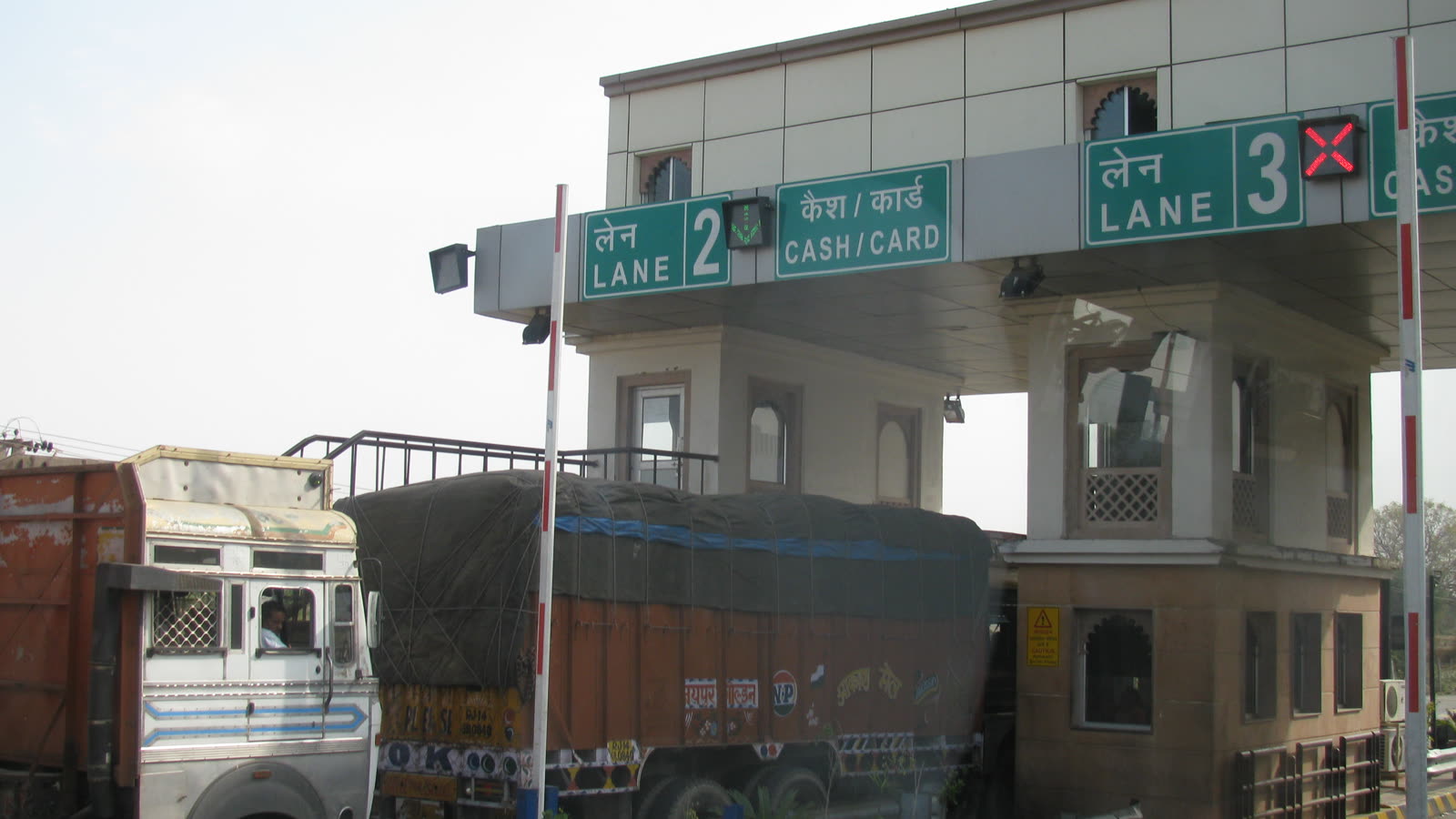
List every toll plaza on each route and confirm the fee for your vehicle category. NHAI's Rajmargyatra service is designed to show the applicable user fee for a plaza or a journey between two stations, while NHAI's Toll Information System also provides route-level toll and estimated travel information. Use the current route result, not a generic toll number copied from a travel forum.
For a return trip, run the calculation for both directions. A return journey does not always equal a simple two-times multiplication because return concessions, closed toll systems, local passes, route changes and the toll operator's current notification can affect the payable amount.
3. Time and delay exposure
Record the estimated driving time, then consider the risk around that estimate. A route through a city may have a low toll but a wide peak-hour range. A tolled route may be more predictable, but an incident, weather event or work zone can reverse that advantage.
Time is not automatically a rupee cost. If the trip is for work, a delivery or a paid driver, you may choose an hourly value for the time difference. If it is a family trip, the better route may be the one with safer stops and less fatigue even when the cash difference is small. Keep this as a separate decision line instead of hiding it inside the fuel number.
4. Other route-specific costs
- Add parking, state entry charges, permits or ferry fees where relevant.
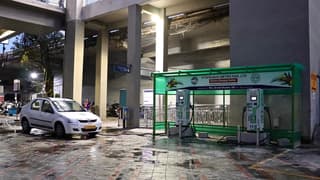
- For an EV, replace litres with usable energy and add charging-stop time; use the EV charging-station directory to check the practical stop plan.
- For a commercial vehicle, include vehicle-class tolls, loading restrictions, driver time and route permits.
- For a two-wheeler, verify whether the particular road or facility has a separate policy; do not assume a car toll estimate applies.
Current reference inputs for a dated estimate
Fuel prices and toll products change. The following values are reference inputs, not a promise of the price at every outlet or the eligibility of every road. The Delhi fuel figures were listed as the IOCL outlet rates in PPAC material on 2 Nov 2026 and cross-checked against a dated Delhi city-rate listing. NHAI and PIB describe the Annual Pass terms for FY 2026–27.
| Input | Verified value | How to use it |
|---|---|---|
| Delhi petrol | ₹102.12 per litre, as of 2 Nov 2026 | Multiply by the litres required for a petrol route. |
| Delhi diesel | ₹95.20 per litre, as of 2 Nov 2026 | Use only for a diesel vehicle and the relevant pump location. |
| FASTag Annual Pass | ₹3,075 for FY 2026–27; one year or 200 eligible toll-plaza crossings, whichever comes first | Compare the pass's applicable cost with the regular toll total only after checking eligible plazas and vehicle status. |
| Route toll source | Current plaza and route result from NHAI's route information service | Check the vehicle category, route, concessions and any recent notification. |
For daily prices in another city, use the live fuel-price pages and record the city and date in your notes. A price from Delhi should not be silently reused for Mumbai, Bengaluru, Jaipur or a highway stop in another state.
Worked rupee example: when the toll-free route is not the fastest choice
The following is an illustrative comparison, not a quote for a named corridor. Replace the route distance, travel time and toll with the current values for your trip. Assume a petrol car gives 15 km per litre, and use the Delhi petrol reference of ₹102.12 per litre as of 2 Nov 2026.
| Illustrative route | Distance | Driving time | Toll | Fuel cost | Fuel plus toll |
|---|---|---|---|---|---|
| Route A: longer in traffic, lower toll | 240 km | 4 hours 10 minutes | ₹300 | 240 ÷ 15 × ₹102.12 = ₹1,633.92 | ₹1,933.92 |
| Route B: shorter time, higher toll | 270 km | 3 hours 20 minutes | ₹650 | 270 ÷ 15 × ₹102.12 = ₹1,838.16 | ₹2,488.16 |
On cash outlay alone, Route A is ₹554.24 cheaper. It also takes 50 minutes longer in this illustration. If a driver assigns a personal value of ₹500 per hour to that extra time, the time difference is about ₹416.67; the remaining cash advantage of Route A is about ₹137.57. That does not make Route A universally better. It simply makes the trade-off visible so the driver can apply their own priority.
If the longer route is likely to lower mileage because of stop-start traffic, rerun the calculation with the lower real-world figure. If Route B has safer rest stops or avoids a recurring bottleneck, record that qualitative benefit instead of pretending the spreadsheet has captured it. For a quick starting point, the fuel-cost calculator can handle the fuel side, while the toll total should be checked separately.
How the FASTag Annual Pass changes the comparison
The Annual Pass is a prepaid product for eligible non-commercial vehicles with a valid FASTag. PIB reported the FY 2026–27 price as ₹3,075, with validity for one year or 200 eligible National Highway and National Expressway toll-plaza crossings, whichever comes first. At full use, the arithmetic average is ₹15.38 per eligible crossing, calculated as ₹3,075 divided by 200. That is an average allocation, not a guaranteed saving on a particular trip.
- Check the eligible-plaza list before treating a route's regular toll as covered.
- Check that the FASTag is active, affixed to the same vehicle and linked to the correct registration.
- Do not count a state-road toll, private facility or excluded plaza as covered without verification.
- Compare the pass against the tolls you realistically expect to use during its validity period, rather than against an ideal maximum.
For the final pre-trip amount, open the toll-charge calculator hub and cross-check the route, vehicle class and direction. The pass may change the marginal toll on an eligible crossing, but it does not remove fuel, parking, food, charging or time costs.
What barrierless tolling and e-notices mean for budgeting
NHAI's 2026 fee-compliance release says that when electronic toll collection records a passage but the applicable user fee is not received, it is treated as an unpaid user fee. The release says an e-notice can require twice the applicable toll, while payment within 72 hours allows the original user fee to be paid. It also sets a 72-hour window for a representation and says that an unpaid amount beyond 15 days, where no representation is pending, may be recorded in VAHAN and affect vehicle-related services.
That rule makes transaction checking part of route budgeting. Keep the registered mobile number working, review the FASTag alert after a trip and save the route and vehicle details if an unfamiliar notice appears. These are compliance checks, not a reason to add a speculative penalty to every normal route estimate.
What to check before choosing a route
- Enter the same origin, destination, departure window and via points for both route options.
- Decide whether the calculation is one-way or return and keep that choice identical.
- Record the current distance, estimated time and any visible closure, diversion or work-zone warning.
- Use a real-world mileage figure for the same vehicle, load and fuel type.
- Record the fuel city, pump rate and date; refresh it if the trip moves into another state.
- Verify each toll by vehicle category and check whether a local concession or Annual Pass actually applies.
- Check FASTag balance, tag status, registered vehicle details and the official route or plaza result.
- Add parking, permits, ferry fees, charging stops, meal stops and a reasonable contingency where they are relevant.
- Choose the route only after considering road quality, safe stopping places, weather, fatigue and the cost of being delayed.
FAQ
Is a toll-free route always cheaper?
No. A toll-free road can be longer, slower or more congested, increasing fuel use and time. Compare fuel and toll together, then consider the practical time and safety difference.
Should I use the car's claimed mileage?
Use the figure that best represents the vehicle on the route you are planning. A recent personal fuel record is usually a better budgeting input than a brochure number, especially when the trip includes traffic, hills, luggage or heavy air-conditioning use.
Does the FASTag Annual Pass cover every toll road?
No. The pass is limited to eligible National Highway and National Expressway plazas and eligible non-commercial vehicles under the published terms. Check the current plaza list before subtracting a toll from your estimate.
How often should I refresh a route-cost estimate?
Refresh it when the route has a new bypass, a lane closure, a toll notification, a change in pass eligibility or a significant fuel-price movement. For a departure-day estimate, check the route and toll result again before setting out.
Sources
- Petroleum Planning and Analysis Cell — RSP of Petrol and Diesel in Delhi as per IOCL outlet — 2 Nov 2026 listing
- TimesAuto — Petrol, diesel and CNG price in North Delhi — 2 Nov 2026
- NHAI Rajmargyatra — About Us: route and toll information service — accessed 3 Nov 2026
- NHAI — Sustainability Report FY 2023–24, Toll Information System description — 2025
- Press Information Bureau — FASTag Annual Pass Reaches One Crore Milestone — 28 Sep 2026
- The Economic Times — NHAI to revise FASTag Annual Pass fee to ₹3,075 for FY 2026–27 — 15 Mar 2026
- NHAI — National Highways Fee Rules, 2026 amended to strengthen toll compliance and digital enforcement — 18 Mar 2026
- The Tribune — Kangra bypass opens to traffic on trial basis; 4.5-km NHAI stretch cuts Kangra–Ranital travel time to 15 minutes — 2 Nov 2026
- Hindustan Times — NHAI opens Kangra bypass on trial basis — 2 Nov 2026
- Wikimedia Commons — India Toll Station.JPG, Zenit, 15 Apr 2009, CC BY-SA 3.0