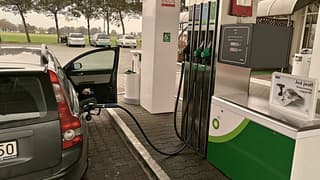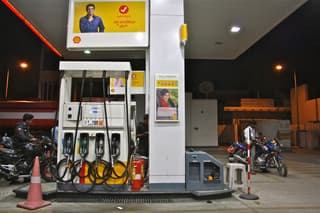
E100 flex-fuel cars are designed for higher-ethanol fuel, but an ordinary petrol car that is compatible with E20 is not automatically safe for E85 or E100. This guide explains how to read the vehicle label, estimate the running cost, check insurance wording and preserve the documents that matter if a fuel-related claim arises.
The practical takeaway is simple: treat the manufacturer’s declared fuel range as the starting point, then match that record across the RC, policy schedule and owner’s manual. The 26 Oct 2026 MoRTH rule recognises E100 in the vehicle-certification framework, but it does not convert existing petrol cars into flex-fuel cars.
For the background event, read the FuelPrice report on E100 flex-fuel insurance checks. The guide below is deliberately broader than that news update so it remains useful when the headline is no longer fresh.
Key takeaways
- E20, E85 and E100 are different fuel specifications. A vehicle’s E20 compatibility does not establish E85 or E100 compatibility.
- MoRTH’s 26 Oct 2026 update expressly includes E100 in the flex-fuel certification framework; it applies to vehicles designed and certified for the fuel.
- Mint’s 1 Nov 2026 report quoted insurers saying E100 compatibility alone is not an automatic premium-loading trigger, although model value, repair cost, location, claims and cover still affect a quote.
- Third-party liability insurance remains a legal requirement. Engine and fuel-system losses depend on the policy’s exclusions, cause of loss and any applicable add-on.
- E100 may need more litres for the same distance. Compare rupees per kilometre, not only the price printed on the pump.
What E100 changes — and what it does not
On 26 Oct 2026, the Ministry of Road Transport and Highways said it had amended the Central Motor Vehicles Rules, 1989, to expressly include E100 alongside E85 for suitable flex-fuel vehicles. The official release says these vehicles must meet the applicable emission and safety requirements, and that the rules take effect from publication in the Official Gazette.
- It changes the certification route: manufacturers can bring vehicles designed for higher ethanol blends within the recognised framework.
- It does not change every petrol car: MoRTH specifically says E85/E100 is for vehicles designed and certified for it.
- It does not require retrofitting: existing owners are not required to modify their vehicles or switch to E85/E100.
- It does not guarantee fuel availability: a legal framework for compatible vehicles is separate from a nationwide retail network.
MoRTH’s earlier notification also requires the manufacturer to define the compatible ethanol level and display it on the vehicle with a clearly visible sticker. That is why a fuel-pump label, brochure claim or internet discussion is not enough on its own: the vehicle’s own sticker, manual and homologation information should agree.
E20 vs E85 vs E100: read the label before filling
The letter E refers to ethanol and the number indicates the blend level used in the regulatory and technical description. The percentages below are fuel-label values, not a promise that every fuel is available at every Indian outlet as of November 2026.
| Fuel label | Ethanol level named in the framework | Who may use it | Owner check |
|---|---|---|---|
| E20 | Up to 20% ethanol | A vehicle declared compatible with E20 | Check the E20 sticker and owner’s manual |
| E85 | Up to 85% ethanol | A flex-fuel vehicle certified for E85 | Confirm the approved range, not just the word petrol |
| E100 | Up to 100% ethanol in the fuel designation; the current PIB explanation describes it as predominantly ethanol | A vehicle specifically designed and certified for E100 or the manufacturer’s declared range | Match the sticker, RC, manual and policy details |
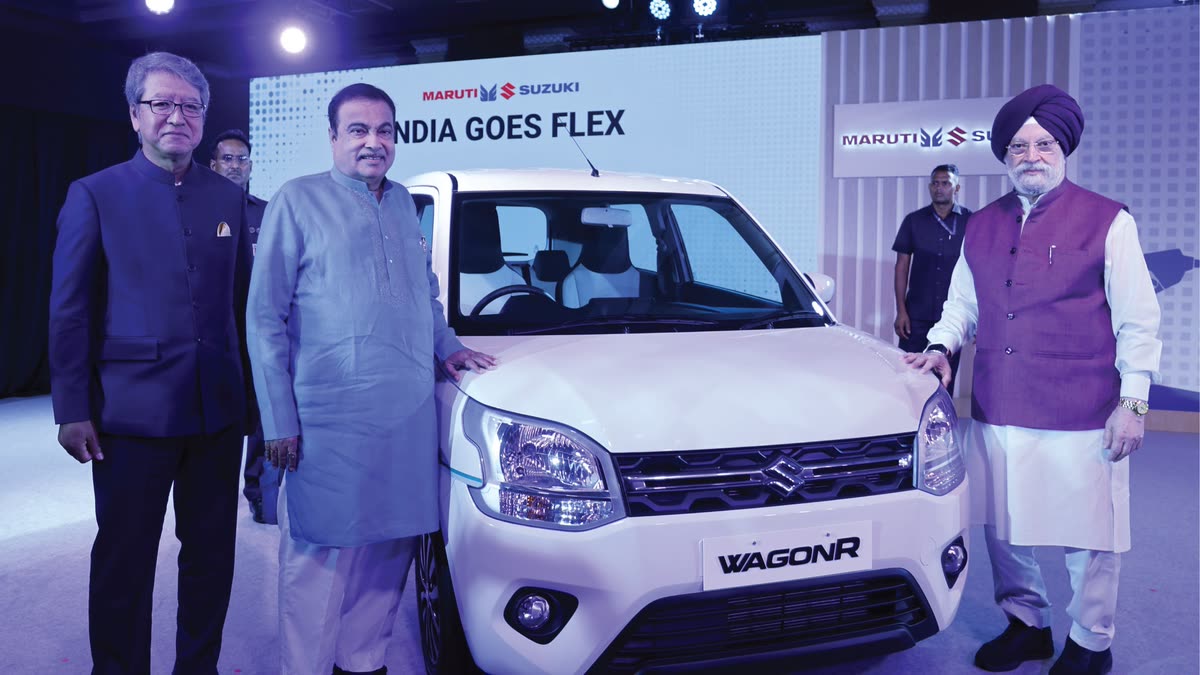
The label and homologation record—not a general internet claim—determine suitability. Maruti Suzuki’s June 2026 announcement illustrates this distinction: its flex-fuel car was described as adapting between E20 and E100, while its regulatory homologation was E85 under the then-applicable CMVR definition.
Why an E100 car can cost more to run
Ethanol has a lower energy content than petrol. A compatible flex-fuel engine can use different blends, but the number of kilometres delivered by each litre depends on the blend, calibration, driving conditions and the vehicle’s measured efficiency. NITI Aayog’s ethanol roadmap records that fuel efficiency on E100 can be more than 30% lower than in a corresponding gasoline engine. That is a planning reference, not a guaranteed loss for every model or driver.
- Use the vehicle’s measured tank-to-tank efficiency where possible; brochure mileage is not the same as real-world mileage.
- Compare cost per kilometre: fuel price divided by kilometres per litre.
- Check whether the route has a reliable supply of the approved fuel before planning a long trip.
- Keep fuel availability separate from insurance: an insurer cannot make an unapproved fuel compatible with the car.
Worked rupee example: compare cost per kilometre
This is an illustrative calculation, not a live pump quote. Assume a car travels 1,000 km in a month, returns 18 km per litre on petrol, and petrol is assumed at ₹100 per litre. Petrol use is 1,000 ÷ 18 = 55.56 litres, so the monthly fuel cost is about ₹5,556.
For a simple stress test, apply a 30% efficiency reduction to the same car when using E100. Efficiency becomes 12.6 km per litre. At an assumed E100 price of ₹80 per litre, the car would use 1,000 ÷ 12.6 = 79.37 litres and cost about ₹6,349. The E100 price that would make this example break even is ₹70 per litre: ₹100 × 12.6 ÷ 18. NITI Aayog’s source says the E100 efficiency reduction can be more than 30%, so actual break-even depends on the vehicle and must be measured rather than assumed.
For your own route, enter distance, mileage and the dated fuel price in the FuelPrice fuel cost calculator. Use the live fuel prices page for the current petrol reference, then verify any E100 price and availability at the specific outlet before budgeting.
Insurance: what E100 compatibility means
Motor insurance has different layers. The Insurance Regulatory and Development Authority of India’s policyholder material states that third-party motor insurance is mandatory for vehicles used on public roads. Own-damage protection is a separate part of the cover and is governed by the policy schedule, terms, deductibles and exclusions.
Will an E100 car automatically cost more to insure?
Not automatically. In a 1 Nov 2026 report, Mint quoted insurer representatives who said factory-built, regulator-recognised E100 compatibility alone was not an inherent reason for a premium loading. The same report explained that insurers can still assess the make, model, variant, vehicle value, repair and replacement costs, safety features, location and claims experience. An insurer’s own public motor-insurance explanation similarly lists IDV, fuel type, make and model, age, location, claim history and selected add-ons as premium factors.
Factory flex-fuel car versus aftermarket conversion
- Factory-built: the vehicle is designed, tested and sold with its declared fuel range. The fuel type, variant and engine details should be recorded consistently in the RC and insurance proposal.
- Aftermarket modification: a conversion kit or fuel-system change can alter the risk and the vehicle record. Disclose it to the insurer before cover or renewal and ask what endorsement or approval is required.
- Mismatch: if the policy says one fuel or variant and the RC or manufacturer record says another, ask for correction before relying on the policy. Keep the insurer’s written response.
What a comprehensive policy may not cover
Comprehensive does not mean every mechanical problem is payable. Policy wording commonly separates accidental own damage from wear and tear, mechanical breakdown, consequential loss and damage caused by improper or contaminated fuel. An insurer’s engine-protection explanation says its add-on is an additional cover and specifically describes protection for certain engine damage caused by water ingression or lubricating-oil leakage; it does not turn every fuel-system problem into an automatic claim.
For an E100 vehicle, read these questions in the policy wording instead of assuming the answer:
- Is the declared E100 or flex-fuel range recorded correctly in the proposal and policy schedule?
- What does the policy say about wrong, contaminated or manufacturer-unapproved fuel?
- Does an engine-protection add-on cover the event you are worried about, and what are its caps, exclusions and claim-notification rules?
- Are fuel-pump, injector, tank, seals and other fuel-system parts named or excluded?
- Is the repair network equipped for the exact flex-fuel variant?
If you suspect misfuelling, stop the engine and do not restart it. Contact roadside assistance or a qualified workshop for safe draining and inspection, and retain the pump receipt and service report. An insurer’s consumer guidance warns that starting the engine after wrong fuelling can worsen damage; claim admissibility still depends on the policy and the documented cause.
What to check before buying or renewing
- Read the fuel sticker on the vehicle and write down the exact approved range, such as E20–E100. Compare it with the owner’s manual and manufacturer specification.
- Check the RC, VIN, engine number, variant and fuel description. Ask the dealer to correct a mismatch before delivery or renewal.
- Obtain quotes for the exact vehicle and date. Compare third-party liability, own-damage cover, IDV, deductibles, depreciation treatment and add-ons rather than comparing only the headline premium.
- Ask the insurer in writing how it treats accidental fuel-system damage, wrong or contaminated fuel, unapproved fuel, engine protection and aftermarket conversion. Save the response with the policy.
- Confirm authorised service and cashless repair access in the places where the car will be driven. Availability of specialist parts can affect downtime even when a claim is admissible.
- Keep the policy schedule, RC, fuel sticker photograph, service invoices, fuel receipts and any inspection report together. These records help establish what fuel the vehicle was designed to use and what happened.
- Renew before the policy expires. The policyholder material and insurer guidance both stress continuous third-party cover and reading the policy conditions before a claim.
For the wider insurance comparison, use the car insurance renewal quote comparison guide and the engine-protection and add-ons guide. Those tools help with the cover structure; the E100-specific fuel range still has to come from the manufacturer and the policy wording.
What to watch next
Watch for clearer fuel ranges, higher-ethanol fuel availability and insurer wording as flex-fuel claims data develops.
Frequently asked questions
Can an E20-compatible petrol car use E100?
No. E20 compatibility alone does not establish suitability for E85 or E100. Use only the blend range declared by the manufacturer on the vehicle, in the manual and in the certification record.
Will E100 compatibility raise my car insurance premium?
It is not an automatic loading by itself, according to insurer comments reported by Mint on 1 Nov 2026. The final quote can still vary with the vehicle’s value, model, repair cost, location, claims history, fuel type and selected cover.
Does comprehensive insurance cover E100 engine damage?
Do not assume it does. Accidental damage, fuel contamination, mechanical breakdown and consequential engine loss can be treated differently, and an engine-protection add-on has its own terms. Read the exclusions and obtain a written clarification for the specific event.
Is E100 cheaper than petrol to run?
Not necessarily. A lower price per litre may be offset by lower kilometres per litre. Calculate cost per kilometre using the vehicle’s measured efficiency and the dated price available on your route.
Sources
- Press Information Bureau, Ministry of Road Transport and Highways — MoRTH updates rules to facilitate E85/E100 flex fuel vehicles (26 Oct 2026)
- MoRTH — G.S.R. 728(E), vehicle ethanol-blend compatibility sticker notification (11 Oct 2021)
- Maruti Suzuki — India Goes Flex: launches India’s first flex-fuel car (4 Jun 2026)
- NITI Aayog — Roadmap for Ethanol Blending in India: 2020–2025 (2021; running-cost and E100 efficiency discussion)
- Mint — E100-compatible cars in India: Will motor insurance premiums rise, and what happens to coverage and claim settlements? (1 Nov 2026)
- IRDAI Policyholder — Introduction to Insurance, motor third-party cover section (accessed Nov 2026)
- ICICI Lombard — Car insurance premium factors and engine-related cover explanations (accessed Nov 2026)
- ICICI Lombard — What Happens if You Put Diesel in a Petrol Car? (21 Nov 2023)
This article is for general information only and is not financial, insurance or legal advice.