Autocar India reports that bookings for the 2027 Kawasaki Z1100 are open and deliveries begin on 19 Oct 2026, while ZigWheels independently reports the India launch at ₹12,79,000 (ex-showroom, Delhi). The important buyer detail is that this is a model-year rollover: both reports describe no mechanical or equipment change from the previous Z1100.
Key takeaways
- Launch: The 2027 model year was reported as launched in India on 19 Oct 2026, with bookings open and deliveries starting from the same date.
- Price: The listed price is ₹12,79,000 ex-showroom Delhi as of 19 Oct 2026; the on-road amount will vary by state.
- Powertrain: The 1,099cc liquid-cooled inline-four produces 136 PS and 113 Nm, according to Kawasaki India and Autocar India.
- Equipment: The 5-inch TFT, bidirectional quickshifter, three-level traction control, dual-channel ABS, cruise control and smartphone connectivity carry over.
- Buyer angle: A written model-year confirmation, on-road price breakup, colour check and delivery terms matter because the 2027 badge does not bring a reported hardware update.
What changed for the 2027 model year?
Autocar India’s 19 Oct 2026 report says the 2027 Z1100 remains mechanically identical to the 2026 version and retains the same price. ZigWheels’ report on the same date describes the change in similar terms: the model year moves from 2026 to 2027, while the design, hardware, software and colour remain unchanged.
That makes the Z1100 a carryover launch rather than a new-generation motorcycle. For a rider comparing 2026 and 2027 stock, the model-year label alone does not signal a new engine, chassis or electronics package. Actual availability, the dealer’s dated invoice and the final on-road quote become more useful checks than the badge year by itself.
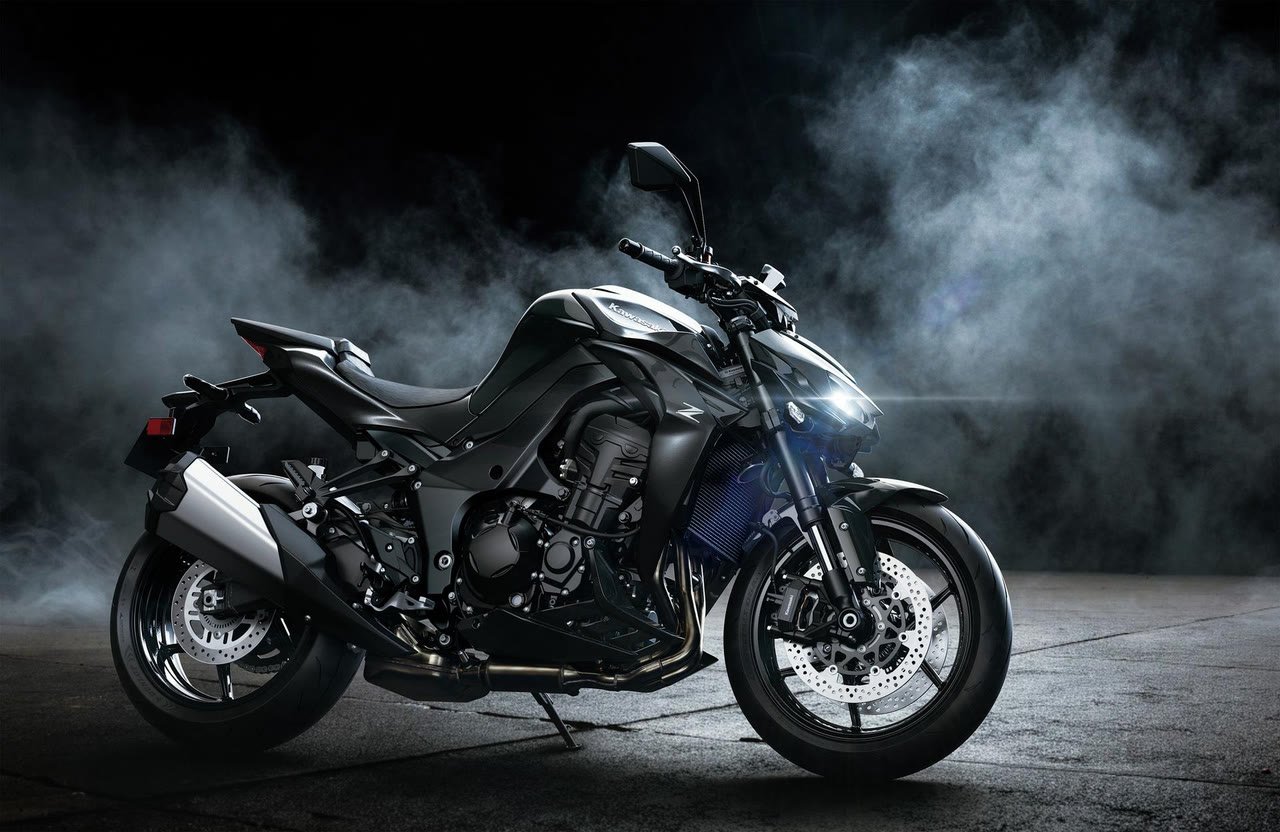
Kawasaki India’s current Z1100 product page lists the Standard edition at ₹12,79,000 and shows the Ebony/Metallic Carbon Grey finish. The page is the primary reference for the motorcycle’s published specification, while the two launch reports establish the 2027 model-year timing.
Engine, features and long-distance use
The official specification sheet lists a 1,099cc liquid-cooled, four-cylinder engine with maximum power of 136 PS and maximum torque of 113 Nm. Autocar India reports the same outputs for the 2027 bike. The figures place the Z1100 in the litre-class performance-bike category, but they do not by themselves determine how easy it will be to use in city traffic or on a long ride.
The equipment list is more relevant to everyday use. Kawasaki lists an IMU-supported rider-assistance package, while Autocar identifies a 5-inch TFT display, bidirectional quickshifter, three-level traction control, dual-channel ABS, cruise control and smartphone connectivity. Cruise control can reduce right-hand workload on long open stretches; traction control and ABS are rider aids, not substitutes for appropriate speed, tyres or braking technique.
The same official specification sheet lists a 17.0-litre fuel tank, checked on 19 Oct 2026. Tank size is not a guaranteed range: traffic, throttle use, speed, payload, tyre condition and riding style all affect fuel use. Riders can estimate a route with the fuel-cost calculator using their own observed efficiency rather than assuming a brochure figure.
Before comparing a ride budget, riders can check live fuel prices for the relevant location. For a longer journey, the road-trip planner can help compare distance, stops and the likely fuel requirement before the motorcycle leaves the city.
What the headline price does—and does not—cover
₹12,79,000 is the reported ex-showroom Delhi price, not a final amount payable at every dealership. Registration and road-tax treatment, insurance, accessories, handling charges if applicable and any financing arrangement can change the total. State-level on-road quotes therefore cannot be inferred from the Delhi ex-showroom figure.
A useful comparison is to separate the purchase price from the ownership budget. The Z1100’s fuel, scheduled servicing, tyres, insurance renewal and protective equipment are recurring or ownership-related costs that do not appear in the launch headline. A rider comparing two model years can ask for both the complete on-road quote and the expected service or warranty terms, then keep running costs separate from the amount due at registration.
Checks before booking
- Confirm that the booking form, invoice and delivery documents identify the motorcycle as the 2027 model year, and match the vehicle details at handover.
- Request a written on-road breakup for the registration state, separating mandatory charges from optional accessories and add-ons.
- Check the colour and equipment list. The launch reports describe the same Ebony/Metallic Carbon Grey colour and standard India specification as before.
- Ask the dealer to state the expected delivery timing and the warranty and service inclusions in writing. Autocar reported deliveries beginning on 19 Oct 2026, but local inventory can vary.
What to watch next
Because the 2027 launch brings no reported hardware update, the next useful information for Indian riders is dealer availability, actual on-road quotes and the support package attached to the sale. The practical difference between one showroom and another may be the final price breakup and delivery timing rather than a different motorcycle.
ZigWheels also notes that the Z1100 SE variant is not offered in India. That matters for shoppers who are comparing the standard bike with higher-spec hardware available in other markets; the current Indian launch reports cover the Standard specification.
The reader takeaway is straightforward: the 2027 Kawasaki Z1100 is a new model-year entry at ₹12.79 lakh ex-showroom Delhi, not a mechanical refresh. The relevant comparison is the complete on-road amount, the carryover rider aids, expected availability and the ongoing fuel and maintenance budget.
Image credit: Kawasaki India official Z1100 product image. Launch reports describe the 2027 model-year styling as unchanged from the preceding Z1100.