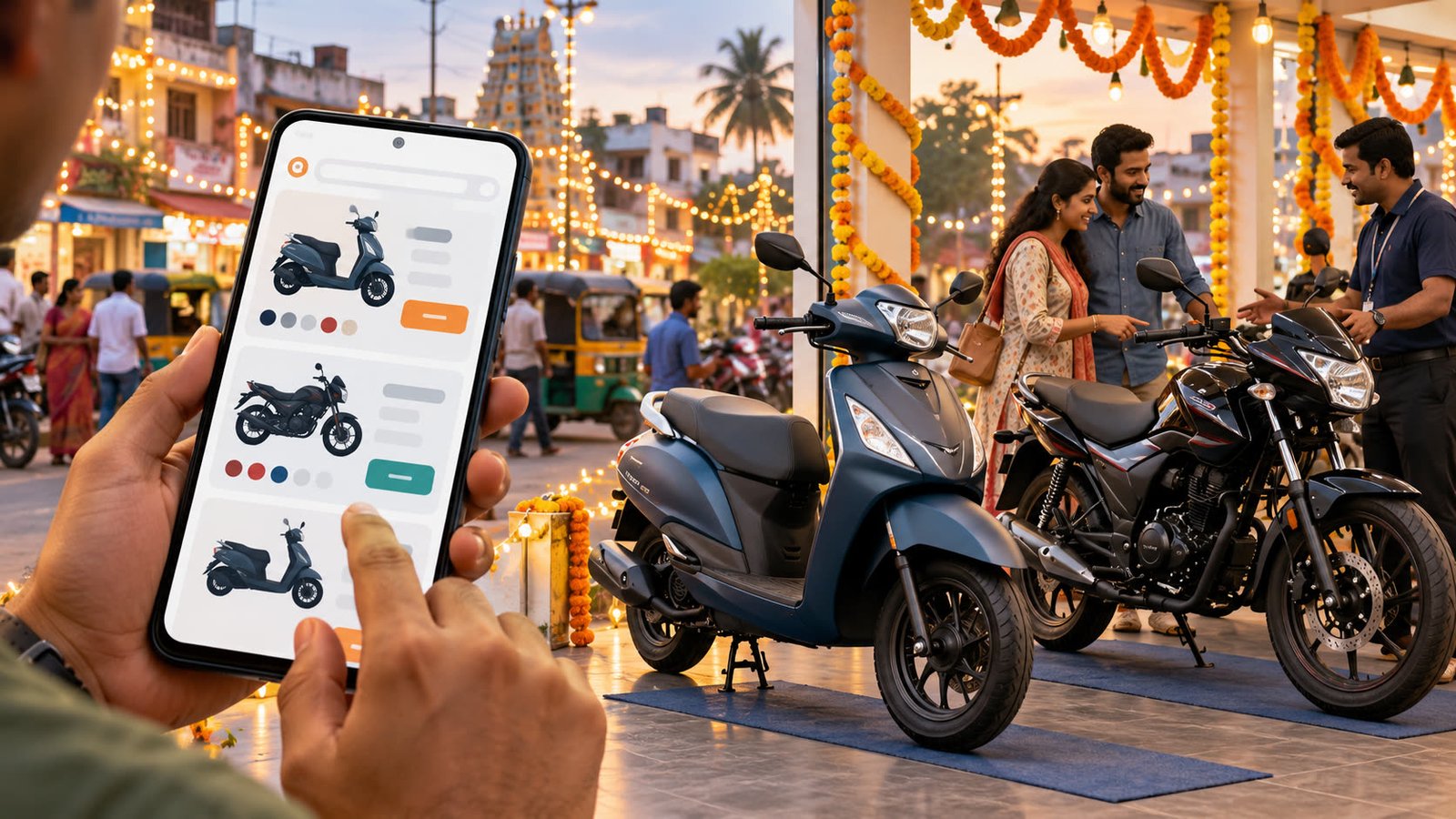
Amazon India has reported a sixfold rise in two-wheeler sales on its platform during the Great Indian Festival 2026, compared with its average-day pace. More than 60% of the platform's two-wheeler sales came from non-metro locations, according to reports published by Autocar Professional and ETAuto on 30 and 31 Oct 2026.
For Indian riders and vehicle buyers, the result points to a wider online research and purchase journey in smaller cities. It is not, however, a national sales or registration count: Amazon did not disclose the number of vehicles sold or the revenue generated during the event.
Key takeaways
- Amazon reported two-wheeler sales at six times its average-day pace during the festive campaign.
- Non-metro locations contributed more than 60% of the platform's two-wheeler sales.
- Electric two-wheeler sales grew eightfold against the platform's average-day pace.
- Everyday commuter motorcycles recorded 13.5 times growth, while premium motorcycles grew 2.5 times.
- The figures describe Amazon's platform performance, not India's complete two-wheeler market.
What Amazon's numbers actually measure
The comparison is a rate of sales against Amazon's average day, not a published year-on-year market volume. That distinction matters. A sixfold increase can show that festive traffic and purchase intent accelerated on the platform without revealing the absolute number of motorcycles or scooters sold.
There is also no public split in the reports between bookings, completed deliveries and registrations. A buyer may place an order online while registration, finance approval, insurance and delivery are completed through a dealer. Those steps can fall in different reporting periods.
The platform's own data is therefore best read as a consumer-behaviour signal. It suggests that online discovery, comparison and payment options are reaching beyond the largest cities, while leaving the size of the wider market to registration and industry data.
Smaller cities lead the reported demand
Amazon said non-metro locations accounted for more than 60% of two-wheeler sales during the festive period. Autocar Professional identified demand from Tier-2 and Tier-3 cities, while ETAuto reported that cities such as Surat, Kota, Visakhapatnam, Bhubaneswar, Prayagraj, Nellore, Warangal, Amritsar, Ludhiana, Belagavi, Kanpur and Bhilwara were among the locations contributing to sales.
That pattern is relevant to riders who may previously have depended on a local showroom for product discovery. An online listing can make specifications and model availability easier to compare, but it does not remove the need to confirm which dealer will deliver, register and service the vehicle in the buyer's district.
EV growth is strong, but the base is undisclosed
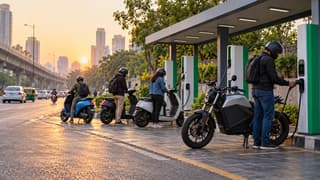
Electric two-wheeler sales on the platform grew eightfold against Amazon's average-day pace, led in the company's reporting by Chetak and Ampere. Everyday commuter models grew 13.5 times, and premium motorcycles grew 2.5 times.
These are relative growth figures, so they should not be read as proof that electric two-wheelers outsold petrol models or that the segment has reached a particular market share. Amazon did not publish the underlying unit base. The useful takeaway is that EVs were part of the festive online shopping mix and that buyers are comparing more than one powertrain.
For an EV buyer, the practical follow-up is local usability. Check the vehicle's warranty terms, charging time and service coverage, then see whether the likely routes have convenient charging points in the state-wise EV charging directory. For a petrol or CNG buyer, estimate recurring running costs with the fuel cost calculator rather than judging a vehicle only by its festive price.
Checks before an online two-wheeler purchase
The growth in online shopping does not change the basic ownership checks. Before paying or confirming an order, a buyer can ask for the following details in writing:
- the ex-showroom price, registration charges, insurance, accessories and every other component of the on-road total;
- the exact variant, manufacturing month, colour, delivery timeline and dealer responsible for fulfilment;
- the test-ride and pre-delivery inspection process, including the procedure for recording any damage or missing equipment;
- the warranty, roadside assistance, service interval and nearest authorised workshop;
- for an EV, the battery warranty, charging equipment, connector type and expected replacement terms; and
- for any finance offer, the interest rate, tenure, processing or documentation charges, late-payment terms and total amount payable. Actual terms vary by customer profile and lender assessment.
Use the road-trip planner to think through typical usage, but treat any online offer as a starting point for verification. A lower displayed monthly payment can reflect a longer tenure or a larger final payment; the total payable is the more useful comparison.
What to watch next
The next test is whether the reported platform surge becomes completed deliveries and registrations after the festive period. Industry-wide registration data, manufacturer dispatches and dealer inventory will give a fuller picture than a single marketplace's average-day comparison.
Amazon's reported figures also do not establish that online buying is replacing showrooms. They do show that the purchase journey is becoming more digitally assisted, particularly in smaller cities. For buyers, the benefit is broader access to information; the responsibility remains to verify the vehicle, paperwork, cost and after-sales support before completing the transaction.
This article is for general information only and is not financial, insurance or legal advice.
Sources
- Autocar Professional — Amazon India Records Sixfold Rise in Two-Wheeler Sales During Festive Season So Far — 30 Oct 2026
- ETAuto — Amazon India reports six-fold rise in two-wheeler sales during Great Indian Festival — 31 Oct 2026
- About Amazon India — From Samsung to Hero MotoCorp: Brands see breakout demand with Amazon Great Indian Festival 2026's record opening — accessed 01 Nov 2026