Astranova Mobility says its lending subsidiary, NovaFusion Capital, has received approval from the Reserve Bank of India to operate as a non-banking financial company (NBFC), according to reports dated 14 and 15 Oct 2026. The move is aimed at financing commercial electric vehicles, but it does not yet publish a new interest rate, repayment tenure or borrower offer for fleet operators.
For businesses running electric two-wheelers, three-wheelers, vans, buses or trucks, the development could eventually widen the financing options available for vehicle and battery assets. The immediate message is narrower: this is a reported regulatory and business milestone, not a promise of cheaper credit or automatic loan approval.
Key takeaways
- Astranova says NovaFusion Capital has received RBI approval to operate as an NBFC; The Economic Times and IBC24 reported the announcement.
- The company says it is targeting ₹5,000 crore in financing over five years, primarily for electric vehicles used by commercial operators.
- The announcement does not publish interest rates, repayment tenures, eligibility rules, operating geographies or a rollout date for specific products.
- Fleet operators should compare the full cost of the asset, including charging, maintenance, insurance, downtime and battery risk, rather than focus only on a headline loan amount.
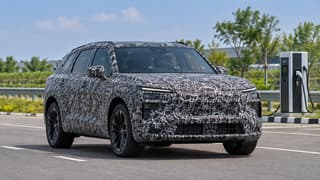
Illustrative editorial visual: commercial electric vehicles, charging and finance paperwork; no specific lender, vehicle or official document is shown.
What was announced
The Economic Times, citing PTI, reported on 14 Oct 2026 that Astranova’s lending arm had received RBI approval to operate as an NBFC. IBC24’s Bhasha report carried the same announcement, while an ETEntrepreneur interview published on 15 Oct described the business rationale behind the move. Astranova’s stated focus is commercial operators whose vehicles generate income, rather than a new mass-market loan scheme for private car buyers.
Astranova says the subsidiary could deploy ₹5,000 crore of financing over the next five years, with electric vehicles as the main area of focus. That figure is a management target, not money already lent, an RBI forecast or a guaranteed pool available to applicants. It should therefore be read as a forward-looking plan.
Why an NBFC structure matters for commercial EVs
The RBI describes NBFCs as regulated financial companies supervised under the regulatory framework for non-banking financial companies. An NBFC is not a bank, and the reported approval does not by itself establish that every EV operator will qualify for finance or that a particular product is already available.
Commercial EV finance can require more than a conventional borrower assessment. A lender may need to understand the vehicle’s daily utilisation, route economics, payload, battery condition, maintenance history and likely residual value. ETEntrepreneur reported that Astranova has built its business around leasing and asset management, including battery analysis, vehicle assessment, refurbishment and credit underwriting. That approach could allow a future lending product to consider the asset and its income-generating use alongside the borrower’s credit profile.
The company’s official website describes a wider EV asset-management model covering financing and operating leases, maintenance, refurbishment, redeployment and energy services. Those are company-described capabilities; they do not substitute for published terms from NovaFusion Capital.
What fleet operators should check
The useful comparison will be the all-in operating cost of an electric asset, not simply the approval of a new lender. A delivery business should test whether the vehicle’s route, load and daily distance are compatible with the battery and charging plan. A bus or truck operator may also need to price depot upgrades, en-route charging, driver downtime and the cost of keeping a backup vehicle available.
- Finance terms: Check the annual rate, whether it is fixed or floating, the processing charge, repayment schedule, security requirement and prepayment conditions.
- Asset terms: Ask how battery degradation, warranty claims, replacement cost and residual value are treated in a loan or lease.
- Route fit: Use the state-wise EV charging directory as a starting point, then verify charger power, vehicle access, uptime and commercial-fleet availability with the operator.
- Business case: Compare energy, maintenance, insurance and downtime assumptions with the existing vehicle. A fuel cost calculation can provide a petrol or diesel baseline, but it is not a substitute for a complete EV operating-cost model.
- Repayment resilience: Stress-test the proposal for lower utilisation, delayed customer payments, charging outages and a weaker resale value before treating the projected cash flow as dependable.
What the announcement does not change yet
There is no published NovaFusion interest-rate card, borrower eligibility list, loan-to-value limit, repayment tenure, state-wise rollout or delivery schedule in the reports reviewed for this article. Existing vehicle-loan customers do not receive a lower EMI or a revised rate merely because a new NBFC has been announced. The practical effect will begin only when products, pricing and application channels are disclosed.
Operators comparing a proposed lease or loan can also use FuelPrice’s car-loan EMI and tenure guide to separate the monthly payment from the total repayment cost. The same discipline matters for commercial EVs, where battery and downtime assumptions can materially change the business case.
What to watch next
The next useful disclosures would be NovaFusion Capital’s RBI registration details and NBFC category, followed by its first product terms, target customer segments and service geography. Fleet users should also look for the treatment of charging costs, maintenance responsibilities, battery insurance, repossession and redeployment if an operator defaults.
For now, the reported approval gives Astranova a new regulated-finance platform to pursue its commercial-EV plan. It does not by itself change the price of an electric vehicle, guarantee a loan, or prove that the ₹5,000 crore target will be reached. The reader takeaway is to treat the announcement as an early financing signal and wait for transparent terms before comparing it with an existing lender or lease.
Questions commercial EV users may have
Does this approval reduce my current vehicle EMI?
No. The announcement does not change an existing loan agreement or publish a rate for current borrowers. Any effect would depend on a future product and its individual terms.
Is NovaFusion Capital already offering every type of EV loan?
That has not been established. The public reports describe the intended commercial-EV focus, but do not set out the final products, eligibility rules or coverage areas.
Sources
- The Economic Times — “Astranova Mobility arm gets NBFC licence, targets Rs 5,000 cr AUM in 5 years” — 14 Oct 2026.
- ETEntrepreneur — “Astranova gets into lending to make EVs bankable” — 15 Oct 2026.
- IBC24 — “Astranova Mobility’s subsidiary gets RBI approval for NBFC status” — 14 Oct 2026.
- Astranova Mobility — company website — accessed 15 Oct 2026.
- Reserve Bank of India — “Non Banking Financial Companies” — accessed 15 Oct 2026.
This article is for general information only and is not financial, insurance or legal advice.