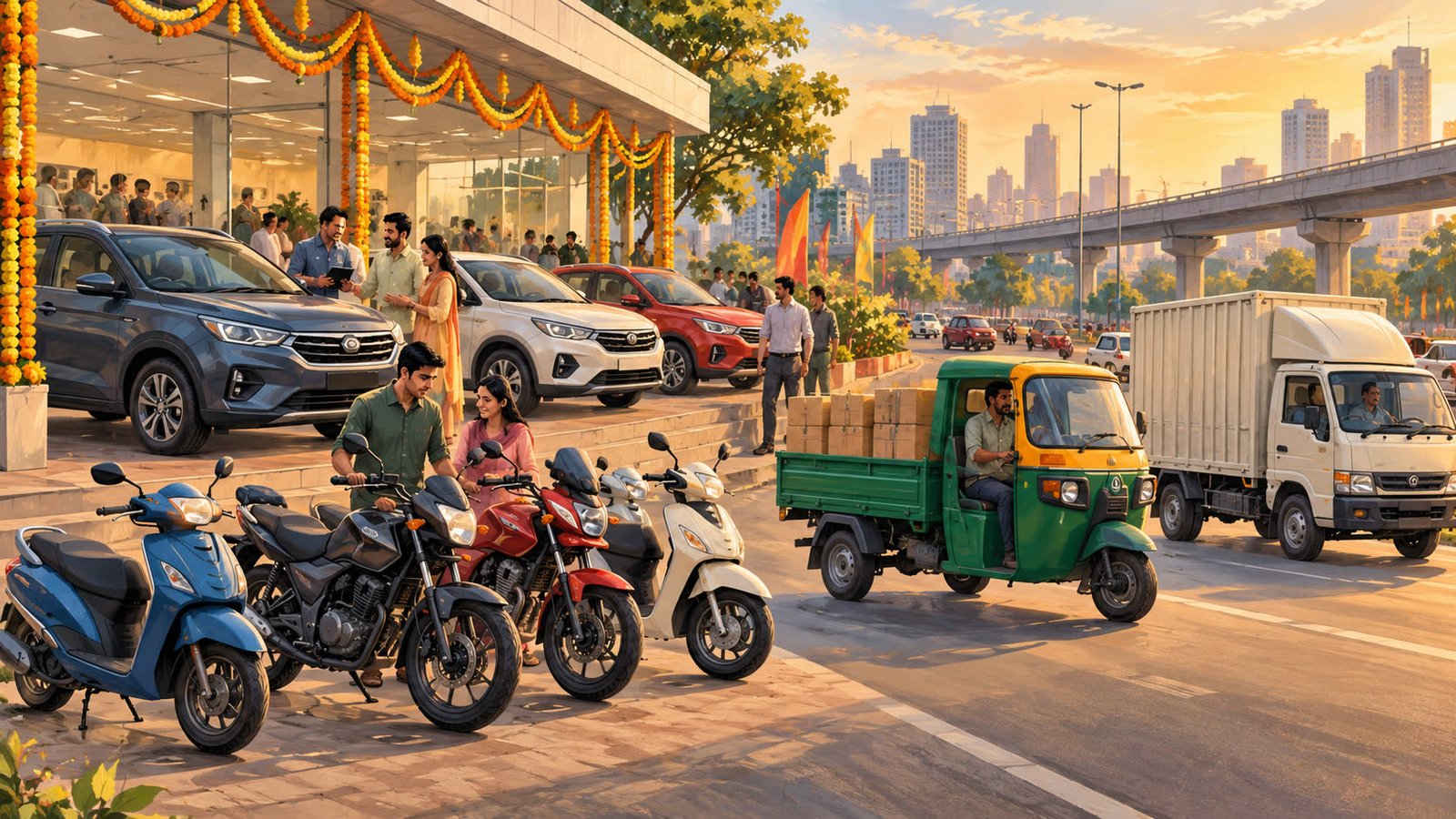
India's auto industry recorded 83.88 lakh domestic vehicle sales in Q2 FY2026-27 (July–September 2026), up 18.2% year on year, with passenger vehicles, two-wheelers, three-wheelers and commercial vehicles all posting their highest-ever Q2 sales, according to the Society of Indian Automobile Manufacturers (SIAM) on 15 October. For buyers and operators, the release points to stronger festive-season demand across cars, scooters, last-mile vehicles and commercial fleets, while also flagging higher inflation, interest-rate and geopolitical risks.
The figures describe industry sales reported for the quarter, not a guarantee that every model will become cheaper or immediately available. They do show where demand was strongest and where a buyer, rider or fleet operator may need to compare running costs, vehicle use and support before making a decision.
Key takeaways
- Combined domestic sales across the four major segments reached 83.88 lakh vehicles in Q2 FY2026-27.
- Passenger vehicles grew 30.7% year on year to 13.61 lakh units, with utility vehicles making up 68% of PV sales.
- Two-wheeler sales rose 15.2% to 64.33 lakh units; scooters grew faster than motorcycles.
- Three-wheelers and commercial vehicles grew 23.6% and 28.7%, respectively, supporting last-mile and freight demand.
- SIAM expects positive momentum in October 2026–March 2027, but says growth rates may moderate against a higher base.
What SIAM's Q2 numbers show
SIAM's official release dated 15 October 2026 lists domestic sales of 13,60,687 passenger vehicles, 64,32,842 two-wheelers, 2,85,342 three-wheelers and 3,09,063 commercial vehicles for July–September 2026. An ANI report carried by the Times of Oman separately put the combined total at 83.88 lakh units and described each segment as reaching a record Q2, providing an independent check on the headline result.
| Segment | Q2 sales | Year-on-year growth | What led the change |
|---|---|---|---|
| Passenger vehicles | 13,60,687 | 30.7% | Utility vehicles and festive demand |
| Two-wheelers | 64,32,842 | 15.2% | Scooters, replacement demand and affordability |
| Three-wheelers | 2,85,342 | 23.6% | Last-mile mobility and cargo applications |
| Commercial vehicles | 3,09,063 | 28.7% | Freight, infrastructure and fleet replacement |
Why demand strengthened
SIAM attributed the quarter's strength to improved affordability after GST 2.0, resilient rural and urban demand, healthy freight movement, infrastructure-led activity and replacement of older vehicles. It also pointed to new vehicle technologies, including alternate fuels and EVs, as part of the changing market. These are industry explanations, not a claim that every buyer received the same price or financing terms.
Passenger vehicles: utility vehicles set the pace
Utility vehicles accounted for 68% of passenger-vehicle sales in Q2 FY2026-27 and grew 34.2% year on year, according to SIAM. Passenger-car sales grew 24.9% during the same quarter. The mix matters for buyers because a strong SUV-led market can increase the number of body styles and powertrains available, but it does not remove the need to compare the vehicle's size, fuel or charging needs with the intended use.
Two-wheelers: scooters outpaced motorcycles
Two-wheeler sales grew 15.2% to 64.33 lakh units in Q2. Within that segment, scooters rose 27.7% while motorcycles grew 7.4%, both measured year on year for July–September 2026. SIAM linked the performance to a low base, improving affordability and a replacement cycle that varied across markets. For riders, the practical comparison remains total ownership cost: purchase price, energy use, service access and expected daily distance.
Three-wheelers and commercial vehicles: work demand returns
Three-wheelers grew 23.6% to 2.85 lakh units, with SIAM pointing to cargo applications, last-mile mobility and the shift toward higher-quality L5 electric vehicles. Commercial-vehicle sales rose 28.7% to 3.09 lakh units, supported by infrastructure spending, freight movement, replacement of older trucks and buses, and logistics-fleet expansion. That is relevant to operators because a vehicle's payload, route suitability and downtime can matter more than the headline sales growth.
What the September run-rate says
SIAM's monthly data also recorded 4,54,574 passenger vehicles, 24,63,103 two-wheelers and 98,162 three-wheelers sold domestically in September 2026. Business Standard, citing PTI, separately reported that passenger-vehicle dispatches rose 21.8% year on year in September, while two-wheeler dispatches rose 13.5% and three-wheelers 16%. The monthly figures support the view that the quarter's result was not limited to one segment, although monthly dispatches and retail registrations are different measures.
What it means for buyers and operators
A record industry quarter can improve product availability and sharpen competition, but it is not proof of a lower on-road price, a particular discount or a better fit for an individual driver. The useful next step is to match the vehicle with the trip and the budget:
- For a car or two-wheeler, compare the full ownership cost rather than only the showroom price. The fuel cost calculator can help estimate a typical trip or monthly commute using the vehicle's expected mileage.
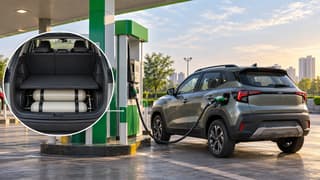
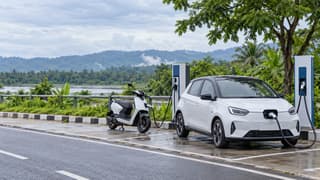
- For an EV, treat charging access as part of the purchase decision. The state-wise EV charging directory can help identify public charging options before a regular route is planned.
- For a three-wheeler or fleet vehicle, check payload, route length, turnaround time, service coverage and energy cost together. The road-trip planner can help test route distance and travel-time assumptions before comparing vehicles.
What to watch in the second half of FY2026-27
SIAM expects positive momentum from October 2026 to March 2027, supported by the festive season, new launches, infrastructure spending, last-mile mobility and fleet replacement. It also cautions that growth rates may moderate as the industry compares with a higher base. Inflation, possible increases in interest rates and geopolitical disruption remain risks for demand, supply chains and vehicle operating costs.
For readers, the clearest signal is breadth: the Q2 increase was spread across personal mobility, last-mile transport and commercial fleets. The clearest caution is that market growth is not the same as a personal saving. Use the sales data to understand choice and demand, then check the vehicle's real running cost, route fit and support network for the use case that matters.
Sources
- Society of Indian Automobile Manufacturers — “Auto Industry Sales Performance of Q2:FY2027 (July–September 2026)” — 15 Oct 2026.
- Times of Oman / ANI — “Auto sales rise 18.2% to 83.88 lakh units in Q2, all vehicle segments post record sales: SIAM” — 15 Oct 2026.
- Business Standard / PTI — “Passenger vehicle dispatches rise 21.8% to 454K units in September: SIAM” — 15 Oct 2026.