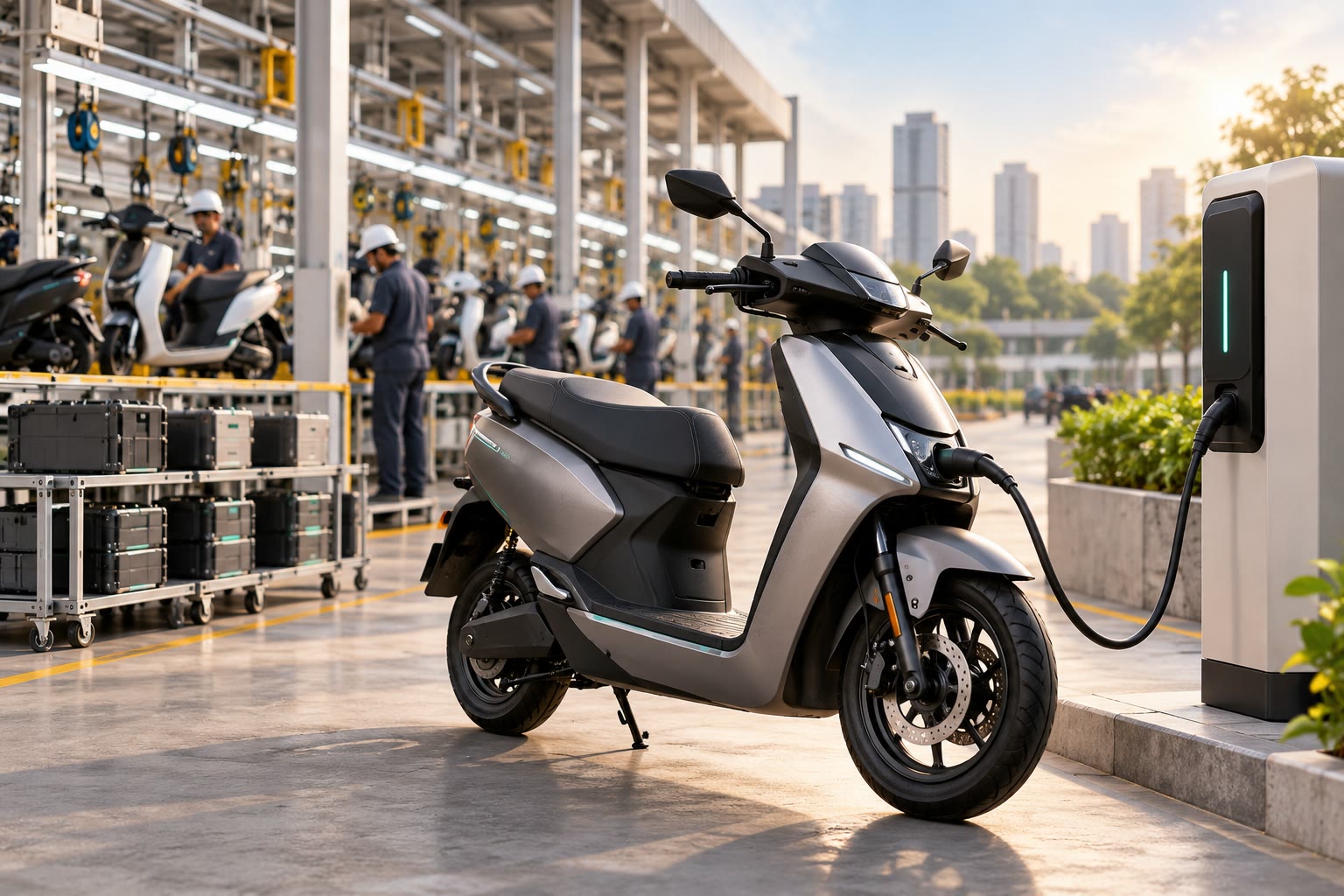
Ather Energy reported consolidated profit after tax (PAT) of ₹1.26 crore for the quarter ended 30 Sep 2026, according to its 26 Oct 2026 exchange filing. The electric two-wheeler maker also plans to add 2.25 lakh units of annual production capacity by Q2 FY28, a move that could improve supply for buyers if the expansion stays on schedule.
Key takeaways
- Consolidated PAT was ₹1.26 crore in Q2 FY27, compared with a ₹154.07 crore loss in Q2 FY26.
- Revenue from operations rose 63% year on year to ₹1,464.24 crore, while volumes increased 42% to 93,211 electric two-wheelers.
- Ather plans 75,000 more units of annual capacity at Hosur by Dec 2026 and a further 1.5 lakh at its Maharashtra facility by Q2 FY28.
- Combined installed annual capacity is planned to reach about 11.4 lakh units; the company says it will invest about ₹122 crore in the two expansions.
What Ather reported in Q2 FY27
The results cover the three months ended 30 Sep 2026. Ather's consolidated PAT moved into positive territory at ₹1.26 crore, against a loss of ₹154.07 crore in the year-earlier quarter. ETAuto reported the same result and said revenue from operations grew 63% year on year to ₹1,464.24 crore, from ₹898.88 crore in Q2 FY26.
The operating picture also improved. Ather reported EBITDA of ₹74.2 crore and an EBITDA margin of 4.9%, compared with a negative 9.6% margin a year earlier. The company described this as its second consecutive EBITDA-positive quarter. That distinction matters: EBITDA improvement and a small consolidated profit point to better operating performance, but they do not by themselves guarantee that future quarters will remain profitable.
Vehicle volumes rose 42% year on year to 93,211 units in Q2 FY27. Customer enquiries were about 10 lakh and pre-orders were 1.8 lakh during the quarter, according to the filing. Those figures indicate strong interest, but they should not be read as confirmed deliveries or as a forecast for the wider electric two-wheeler market.
Where the new capacity will come from
Ather plans to increase annual capacity at its Hosur facility in Tamil Nadu by 75,000 units, from 4.2 lakh to 4.95 lakh units, by Dec 2026. The company says its Hosur factory operated at 98% capacity utilisation during peak production in Q2 FY27, making this the nearer-term part of the expansion plan.
The second part is at AURIC in Chhatrapati Sambhajinagar, Maharashtra. The facility is expected to begin commercial production in phases from Dec 2026, with Phase 1 capacity of 5 lakh units a year. Ather plans to expand that annual capacity to 6.5 lakh units by Q2 FY28. Taken together, the Hosur and AURIC plans would take installed annual capacity to approximately 11.4 lakh units.
ETAuto reported planned investments of up to ₹58 crore at Hosur and ₹64 crore at the Maharashtra facility. Together, those figures equal up to ₹122 crore, matching the filing's approximately ₹122 crore figure. This is a company investment plan, not a government subsidy or incentive.
What the plan means for EV buyers
For a prospective electric-scooter buyer, the practical significance is potential availability rather than an immediate price change. More installed capacity can help a manufacturer serve demand and replenish dealers, but production capacity is not the same as showroom stock. Deliveries will still depend on the commissioning schedule, component supply, logistics, local demand and the company's retail network.
The results also give buyers a reason to separate product questions from company-growth headlines. Ather's Q2 numbers describe the manufacturer's performance; they do not confirm the range, charging time, warranty or service experience of any individual scooter. Before making a comparison, readers can check the EV station directory for charging options in their area and use the road-trip planner to think through longer journeys. Those comparing an electric scooter with a petrol commuter can model the fuel side of the running cost using the fuel-cost calculator.
What to watch next
The next useful checkpoints are the start of phased production at AURIC from Dec 2026, the Hosur capacity addition, and whether Ather converts enquiries and pre-orders into deliveries without a comparable rise in costs. Input prices, battery supply, charging access and after-sales coverage will remain relevant to the ownership equation.
For now, the defensible reading is limited but useful: Ather has reported a small consolidated profit, stronger operating metrics and a concrete capacity plan. The 11.4-lakh-unit target is a company plan for Q2 FY28, not output already available to buyers on 26 Oct 2026.
This article is for general information only and is not financial, insurance or legal advice.