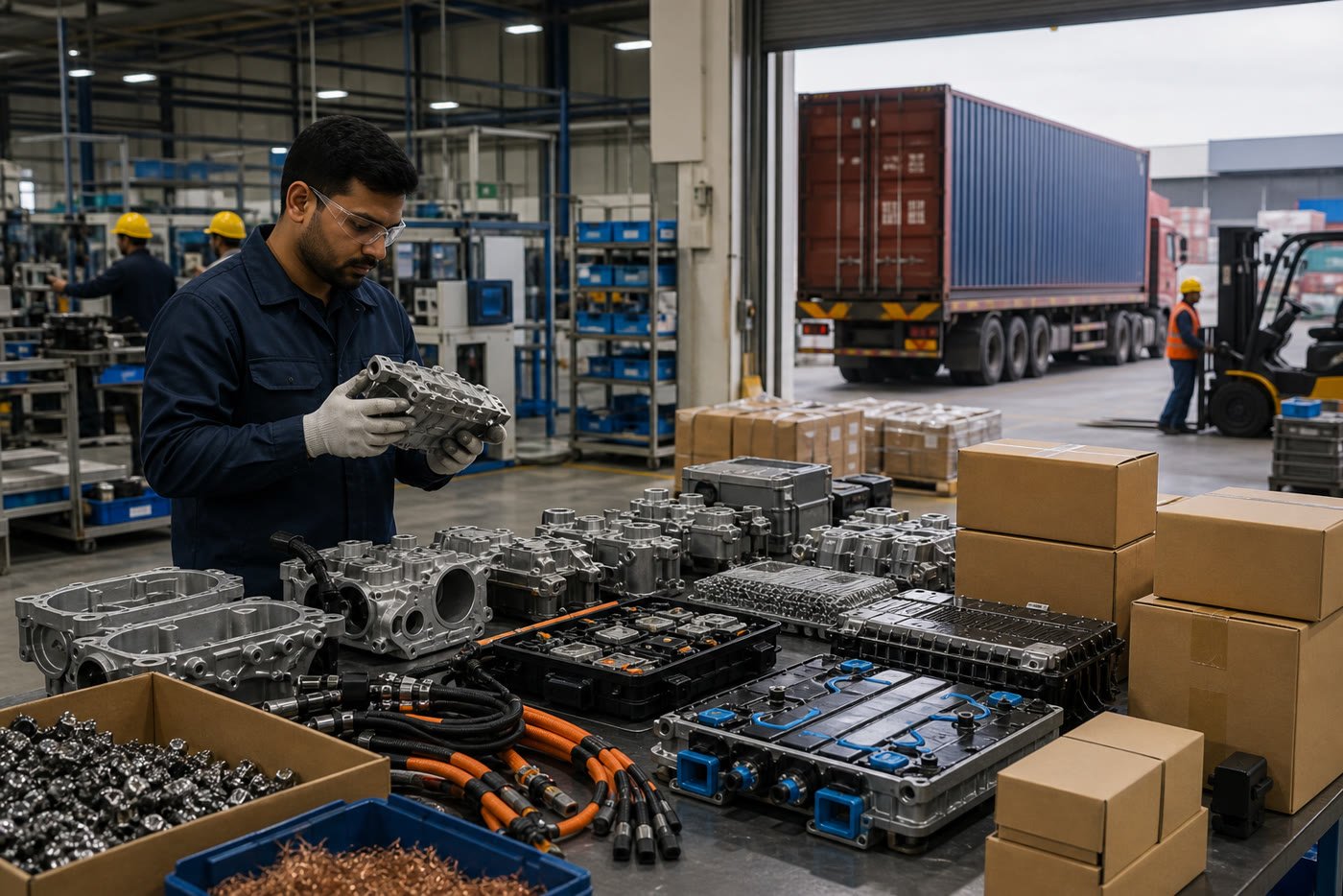
Indian auto-component makers are entering fiscal 2027 with a familiar problem: demand is healthy, but the cost of making and moving parts is rising faster than many suppliers can fully pass on. CRISIL Ratings now expects operating margins in the sector to moderate by 100-150 basis points this fiscal, from around 12 percent last year to 10.5-11 percent, as raw material, energy and freight costs climb amid West Asia-linked supply-chain stress.
This is not only a supplier-profitability story. Auto components sit behind every passenger car, two-wheeler, commercial vehicle, EV battery system, braking module, wiring harness and replacement part sold in India. When component makers face higher steel, aluminium, power, wage and freight bills, the pressure can travel through the chain to vehicle makers, dealers, repair networks, fleet operators and eventually buyers.
What CRISIL Has Flagged
CRISIL's latest release says Indian auto-component makers should still see resilient revenue growth of 9-11 percent this fiscal, helped by steady original equipment manufacturer demand, new passenger-vehicle launches, infrastructure-linked commercial vehicle activity, premiumisation in two-wheelers and rising EV adoption. That demand cushion is important because it can keep absolute operating profits stable even if margins decline.
The cost picture is less comfortable. CRISIL notes that raw materials form nearly three-fourths of the sector's total cost, with steel and aluminium together accounting for 50-60 percent of input costs. It also says raw materials, employee expenses and power account for about 90 percent of the overall cost structure. With input and energy prices up, minimum wage revisions adding pressure in several states, and freight costs affected by West Asia disruption, suppliers have less room to protect margins.
Why Freight And Fuel Matter Here
Auto-component supply chains are logistics-heavy. Parts move from metal processors to component plants, from tier-2 suppliers to tier-1 suppliers, from component hubs to vehicle factories, and then again into aftermarket distribution networks. Any rise in diesel-linked freight, shipping lead times, air freight substitution, container delays or warehousing cost changes the economics of a part before it reaches the assembly line.
That is why the West Asia conflict matters for Indian component makers even when domestic vehicle demand is steady. CRISIL's broader stress test of 34 sectors says prolonged supply disruptions can increase fuel and freight costs and shave roughly 200 basis points from corporate operating profitability in its stress scenario. For auto-component makers specifically, the rating agency says pass-through of higher production costs can be lagged, especially in aftermarket channels where pricing power is weaker than in OEM contracts.
The Pass-Through Problem
OEMs account for over two-thirds of sector revenue, and supplier contracts usually allow some cost pass-through. But CRISIL says this pass-through can lag by one to two quarters and may not always be complete. That delay is important. A supplier may pay more for steel, aluminium, energy and freight today, but recover only part of it later from vehicle makers. During that gap, working capital rises and margins compress.
The aftermarket is more exposed. Replacement-part buyers, repair shops and smaller distributors are price-sensitive. If a parts maker raises prices too quickly, demand can shift to cheaper alternatives. If it absorbs costs, profitability falls. This makes cost timing, inventory discipline and supply-chain planning central to the sector's FY27 performance.
Key Numbers For FuelPrice Readers
| Metric | CRISIL reading | Why it matters |
|---|---|---|
| Operating margin | Expected at 10.5-11 percent this fiscal, down 100-150 bps from around 12 percent. | Shows supplier profitability is under cost pressure even with demand support. |
| Revenue growth | Expected at 9-11 percent. | Demand from OEMs, EVs, two-wheelers and PVs remains a cushion. |
| Sector base analysed | CRISIL-rated firms covering nearly half of the sector's about Rs 9 lakh crore revenue last fiscal. | The assessment covers a meaningful share of the organised supplier ecosystem. |
| Capex | Expected near Rs 27,000 crore, up about 10 percent on-year. | Spending is directed toward capacity and EV-related components, even as costs rise. |
| Inventory | Inventory levels may rise by 15-20 days from the current 80-85 days. | More buffer stock means higher working-capital needs and cash locked in supply chains. |
What It Means For Vehicle Buyers
Buyers should not read this as an immediate price hike on every car, bike or EV. Automakers negotiate component costs, manage inventory, adjust discounts and sometimes absorb cost changes to protect demand. But sustained supplier pressure can eventually show up through smaller discounts, variant-level price increases, higher replacement-part costs or slower repair-part availability if working capital gets tight.
The EV angle is particularly important. CRISIL expects about Rs 27,000 crore of capex by rated auto-component players this fiscal, with spending directed mainly at capacity expansion, including EV-related components. EV supply chains require new electronics, high-voltage parts, battery-related systems, sensors, cooling units and software-linked modules. These are higher-value opportunities, but they need upfront investment at a time when freight, metals and power costs are volatile.
Who Is Most Exposed?
Large suppliers are better placed because they have scale, stronger bargaining power with creditors, broader customer bases and greater ability to fund inventory. Smaller suppliers and aftermarket-heavy players face more pressure because they may not have the same ability to stretch creditors, hedge costs or negotiate pass-through quickly. Exporters also face longer shipping routes and lead-time uncertainty, although CRISIL still expects export revenue to grow 8-9 percent on-year.
Fleet operators, logistics companies and repair networks should also watch the aftermarket. If replacement parts become costlier or delivery windows stretch, vehicle uptime can be affected. For high-utilisation commercial vehicles, buses and delivery fleets, a delayed component can cost more than the part itself because downtime disrupts revenue.
What To Watch Next
- Whether steel, aluminium, energy and freight costs normalise or stay elevated through the fiscal year.
- How quickly OEMs allow supplier cost pass-through, especially for smaller tier-2 vendors.
- Whether auto-component companies increase prices for replacement parts in the aftermarket.
- Whether EV-component capex remains on schedule despite margin pressure.
- Whether longer shipping routes continue to affect export lead times and inventory planning.
- Whether vehicle makers use discounts or price hikes to manage supplier-side cost pressure.
Reader takeaway: CRISIL's auto-component margin warning is a supply-chain cost story with direct mobility relevance. Demand from OEMs and EV adoption remains healthy, but higher freight, raw material, energy and working-capital costs can still pressure suppliers and ripple into vehicle prices, repair costs and component availability. For buyers and fleet operators, the important signal is not panic pricing today; it is sustained cost pressure in the parts ecosystem that supports every vehicle on the road.