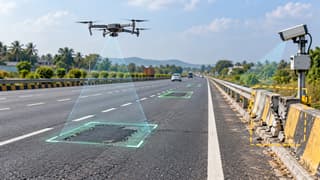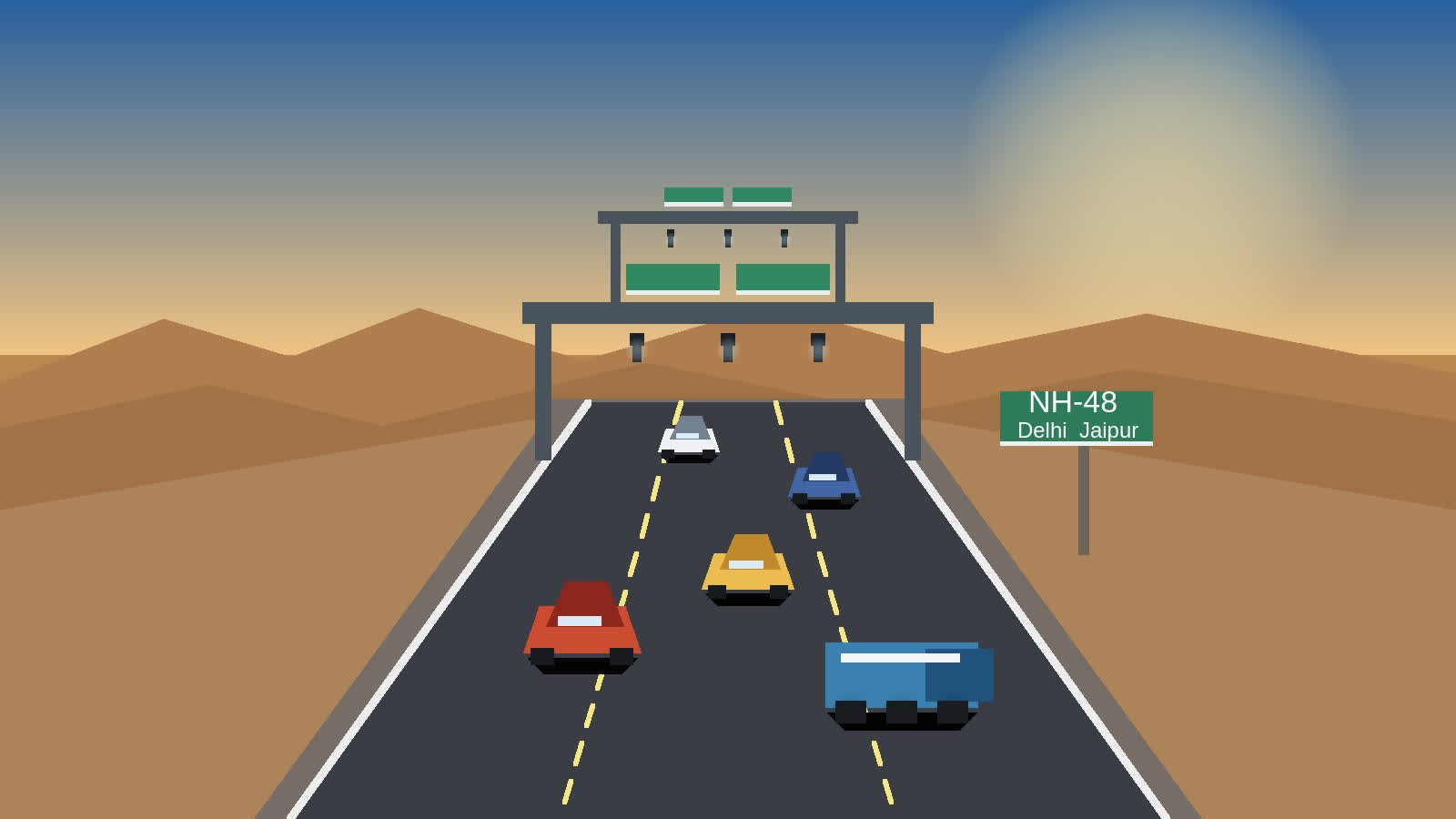
NHAI has pushed India’s barrier-free tolling rollout one step further on the Delhi-Jaipur corridor. In an official press release issued on July 1, 2026, the authority said it has launched the Multi-Lane Free Flow (MLFF) tolling system at Manoharpura Toll Plaza on the Delhi-Jaipur section of NH-48 in Rajasthan. For FuelPrice readers, this is not only a digital highways story. It is a direct fuel-efficiency, freight-flow and toll-user compliance story on one of north India’s most commercially important road stretches.
The practical change is simple. Instead of the familiar toll-plaza stop, wait, pay and move pattern, MLFF is designed to let vehicles pass through without physically halting at the barrier. NHAI says the system combines Automatic Number Plate Recognition (ANPR) with FASTag-based electronic toll collection so user fees can be captured with minimal human intervention. The authority’s argument is that zero waiting time and uninterrupted flow improve travel time, fuel efficiency and emissions at the toll point itself.
This matters because toll plazas do not only collect fees; they often create avoidable energy waste. Every car, bus or truck that brakes, idles, accelerates again and queues behind slower traffic is burning fuel without covering meaningful distance. On a busy intercity corridor, that inefficiency adds up across private motorists, taxis, tourist traffic, buses, light commercial vehicles and long-haul trucks.
What changed now at Manoharpura
NHAI’s July 1 statement positions Manoharpura as the next expansion point in a larger NH-48 tolling transition. The authority said Rajasthan’s first MLFF system had already gone live at Daulatpura Toll Plaza on June 19, 2026. With Manoharpura now active, NHAI also said it plans to move Shahjahanpur Toll Plaza to the same system next. In other words, this is not a one-off pilot buried in a quiet location. It is part of a visible attempt to make the Delhi-Jaipur highway more seamless and more digitally enforced.
Business Standard’s July 1 report framed the change in equally practical terms: cameras capture vehicle registration details and toll charges are deducted automatically without forcing vehicles to stop at the plaza. That summary matters because it tells users what the new system feels like on the road. If it works cleanly, drivers see movement instead of a toll barrier queue. If it does not work cleanly, the friction simply shifts from the booth to the back-end notice and payment system.
| Earlier toll experience | What MLFF changes | What users must do now |
|---|---|---|
| Vehicles slow down, queue at the plaza and wait for fee clearance before moving. | Barrier-less passage using ANPR and FASTag aims to let vehicles continue without a physical stop. | Keep FASTag valid and funded so the trip does not convert into an e-notice problem. |
| Idling and stop-start movement raise fuel burn and local emissions near toll plazas. | Zero-wait movement can reduce wasted fuel, especially for frequent highway users and freight traffic. | Monitor toll deductions and clear any non-payment notice within the allowed window. |
| Human intervention is visible and cash-era friction lingers in lane behaviour. | Digital capture and back-end enforcement take over more of the collection process. | Use the official portal or Rajmargyatra app if an e-notice is issued. |
Why this matters for fuel users and logistics operators
The fuel-saving case is stronger on highway corridors than it looks on paper. A single toll stop may seem small for one private car, but a repeated stop-go pattern across thousands of vehicles compounds into measurable inefficiency. Trucks lose momentum. Buses lose schedule accuracy. Taxi and cab drivers lose trip time. Small freight operators lose route predictability. For passenger vehicles, the visible benefit is smoother travel. For commercial traffic, the larger benefit is more consistent movement and less dead time in the middle of a paid trip.
That is why MLFF matters to FuelPrice’s core audience. Lower fuel prices are only one route to reducing travel cost. Cutting unnecessary idling is another. On a busy corridor like Delhi-Jaipur, even modest reductions in stoppage time can help fleets manage diesel use more tightly and improve turnaround efficiency. The advantage is especially relevant for vehicles that cross the corridor frequently rather than occasionally.
NHAI’s language also links the upgrade to lower vehicular emissions at the toll location. That is a reasonable claim because the removal of queue formation reduces the local concentration of braking, idling and re-acceleration. For readers, the important nuance is this: MLFF does not make a highway cheap by itself, and it does not remove toll liability. It makes the toll event less wasteful if the technology and enforcement work properly.
The real compliance rule readers should not miss
The biggest user-risk in the new system is not a barrier arm. It is backend non-compliance. NHAI’s official release says highway users must maintain sufficient FASTag balance for a seamless experience. If a vehicle has insufficient balance, an invalid tag or a non-functional FASTag, the system can issue an electronic notice for non-payment. That notice is not a minor warning to ignore later.
According to the same official guidance, the user must pay the normal fee within 72 hours of the e-notice. If that does not happen, the charge rises to twice the normal vehicle-category fee. NHAI says these e-notices can be accessed and paid through the designated portal at nhfeenotice.parivahan.gov.in and through the Rajmargyatra app.
That changes the user habit required for toll travel. Under older conditions, many users treated the toll moment as something resolved physically at the lane itself. Under MLFF, some toll disputes and payment failures move into a digital after-process. So the benefit of barrier-free travel comes with a sharper responsibility: users need working tags, enough balance and some discipline in checking notices.
Why Manoharpura is more than a local Rajasthan update
The Manoharpura launch is geographically in Rajasthan, but the corridor logic is wider. NH-48 is not a low-volume rural road. The Delhi-Jaipur stretch is a high-importance passenger and business route, which makes it a visible test bed for how MLFF performs under real traffic pressure. NHAI’s earlier June 19 announcement on Daulatpura had also placed the Rajasthan rollout in a broader national sequence, noting previous barrier-free deployments at Chorayasi on the Surat-Bharuch section of NH-48 and at Mundka-Bakkarwala on Delhi’s Urban Extension Road-II.
That broader rollout pattern matters because it shows the authority is trying to normalise tolling without physical stoppage rather than keeping it confined to a showcase site. For transporters and regular highway users, that means MLFF is gradually becoming an operational reality, not just a policy presentation. Over time, the real questions will shift from “what is MLFF?” to “how reliably does it read tags and plates, how quickly are disputes handled, and whether drivers trust the system enough to stop worrying about surprise penalties?”
What to watch next
The next milestone is Shahjahanpur, because NHAI has already signalled that the toll plaza is expected to transition next on the same Delhi-Jaipur section. Readers should also watch for user feedback on deduction accuracy, notice issuance, dispute handling and actual queue reduction during peak movement windows. If the system reads correctly and notices are managed fairly, MLFF strengthens the case for wider rollout. If not, drivers may see it as a convenience headline with a penalty tail.
The reader takeaway is clear. Manoharpura’s MLFF launch is important because it turns toll reform into something highway users can feel immediately: less stopping, less idling and a cleaner flow through a major corridor. But it also turns FASTag discipline into a stricter requirement. For motorists and fleets alike, the upside is smoother travel and better fuel efficiency. The catch is that a weak balance, bad tag or ignored e-notice can now become the more expensive part of the journey.
Sources: PIB/MoRTH July 1, 2026 release on Manoharpura MLFF launch, Business Standard July 1, 2026 report, PIB/MoRTH June 19, 2026 release on Daulatpura MLFF launch, Official NHAI barrier-less tolling e-notice portal.