Battery Asia Expo 2026 opens today, 4 June 2026, at India Expo Centre, Greater Noida, and runs until 6 June. On the surface, it is a business-to-business exhibition. For FuelPrice readers, the larger point is more practical: battery manufacturing, battery management systems, energy storage and recycling are now central to how quickly India can reduce dependence on petrol and diesel in personal mobility, fleets and last-mile logistics.
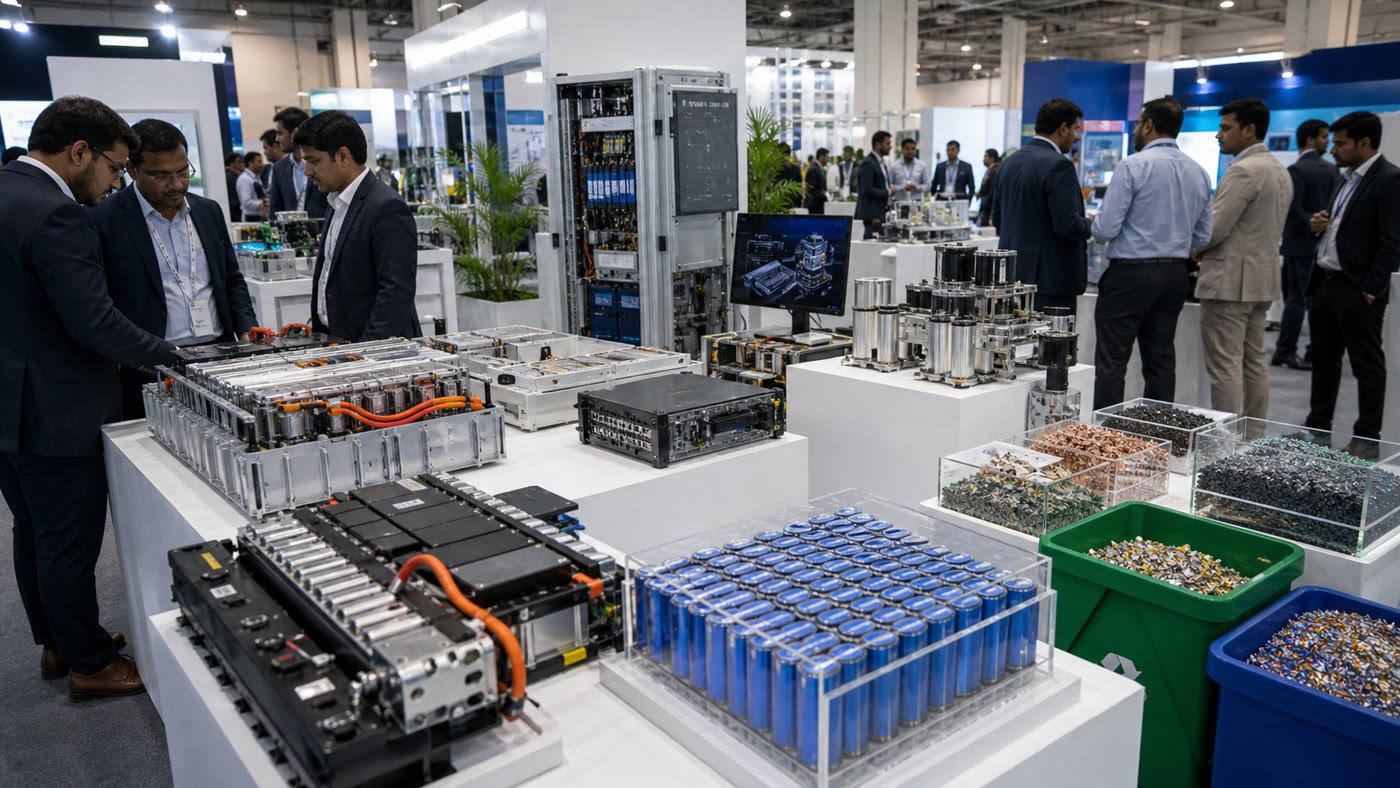
Representative editorial image: Battery Asia Expo 2026 puts EV battery packs, BMS, manufacturing equipment and recycling at the centre of India’s mobility supply-chain discussion.What is happening?
The official Battery Asia listing describes the event as an international exhibition on battery manufacturing processes, battery recycling, battery technology, battery management systems, battery manufacturing equipment, raw materials and allied industries. It is being held from 4 to 6 June 2026 at India Expo Centre in Greater Noida, Uttar Pradesh.
The event focus is broad but highly relevant to electric mobility. It covers battery storage, BMS, fuel-cell technology, lithium-ion batteries, EV batteries, battery development, commercial power devices and the wider mobile power ecosystem. Event listings also point to participation across lithium-ion, sodium-ion, solid-state, flow batteries, testing solutions, raw materials and recycling technologies. That range matters because EV adoption depends on more than vehicle launches. It also needs reliable cells, safer packs, better testing, recycling capacity and suppliers that can support local assembly at scale.
Why this matters for EV buyers and fuel users
The battery is usually the most expensive single component in an electric vehicle. It influences purchase price, driving range, charging time, safety, warranty confidence and resale value. When India’s battery ecosystem becomes deeper, the benefits can flow into vehicle prices, financing, battery replacement costs and fleet operating economics. This does not mean prices will fall immediately after an expo, but it does mean the domestic supply chain is getting more attention at the right point in the EV cycle.
For two-wheeler and three-wheeler users, the impact is especially important. These segments are highly sensitive to running cost. Petrol savings are the reason many delivery riders, small businesses and urban commuters consider EVs. However, weak batteries, poor thermal management, low-quality chargers or uncertain replacement support can erase that advantage. Better BMS suppliers, testing equipment and recycling channels help the market move from headline range claims to dependable real-world ownership.
The recycling angle is not optional anymore
Battery recycling is one of the most important parts of the story. As EV sales grow, India will need systems to recover lithium, nickel, cobalt, manganese, copper, aluminium and other materials from used or rejected battery packs. Recycling can reduce waste risk, lower long-term raw-material pressure and support a circular supply chain for mobility and stationary energy storage.
This matters for fuel transition because EV adoption is not only about replacing tailpipe emissions. It also has to be responsible at the end of battery life. If recycling and material recovery lag behind sales, the sector can face environmental, safety and supply problems later. If recycling scales alongside battery manufacturing, India gets a stronger base for future EVs, hybrid support systems, grid storage and charging infrastructure.
| Expo focus area | Why it matters for mobility |
|---|---|
| Battery manufacturing equipment | Supports local pack and cell production, which can reduce import dependence over time. |
| Battery Management Systems | Improves safety, thermal control, charging behaviour and battery life. |
| Testing and quality systems | Helps OEMs and fleet buyers trust range, warranty and durability claims. |
| Recycling and raw materials | Creates a path to recover critical materials and manage end-of-life batteries responsibly. |
Who is affected?
The direct audience is industry: battery manufacturers, equipment suppliers, recyclers, EV OEMs, component makers, energy-storage companies and procurement teams. The indirect audience is much larger. Vehicle buyers, delivery fleets, bus operators, charging companies and even petrol users are affected because battery costs shape how quickly EV alternatives become affordable and reliable.
For logistics companies, better battery and charging technology can change the total cost of ownership for electric cargo three-wheelers, vans and future trucks. For consumers, it can improve confidence in range and battery life. For automakers, it can widen the supplier base and shorten development cycles. For India’s energy transition, it can support domestic capability instead of depending too heavily on imported battery systems.
What to watch next
The most important signals from the expo will be announcements around local manufacturing partnerships, recycling capacity, BMS platforms, fast-charging compatibility, thermal safety solutions and raw-material supply. Product displays alone are useful, but commercial commitments matter more. Buyers should also watch whether Indian suppliers can meet automotive-grade reliability, not only consumer-electronics standards.
Another point to watch is whether more fleet-focused solutions emerge. India’s EV growth is strongest where running-cost savings are visible: two-wheelers, three-wheelers, taxis, buses and last-mile delivery. Battery systems designed for high daily utilisation will matter more than showroom-friendly claims.
Final takeaway
Battery Asia Expo 2026 is not a fuel-price update in the narrow sense, but it is directly linked to India’s future fuel bill. Cheaper, safer and more recyclable batteries can make EV ownership more practical, reduce petrol and diesel dependence in urban transport, and strengthen the local supply chain behind clean mobility. The event’s real importance is whether it helps move India from importing EV ambition to building EV capability.