On 10 November 2026, the International Energy Agency (IEA) published a first-year tracking report on the Belém 4X sustainable-fuels pledge, an international initiative that aims to quadruple the use and production of sustainable fuels by 2035. The pledge matters to drivers and transport operators because its scope includes road transport, shipping and aviation, but it does not change pump prices or fuel rules worldwide today.
The IEA report says 32 countries had endorsed the pledge by late September 2026. A Clean Energy Ministerial update for COP31 also counted 32 endorsing countries as of October. The difference is the reporting date; neither source presents the pledge as a universal law or a fuel mandate.
Key takeaways
- The Belém 4X pledge targets a fourfold increase in global sustainable-fuel use and production by 2035, using 2024 as the reference year.
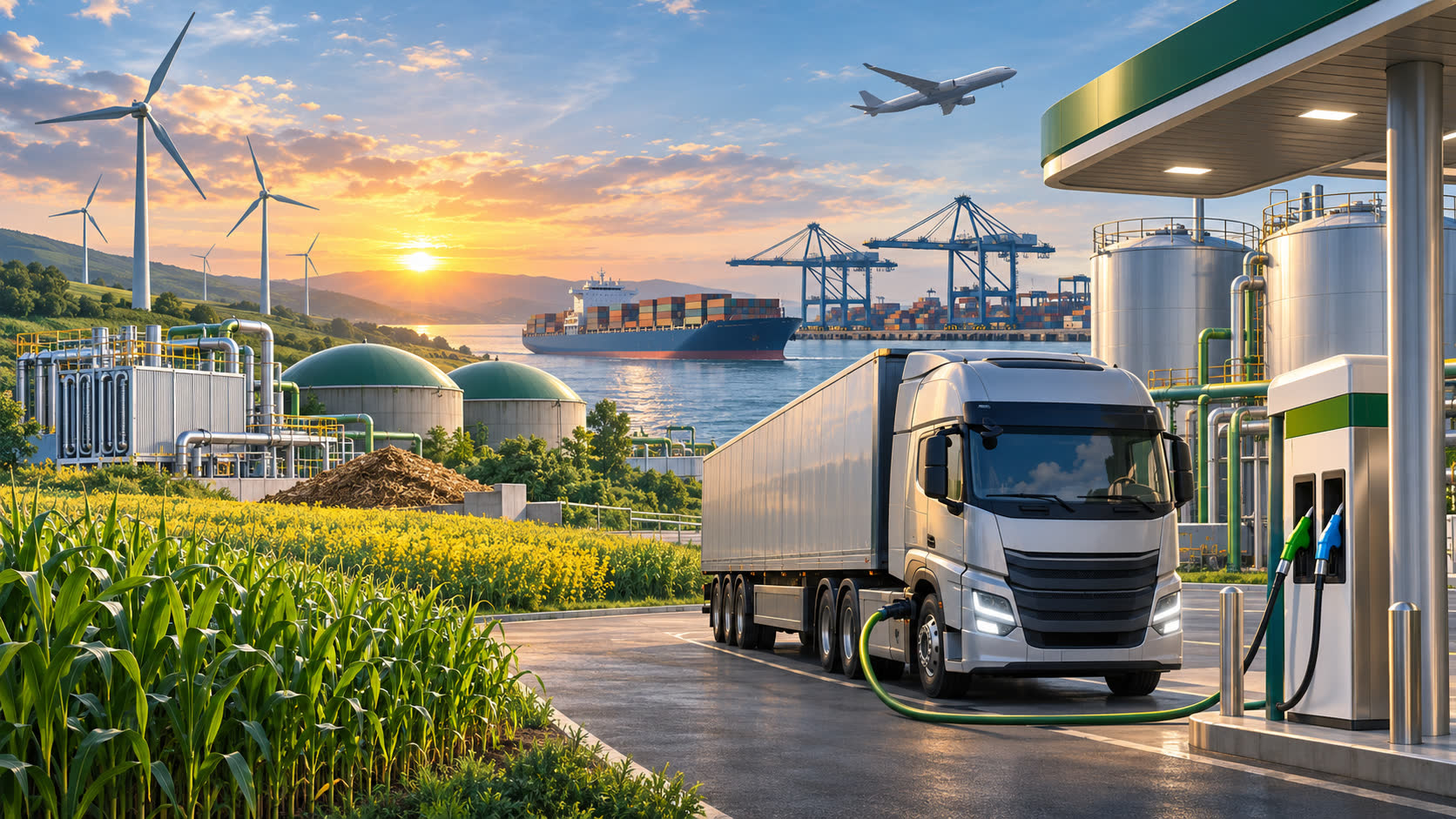
- The initiative covers liquid biofuels, biogases, low-emissions hydrogen and hydrogen-based fuels.
- The IEA says current and proposed policies, if fully legislated and implemented, could put sustainable liquid and gaseous fuels on a path to nearly double from 2024 levels by 2030 and quadruple by 2035.
- Road freight, shipping and aviation are important because batteries and direct electrification will not be the only options for every distance, payload or route.
- For households, fleets and businesses, the near-term issue is national implementation: fuel standards, certification, supply, infrastructure and the price of the final product.
What the Belém 4X pledge covers
The pledge was launched by Brazil, India, Italy and Japan at a pre-COP event in Brasília on 14 October 2025. It is designed to coordinate international action rather than impose one fuel blend or one technology on every market. The IEA defines the covered fuels broadly: liquid biofuels, biogases, low-emissions hydrogen and fuels made from hydrogen.
That range is important. Sustainable fuels can be used in some existing engines, turbines and industrial equipment, while other pathways require new vehicles, storage systems or refuelling infrastructure. The common policy goal is to reduce the use of fossil fuels in applications where a low-emissions fuel can be made, delivered and used at an acceptable cost and with credible lifecycle emissions accounting.
The IEA tracking report is careful about the difference between an ambition and an outcome. Its projection says current and proposed national and international policies could nearly double sustainable liquid and gaseous fuel use from 2024 levels by 2030 and quadruple it by 2035 if those policies are fully legislated and implemented. That is a conditional pathway, not a guarantee that production or consumption will reach the target.
Why it matters for transport
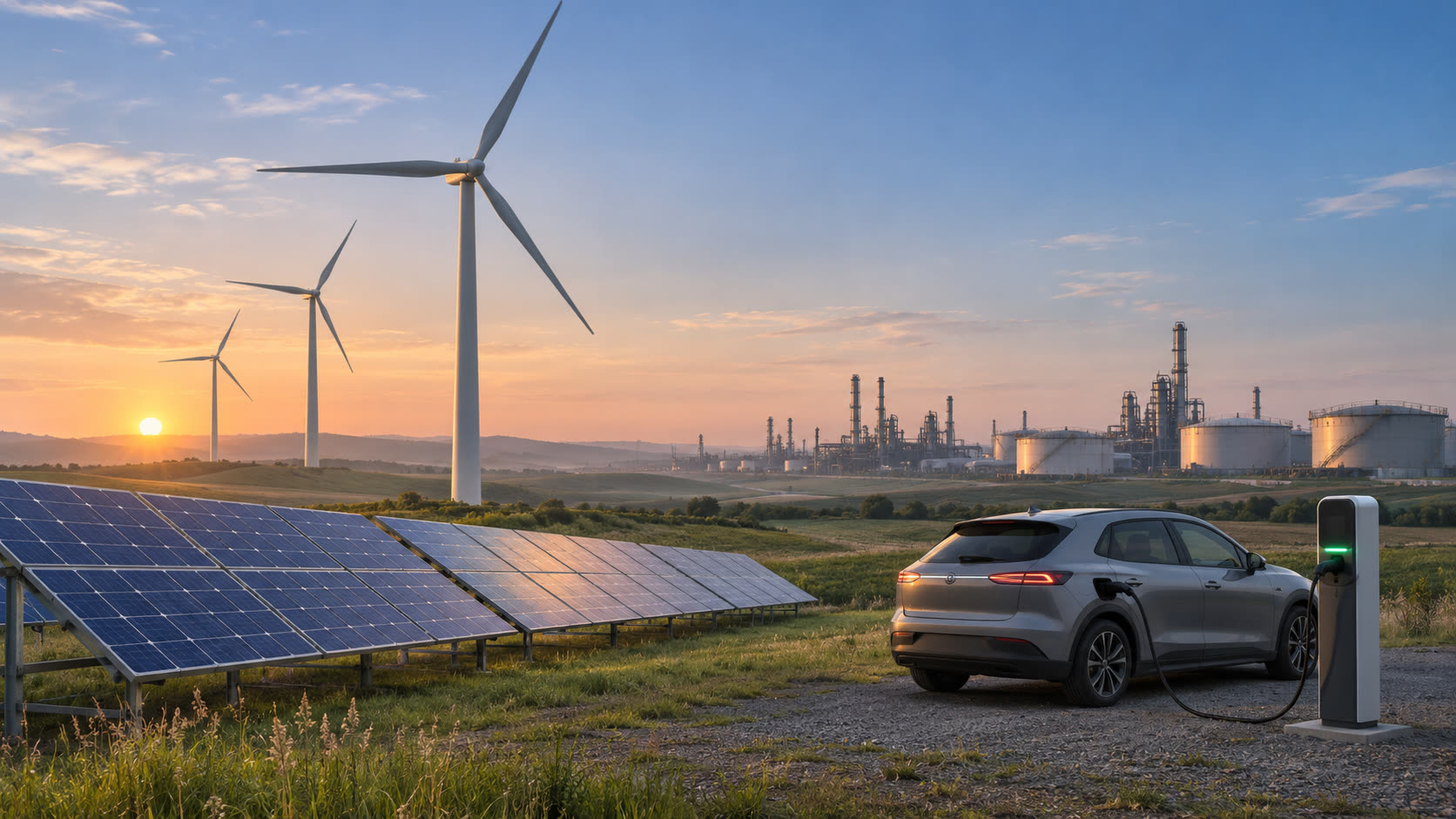
Passenger cars are the most visible part of the transition, but the pledge is broader than electric cars. The IEA says sustainable fuels are particularly relevant to aviation, shipping, parts of road transport and industry, where energy density, range, payload, charging time or the absence of suitable infrastructure can complicate direct electrification.
For road users, the practical split will vary by vehicle and route. A city car may have access to charging and a predictable daily distance, while a long-haul truck may need high utilisation, large payload capacity and refuelling that takes less time than a full battery charge. A bus, ship or aircraft also faces different energy, safety and infrastructure constraints. The pledge does not settle those technology choices; it creates a policy umbrella for several of them.
That is why sustainable fuels and electric mobility should not be treated as mutually exclusive. A country can expand EV charging for passenger vehicles while developing lower-emissions fuels for freight, ports and airports. Readers comparing a road trip can use the fuel cost calculator to understand the cost of a route under current fuel assumptions, while EV owners can check the EV charging directory for the infrastructure available on their journeys.
What changes now for fuel users
There is no single global pump-price change attached to Belém 4X. An international pledge does not automatically alter the tax, blend percentage, retail margin or fuel specification in a particular country. Retail prices will continue to be shaped by crude and refined-product markets, local taxes, exchange rates, distribution costs and any national support for alternative fuels.
For a driver or fleet manager, the useful near-term questions are more specific:
- Availability: Is the fuel sold in the vehicle’s market, and is it available along the route rather than only at a demonstration site?
- Compatibility: Does the vehicle, engine or equipment maker approve the fuel and its blend level? A sustainability label does not by itself make every fuel interchangeable.
- Cost: What is the delivered price per litre, kilogram or energy unit, and how does consumption compare with the vehicle’s normal fuel?
- Traceability: How are feedstock, production emissions and chain-of-custody claims verified? This will matter as governments and buyers set carbon standards.
For current petrol and diesel prices, readers can still use the fuel-prices hub. The point is to separate what is already available at a local pump from what is still a policy target or a project pipeline.
What needs to happen for the pledge to work
The Clean Energy Ministerial says the Future Fuels Action Plan is being used as an implementation platform for countries supporting Belém 4X. Its COP31 programme links the work to demand creation, infrastructure and cooperation across fuel technologies and end-use sectors. The implementation challenge is therefore not only building production capacity. It also includes creating reliable buyers, aligning safety and carbon-accounting rules, expanding storage and refuelling networks, and making supply chains dependable enough for transport operators to plan around them.
A new maritime-sector supply commitment announced at COP31 by RMI adds an industry signal. RMI said private-sector participants would support the development of scalable net-zero fuels for shipping in line with the Belém target. That does not prove that supply is already sufficient, but it shows where the next stage of the pledge is moving: from a headline ambition to contracts, standards, infrastructure and projects that can be measured.
What to watch next
The next meaningful developments will be national rather than ceremonial. Watch for new fuel standards, aviation and maritime procurement rules, low-emissions hydrogen corridors, biofuel sustainability certification, and published data showing whether actual use is rising from the 2024 baseline. It will also be important to see whether countries coordinate rules well enough for fuels and equipment to move across borders without creating a patchwork of incompatible requirements.
For FuelPrice readers, Belém 4X is best understood as a long-term direction for the fuels that may power heavy road transport, ships and aircraft. It does not retire petrol or diesel tomorrow, and it does not guarantee cheaper travel. Its importance lies in whether governments and industry can turn a fourfold 2035 ambition into fuel that is available, verifiable and affordable where vehicles actually operate.
Sources
- International Energy Agency — “COP30 Belém Sustainable Fuels Pledge” — 10 Nov 2026
- Clean Energy Ministerial — “CEM at COP31” — 10 Nov 2026
- RMI — “Private Sector Launches COP31 Supply Commitment to 4X SZEF Production for the Maritime Sector” — 10 Nov 2026
This article is for general information only and is not financial, insurance or legal advice.