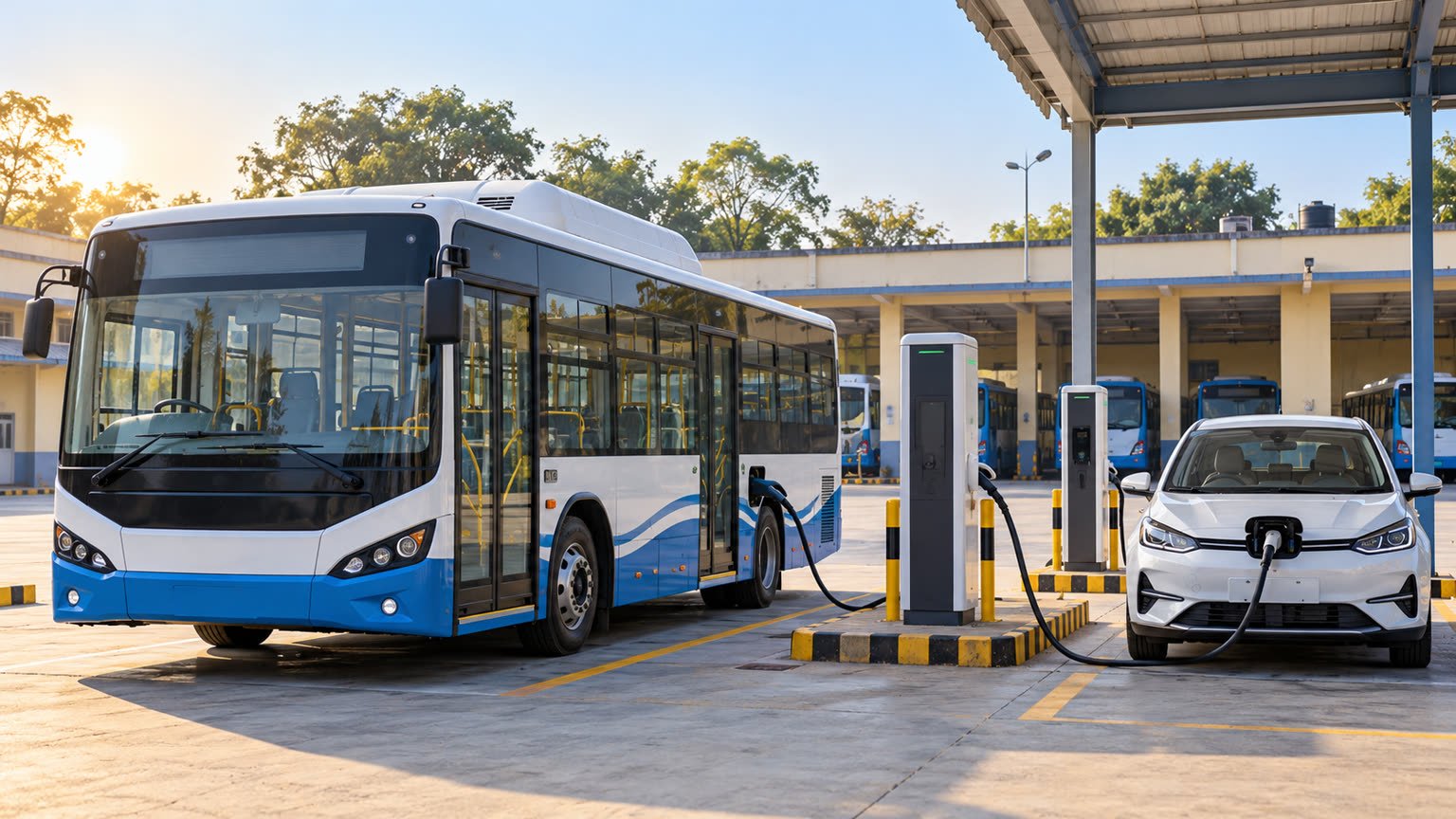
Bihar’s transport department says it has completed an electric-vehicle charging station in Purnia and is building depot facilities in Patna, Muzaffarpur, Darbhanga and Gaya. The plan is aimed at electric buses, but the department says the fast-charging network will also be available to private cars, two-wheelers and three-wheelers, giving local EV users more public charging options as construction progresses.
Key takeaways
- The Purnia charging station is reported complete; work is under way in four other Bihar districts.
- Each planned depot facility is described as having eight charging points and capacity for 50 buses.
- Patna is getting direct-current charging sites at 10 government campuses or facilities for private EVs.
- The reported Bihar EV policy support is 25% of eligible machinery and equipment cost, capped at ₹10 lakh per charging unit.
- Station access, commissioning dates and charging tariffs still need to be checked locally before a trip.
What Bihar has confirmed
Reports published on 17 Oct 2026 by The Times of India and Amar Ujala, both citing the Bihar Transport Department, said the Purnia installation is complete. The same update placed construction activity in Patna, Muzaffarpur, Darbhanga and Gaya. It describes eight charging points at each depot, with every facility designed to cater to 50 buses.
The department’s reported estimate is that an electric bus would take about one to one-and-a-half hours to charge at these facilities. It also said charging stations were already operational at the Phulwarisharif, Rajgir and Muzaffarpur bus depots, while the wider four-district rollout continues. The wording matters: a completed installation or an operational bus-depot charger does not automatically mean every charger is open to private motorists at all hours.
Why private EV users should pay attention
The expansion is not limited to buses. The department says the fast-charging facilities are intended to serve private two-wheelers, three-wheelers and cars as well. In Patna, direct-current chargers are being installed at 10 government campuses and facilities under a memorandum of understanding between the transport department and Indian Oil Corporation.
The reported locations include major public offices and facilities such as the Main Secretariat, Bihar Assembly, Collectorate, Vishwesaraiya Bhawan, Vikas Bhawan, the Kankarbagh multimodal hub, Beur Mor and Hardinge Road. The reports say a private electric car could take roughly 45 to 60 minutes to charge there, with two-wheelers and three-wheelers also included in the intended user base.
For an EV owner, this is useful infrastructure news but not a promise of instant statewide coverage. A charger may be physically installed while commissioning, software access, payment integration, connector compatibility or public opening hours are still pending. Before relying on a new site, check its live status and access rules in the state-wise EV charging directory and with the local operator.
What the Bihar EV subsidy means
The Government of Bihar Transport Department’s notification listing records the Bihar Electric Vehicle Policy 2026 under a 15 May 2026 policy entry. The 17 Oct reports say the policy provides a subsidy for private entities and individuals setting up public charging stations: 25% of the cost of machinery and equipment, subject to a maximum of ₹10 lakh per unit.
The reported eligible locations include government buildings, commercial complexes, hotels, hospitals, shopping malls, multiplexes, residential apartments and housing societies with more than five families. Petrol pumps, highway dhabas and restaurants, bus stands and parking areas are also listed. This is an eligibility framework, not a guarantee that every proposal will receive money; applicants need to verify the current process, documents, cap and approval authority with the department.
What changes for a Bihar road trip
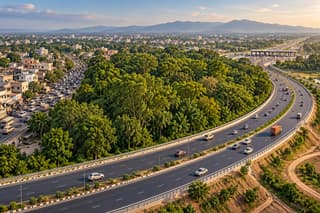
For someone travelling through Bihar in an EV, the practical change will arrive in stages. Purnia has a reported completed station, while the four-district depot work and Patna’s private-vehicle sites are still being built or expanded. That makes route planning more important than simply counting announced chargers.
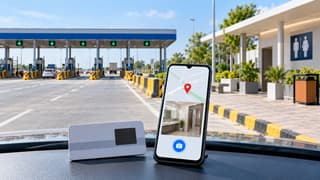
Use the road-trip planner to map a journey, then confirm that a charging point is public, compatible with the vehicle and accepting sessions on the day of travel. Keep a battery buffer for diversions and queues, especially where a depot charger may be serving buses first. A charging time of 45 to 60 minutes is also materially different from a short conventional fuel stop, so the stop needs to be built into the schedule.
No electricity tariff was provided in the two 17 Oct reports. That means this announcement alone cannot support a rupee-per-kilometre saving claim. Readers comparing an EV trip with a petrol or diesel trip can use the fuel-cost calculator for the conventional-fuel side, but should obtain the actual charger tariff and any parking or service fee before comparing total trip cost.
What to watch next
The next useful milestones are the commissioning dates for the four district depots, a clear public-access list for the Patna sites, and live information on connector type, payment method, operating hours and tariffs. Fleet operators will also want to know how the eight-point depot design is scheduled across 50 buses and whether private vehicles are admitted during bus charging windows.
Bihar’s update therefore matters as a local infrastructure expansion rather than a completed statewide network. It gives EV users and potential charging-site operators a clearer direction, while the reader’s immediate checklist remains simple: verify the charger, verify access, allow time for charging and keep a backup option for the route.
Sources
- The Times of India — Purnia gets EV charging station, work on in 4 districts (17 Oct 2026)
- Amar Ujala — Bihar EV charging network to expand; fast-charging facilities to be available for vehicles (17 Oct 2026)
- Government of Bihar, Transport Department — Bihar Electric Vehicle Policy 2026 notification listing (15 May 2026)