Bihar's Khagaria-Purnea highway corridor is set for a major upgrade after the Cabinet approved four-laning of the NH-31 and NH-231 section on BOT-Toll mode. The approved project covers 143.529 km and carries a total capital cost of Rs 3,936.05 crore. For road users, fleet operators and freight customers, the practical significance is clear: the corridor is expected to reduce travel time to about two hours while improving road safety, fuel efficiency and vehicle operating costs.
The Khagaria-Purnea NH-31/NH-231 upgrade is designed to reduce bottlenecks across eastern Bihar and improve freight movement, fuel efficiency and toll-road connectivity.What has been approved
The Ministry of Road Transport and Highways said the Cabinet Committee on Economic Affairs, chaired by Prime Minister Narendra Modi, approved the upgradation of the Khagaria-Purnea section of NH-31 and NH-231 to 4-lane standard. The project will be executed on Build-Operate-Transfer (Toll), or BOT-Toll, mode. The total civil cost is Rs 2,467.77 crore, land acquisition cost is Rs 290.16 crore, and total capital cost is Rs 3,936.05 crore.
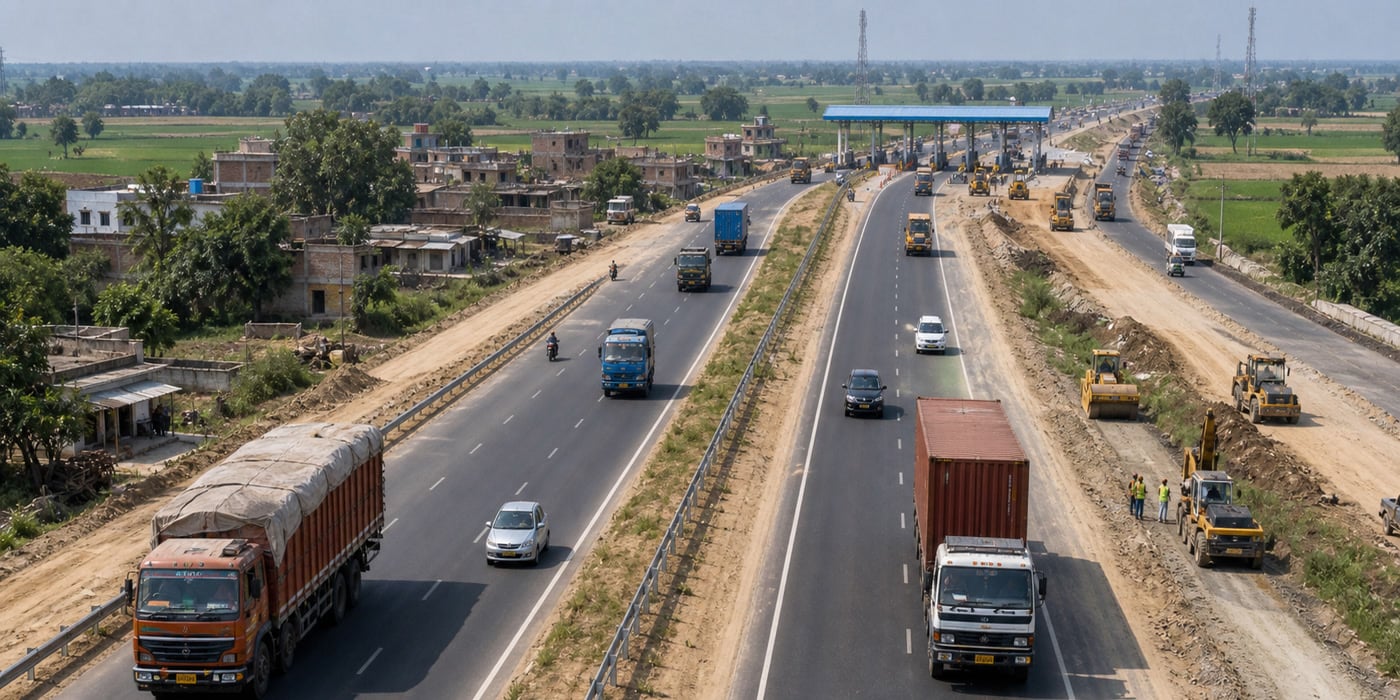
The official release says the project will address severe geometric deficiencies, sharp curves and congestion in built-up areas across Khagaria, Bhagalpur, Katihar and Purnia districts. A 6.729 km greenfield bypass of Purnea city will also be developed as part of the project. The corridor is part of the Patna-Purnea movement axis and will connect important national and state highways, including NH-27, NH-13, NH-131A, NH-231, SH-95 and SH-77.
Why fuel users should care
A highway upgrade does not reduce the retail price of petrol or diesel. Its fuel impact comes through movement efficiency. Vehicles burn more fuel when they brake frequently, crawl through dense town traffic, take inefficient turns through sharp curves, idle at bottlenecks, or slow down around unsafe geometry. A 4-lane corridor with improved alignment and bypass movement can reduce fuel consumed per trip even when pump prices remain unchanged.
This matters most for diesel-heavy users: trucks, buses, small commercial vehicles and inter-district logistics operators. If the upgraded route improves average speed and reduces repeated stop-start sections, fleet owners can see better trip planning, lower per-tonne delivery cost and less driver waiting time. For passenger cars and buses, the benefit is more predictable journey time and less wear on tyres, brakes and suspension.
Freight and logistics impact
The corridor is not only a commuter road. PIB says the upgraded highway will link five PM Gati-Shakti economic nodes, including one textile cluster, two mega food parks and two fishing-seafood parks. It will also connect 11 logistics nodes, including four major railway stations, one airport, four national highways and two state highways. The railway stations named in the official release are Khagaria, Bhagalpur, Katihar and Purnia, while Purnea airport is also listed as a transport node.
For eastern Bihar, that mix is important. Food processing, textile movement, seafood-linked cold chain and agricultural cargo all need reliable road access to railheads, airports, warehouses and markets. If trucks can move through the corridor with fewer bottlenecks, local producers and traders can reduce delivery uncertainty. Multimodal integration also matters because a highway that connects with railway stations and airports can support first-mile and last-mile movement instead of forcing every shipment to rely on long-distance road haulage.
What BOT-Toll means for users
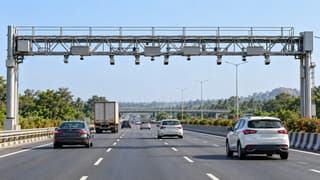
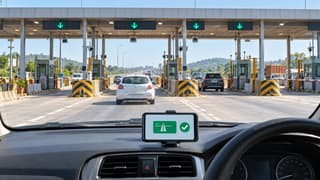
The BOT-Toll model is important because it signals that tolling will be part of the project economics. In a BOT-Toll project, the private concessionaire typically builds, operates and maintains the road, and recovers investment through toll collection during the concession period, subject to the contract and government toll rules. For users, the key question will be the final toll notification, plaza placement, FASTag arrangements and any applicable local user pass provisions.
The tradeoff is straightforward. Road users may pay tolls, but the corridor is expected to reduce travel time, improve safety and lower operating cost. For freight operators, the relevant calculation is not toll cost alone. It is toll plus fuel, driver time, vehicle maintenance, delay risk and cargo reliability. If the project cuts travel time to around two hours on the section as stated by the government, the cost equation may still improve for many commercial users.
Key numbers at a glance
| Detail | Project figure |
|---|---|
| Corridor | Patna-Purnea axis, Khagaria-Purnea section |
| National highways | NH-31 and NH-231 |
| Length | 143.529 km |
| Capital cost | Rs 3,936.05 crore |
| Delivery model | BOT-Toll |
| Bypass | Greenfield Purnea bypass of 6.729 km |
Before and after impact
Before this approval, the corridor had the classic problems of a busy regional highway: sharp curves, built-up congestion, uneven speeds and mixed local and long-distance traffic. That combination increases accident risk and makes trip times unreliable. It also raises hidden costs for users because slow movement consumes more fuel and makes vehicles spend more time on the road for the same distance.
After completion, the upgraded corridor is expected to provide faster and safer movement across Khagaria, Bhagalpur, Katihar and Purnia. The greenfield Purnea bypass is especially important because bypasses can remove through-traffic from dense urban sections. That helps long-distance vehicles avoid city-edge congestion while local traffic gets relief from heavy trucks passing through built-up areas.
Who is affected
- Truck operators: Better alignment and four-laning can reduce fuel burn, waiting time and maintenance stress.
- Toll users: Drivers should watch final toll rates, FASTag rules and plaza locations once project implementation advances.
- Local commuters: Town-edge congestion may ease if bypass and access design are implemented well.
- Farm and food supply chains: Faster links to food parks, railway stations and regional markets can reduce delivery uncertainty.
- Passenger transport: Buses and shared mobility operators may get more reliable schedules on the Patna-Purnea movement axis.
What to watch next
The next practical milestones are concession award, land and pre-construction clearances, Purnea bypass alignment readiness, toll-notification details, work-zone traffic management and construction timelines. Since the route passes through active districts and built-up sections, safe temporary diversions will matter during construction. The full benefits will be visible only after the project reaches stable operations.
The final takeaway is simple: this is a fuel and logistics story as much as a highway story. The Khagaria-Purnea upgrade can improve road safety, reduce inefficient fuel burn, strengthen freight links to rail and airport nodes, and give eastern Bihar a more predictable toll-road corridor. The approval is only the first step, but it creates a clear project for road users and transport operators to track.
Sources: PIB Ministry of Road Transport and Highways, Moneycontrol, Financial Express, LatestLY ANI, Patna Press.