Biofuel Expo 2026 opens today, 4 June 2026, at India Expo Centre, Greater Noida, and runs until 6 June. For fuel users, transporters and the auto sector, the event is more than an industry gathering. It brings together the technologies and suppliers behind ethanol, biodiesel, biogas, compressed biogas, biomass conversion, hydrogen integration, plant machinery and biofuel refineries at a time when India is pushing harder to reduce crude-oil dependence.
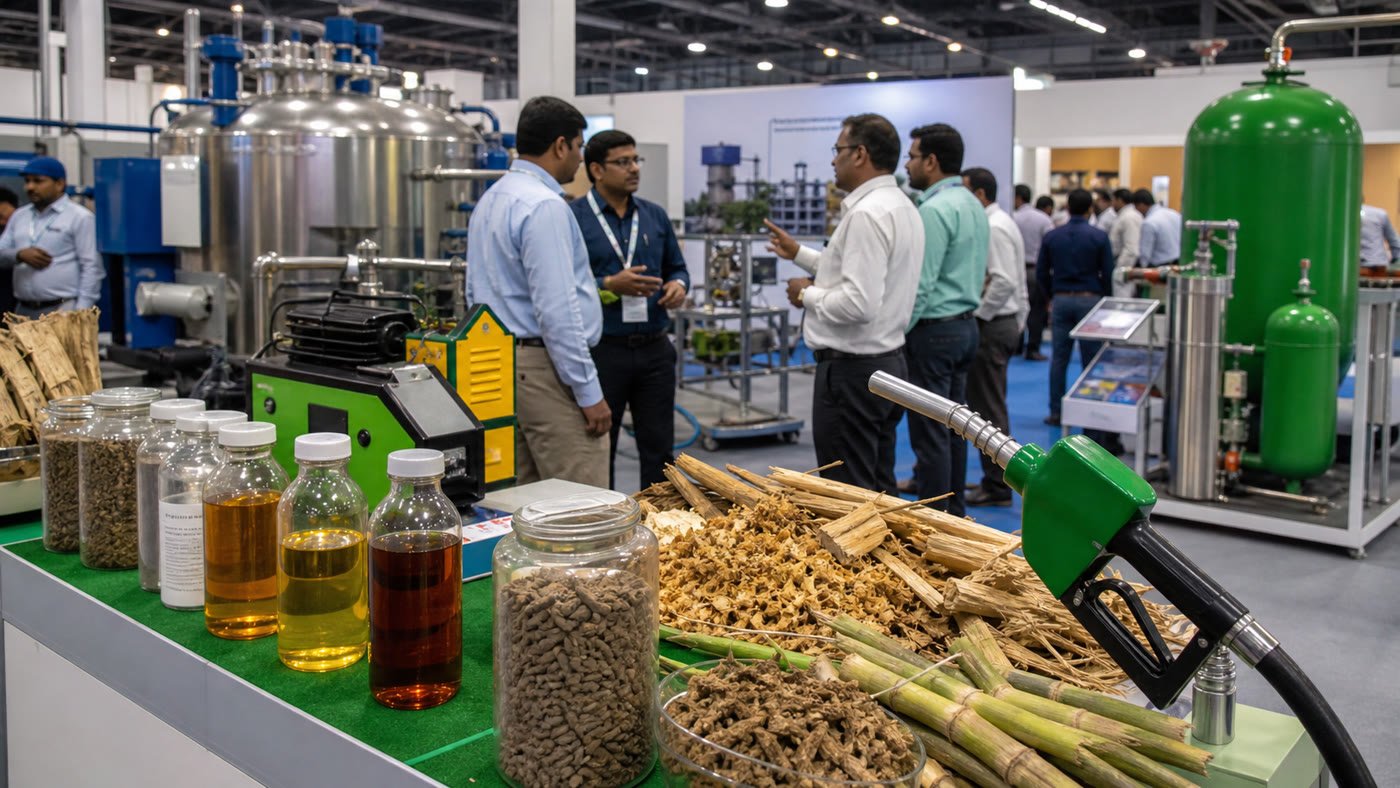
Representative editorial image: the Biofuel Expo story is about ethanol, biodiesel, biogas, biomass feedstock and refinery equipment becoming part of India’s fuel-transition supply chain.What is happening?
The official Biofuel Expo 2026 listing describes the event as an international exhibition and conference on biofuel manufacturing processes, plant machinery, equipment and allied industries. The show is focused on biofuel producers, biomass aggregation machinery, biofuel plant equipment manufacturers, biofuel refineries and allied stakeholders.
The expo’s stated focus areas include ethanol and the blending ecosystem, biogas and compressed biogas, biomass and waste-to-energy, biodiesel and alternative liquid fuels, green hydrogen integration, technology innovation, investment, policy, financing, infrastructure and supply chain. The official event information also lists 200-plus exhibitors, 20,000-plus visitors from India and abroad, country buyer delegations, confirmed state government delegations and an India Biofuel Meet on 4 June.
Why this matters for ordinary fuel users
Biofuels already affect everyday motorists in India through ethanol-blended petrol. The government advanced the 20 percent ethanol blending target from 2030 to Ethanol Supply Year 2025-26 under the National Policy on Biofuels framework. Official petroleum ministry information has also discussed measures to expand feedstock and production infrastructure for higher ethanol blending.
That means the future of petrol is not only about crude oil and refinery margins. It is also about ethanol production capacity, maize and sugar-linked feedstock, distillery infrastructure, blending logistics, material compatibility and vehicle calibration. When an event puts ethanol technology, plant machinery and policy stakeholders in one place, it becomes directly relevant to the price, availability and performance experience of petrol users.
The transport and logistics angle
For diesel-heavy sectors such as freight, agriculture, buses and construction movement, biodiesel and compressed biogas are the more relevant parts of the story. Biodiesel can be blended into diesel in suitable applications, while CBG can support commercial vehicles, city buses and captive fleets where supply points are planned around fixed routes.
The impact will not be instant. Transporters cannot switch fuel systems overnight, and operators need dependable fuel quality, warranties, storage standards, safety rules and route-level supply. But the direction is clear: India is trying to widen the fuel basket so that every litre of mobility energy does not have to come from imported crude. Biofuel suppliers, equipment makers and policy platforms can help reduce that gap if projects move from exhibition floors to bankable plants and reliable retail or fleet supply.
| Biofuel segment | Why it matters for FuelPrice readers |
|---|---|
| Ethanol | Directly linked to petrol blending, E20 compatibility, farm feedstock demand and pump-level fuel experience. |
| Biodiesel | Relevant for diesel fleets where quality, blending rules and engine acceptance are clearly defined. |
| Biogas and CBG | Can support buses, delivery fleets and local transport if supply is reliable and route-based. |
| Biomass and waste-to-energy | Turns crop residue and organic waste into usable energy, reducing waste pressure and supporting rural income. |
Who is affected?
The direct participants are biofuel producers, refinery equipment makers, EPC companies, distilleries, machinery suppliers, government delegations, investors and buyers. The indirect impact reaches much further. Farmers can be affected through feedstock demand. Oil marketing companies need reliable blending supplies. Vehicle owners care about fuel compatibility and mileage. Fleet operators care about route economics and downtime. State governments care about waste management, rural industry and local employment.
For automakers, the biofuel push also changes product planning. E20-compatible petrol vehicles, flex-fuel experiments, CNG and CBG applications, and hybrid strategies all sit within a wider discussion on how India reduces oil-import exposure without asking every user to shift to battery EVs immediately.
What changes now?
The immediate change is visibility. By placing ethanol, biogas, biomass, biodiesel and hydrogen on a dedicated platform, Biofuel Expo 2026 gives suppliers and buyers a concentrated space to compare technology, cost, policy direction and partnership models. The bigger change will come only if exhibitors convert discussions into capacity expansion, quality improvement and dependable supply contracts.
The watch points are clear: new distillery and refinery equipment partnerships, CBG project announcements, feedstock aggregation models, financing commitments, state-level procurement interest, and technology that can improve fuel quality or lower production costs. For consumers, the most important outcome is not the number of booths. It is whether the clean-fuel ecosystem becomes strong enough to support stable blending, transparent fuel quality and fewer crude-linked shocks over time.
Final takeaway
Biofuel Expo 2026 matters because India’s fuel transition is not only an EV story. Ethanol, biodiesel, biogas, CBG, biomass and green hydrogen all have roles in reducing crude dependence, supporting rural supply chains and giving transport users more options. The event’s real value will be measured by how quickly the ideas on display become cleaner, reliable and commercially viable fuel supply for Indian roads.