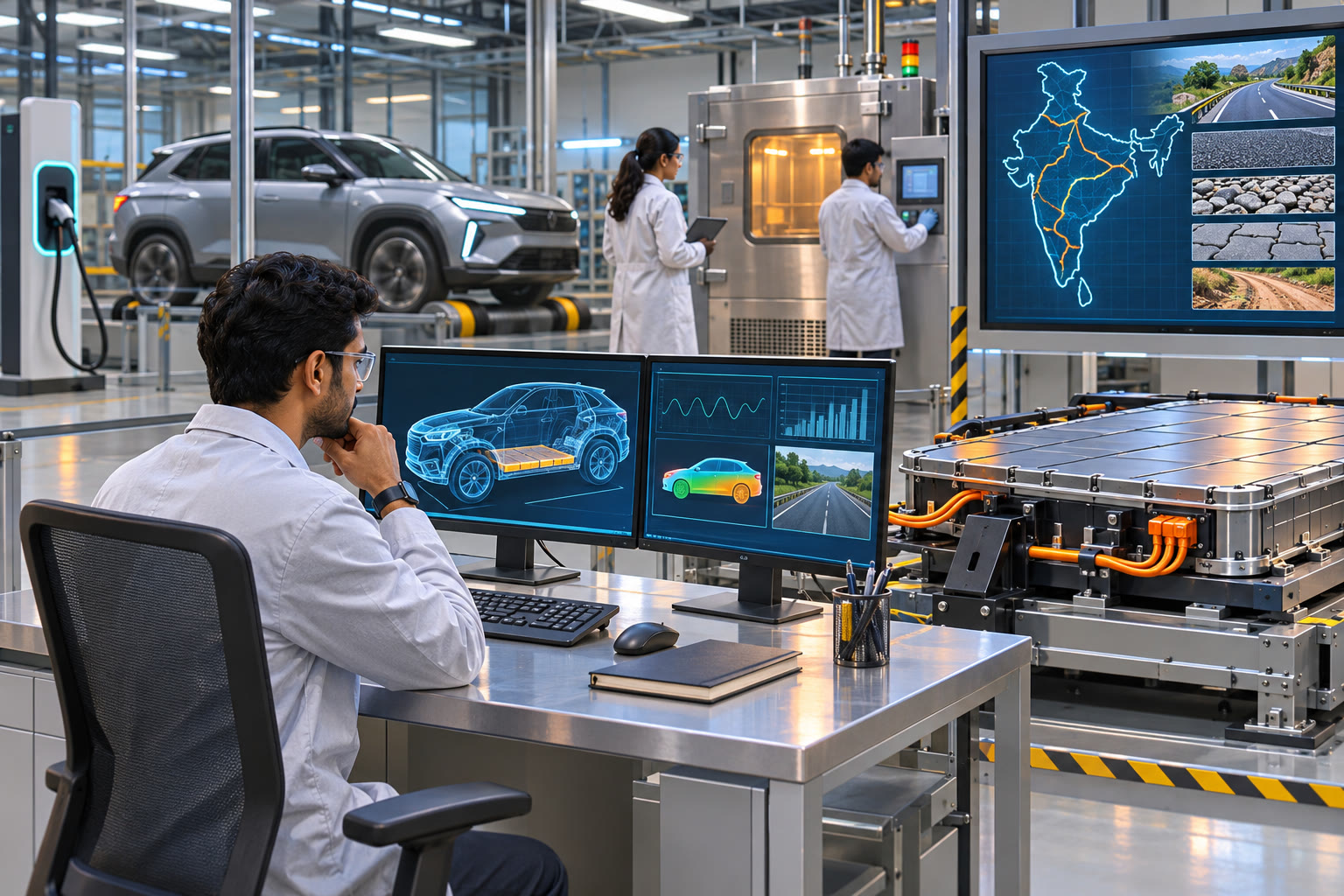
India’s electric-vehicle market is growing quickly, but BloombergNEF says its market-led 2030 scenario misses the country’s road-transport electrification ambitions in every segment except three-wheelers. The finding does not change any law or prohibit petrol and diesel vehicles; it shows where buyers, fleet operators and charging providers may see the slowest shift.
Key takeaways
- BloombergNEF’s Economic Transition Scenario puts three-wheelers on track to meet India’s 2030 electrification ambition, while other vehicle segments fall short.
- Passenger EV sales are projected to exceed 3.05 lakh units in 2026, up 42% from 2025, with a 6.7% share of passenger-vehicle sales.
- Passenger EV sales are projected at about 6.21 lakh units in 2030, or 10.2% of sales; electric two-wheelers are at 9.4% of sales for January–October 2026.
- Medium and heavy electric commercial vehicles are projected to account for only 1.5% of their sales in 2030, showing why long-haul fleet adoption may take longer.
- India could need more than 87 lakh charging connectors and about US$29 billion of charging investment by 2040 under the same scenario.
What BloombergNEF’s forecast says
Business Standard and Autocar Professional reported the India findings on 23 Nov 2026 from BloombergNEF’s India Electric Vehicle Outlook 2026. The report uses an Economic Transition Scenario, which models adoption driven mainly by market forces and existing policy settings rather than assuming a large additional policy push. That distinction matters: the figures are a projection, not a new government forecast, deadline or vehicle rule.
India’s EV sales crossed 24 lakh units in 2025, according to the BNEF figures reported on 23 Nov 2026, and reached 29 lakh units in the first 10 months of 2026. That growth is real, but the mix is uneven. Three-wheelers have the strongest operating case because commercial users typically run predictable routes and can spread a vehicle’s purchase cost over frequent daily use.
Cars, two-wheelers and trucks are moving at different speeds
Passenger cars
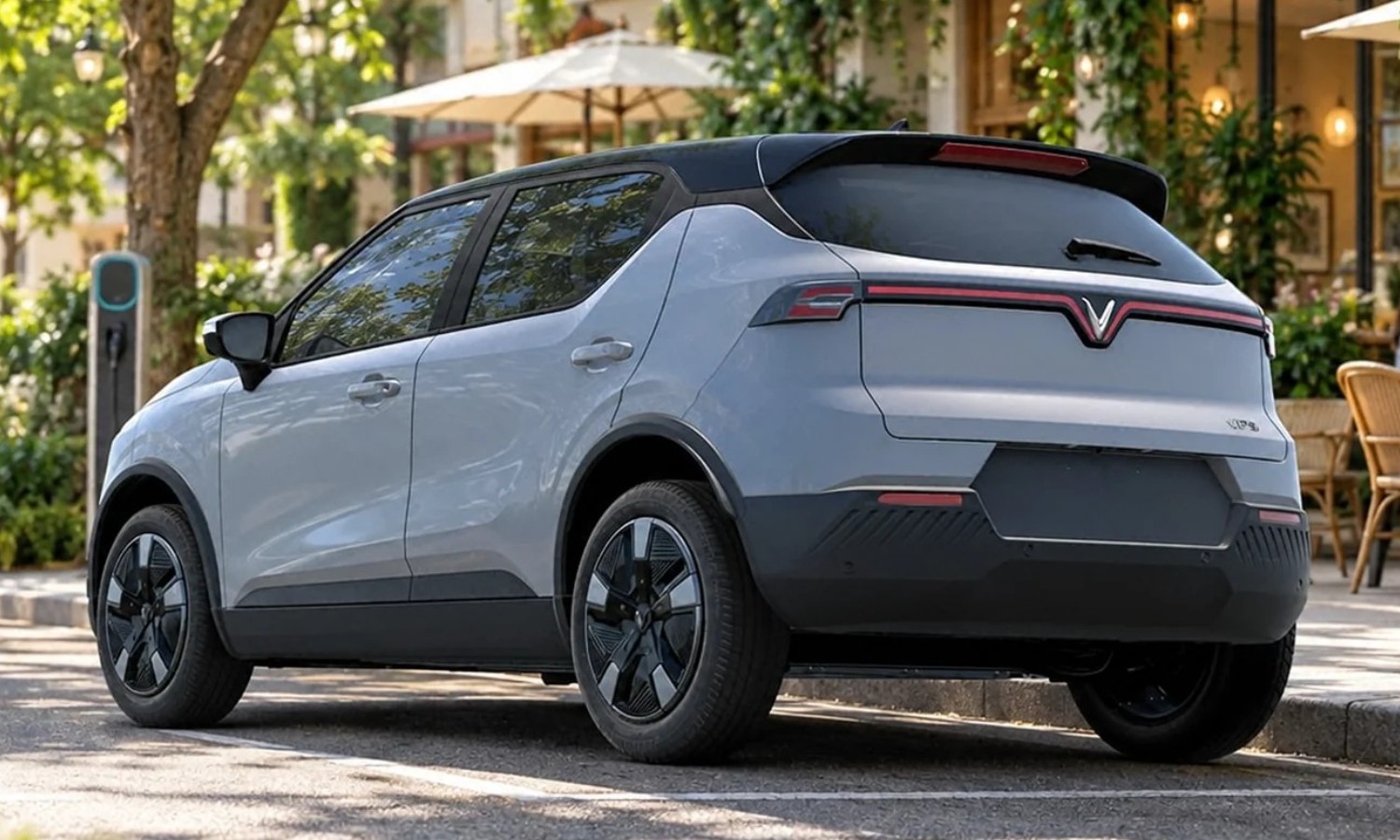
BNEF expects passenger EV sales to exceed 3.05 lakh units in 2026, a 42% rise over 2025, giving electric cars a 6.7% share of passenger-vehicle sales. In the same 23 Nov 2026 reporting, the outlook puts passenger EV sales at about 6.21 lakh units in 2030, equal to 10.2% of that segment’s sales. Private buyers are leading this part of the market, while the limited supply of affordable cars suitable for shared mobility and competition from CNG vehicles are slowing fleet-led adoption.
For a car buyer, the practical implication is that model choice and charging access are likely to improve, but a petrol, CNG or hybrid vehicle will remain part of the market for years. A purchase decision should therefore compare the vehicle’s upfront cost, home or workplace charging, expected monthly kilometres and the availability of public chargers on regular routes. A fuel-cost calculation for a typical trip can provide a useful baseline before comparing it with an EV’s charging cost.
Two-wheelers
Electric two-wheelers accounted for 9.4% of two-wheeler sales during January–October 2026, based on the BNEF data reported by Business Standard and Autocar Professional on 23 Nov 2026. Annual electric two-wheeler sales are projected to exceed 45 lakh units by 2030, but the report expects scooters to lead while slower motorcycle electrification keeps the overall segment from moving as quickly as the three-wheeler market.
For riders, the relevant questions are less about a national target and more about daily use: whether the battery covers the round trip, how long charging takes, what warranty and service support apply, and whether a dependable charger is available at home or near work. The state-wise EV charging directory can help readers check the infrastructure around their usual travel area.
Commercial vehicles
Medium and heavy commercial EVs are projected to represent only 1.5% of sales in 2030, although the share could rise to 40.4% by 2040, according to the BNEF outlook as reported on 23 Nov 2026. This slower path reflects the tougher requirements of freight work: payload, range, charging turnaround, route reliability and financing all matter at the same time. For transport operators, the near-term change is more likely to be selective deployment on predictable routes than a wholesale replacement of diesel trucks.
Charging investment is the next constraint
BNEF’s 2040 scenario estimates that India may need more than 87 lakh charging connectors and around US$29 billion in charging infrastructure investment. It also projects EV charging electricity demand above 96 terawatt-hours, or 6.8% of India’s total electricity demand, in 2040. Autocar Professional reported these figures on 23 Nov 2026 alongside the passenger-car, two-wheeler and commercial-vehicle projections.
Those figures are a reminder that charger count alone is not enough. Location, uptime, grid connections, payment reliability and the ability to serve two-wheelers, cars and commercial vehicles will determine whether an EV works on a real route. For road-trip planning, users can combine a charger check with the FuelPrice road-trip planner before setting out.
What India’s policy target means
NITI Aayog’s India Electric Mobility Index 2025, published on 15 Sep 2026, records the Government of India’s 30% EV-sales target for 2030 and describes the policy support already directed towards vehicle incentives, charging infrastructure and domestic manufacturing. BNEF’s assessment should be read against that ambition: it says existing market forces and policy settings may not be enough to reach the intended pace across cars, two-wheelers and commercial vehicles.
The report does not announce a change to the 2030 target, a ban on internal-combustion vehicles or a new subsidy. The next developments to watch are the price and availability of mass-market EVs, the rollout and uptime of public charging, state-level fleet rules, and whether heavy-vehicle manufacturers can offer workable electric options for freight routes.
What this means for drivers
For petrol and diesel users, the transition is unlikely to remove the need to track fuel costs in the near term. BNEF projects India’s road-fuel demand to peak above 25 lakh barrels per day in 2034 and decline to slightly above 23 lakh barrels per day by 2040, as lower demand from passenger cars and two- and three-wheelers offsets rising commercial-vehicle use. That is a long-range demand scenario, not a prediction of pump prices. Drivers can continue to check current fuel prices by city and compare them with their own monthly usage.
For EV buyers and operators, the central lesson is to match the vehicle with the route and duty cycle. Three-wheelers may reach economic viability earlier, while passenger cars and heavy trucks need more affordable products, dependable charging and stronger infrastructure investment. India’s EV transition is advancing, but BNEF’s numbers show that it will not move at one speed.
Sources
- BloombergNEF — Electric Vehicle Outlook 2026 — 16 Jun 2026
- Business Standard — India set to miss 2030 EV adoption targets barring three-wheelers: BNEF — 23 Nov 2026
- Autocar Professional — India EV Market To See 5.2 Million Passenger EV Sales By 2040 — 23 Nov 2026
- NITI Aayog — India Electric Mobility Index 2025 — 15 Sep 2026