BYD is preparing to widen its India playbook beyond pure electric vehicles. The company is expected to debut its first plug-in hybrid model for the Indian market on 9 June 2026, and the update matters because it sits exactly between two buyer concerns that are shaping the market right now: fuel cost control and charging confidence.
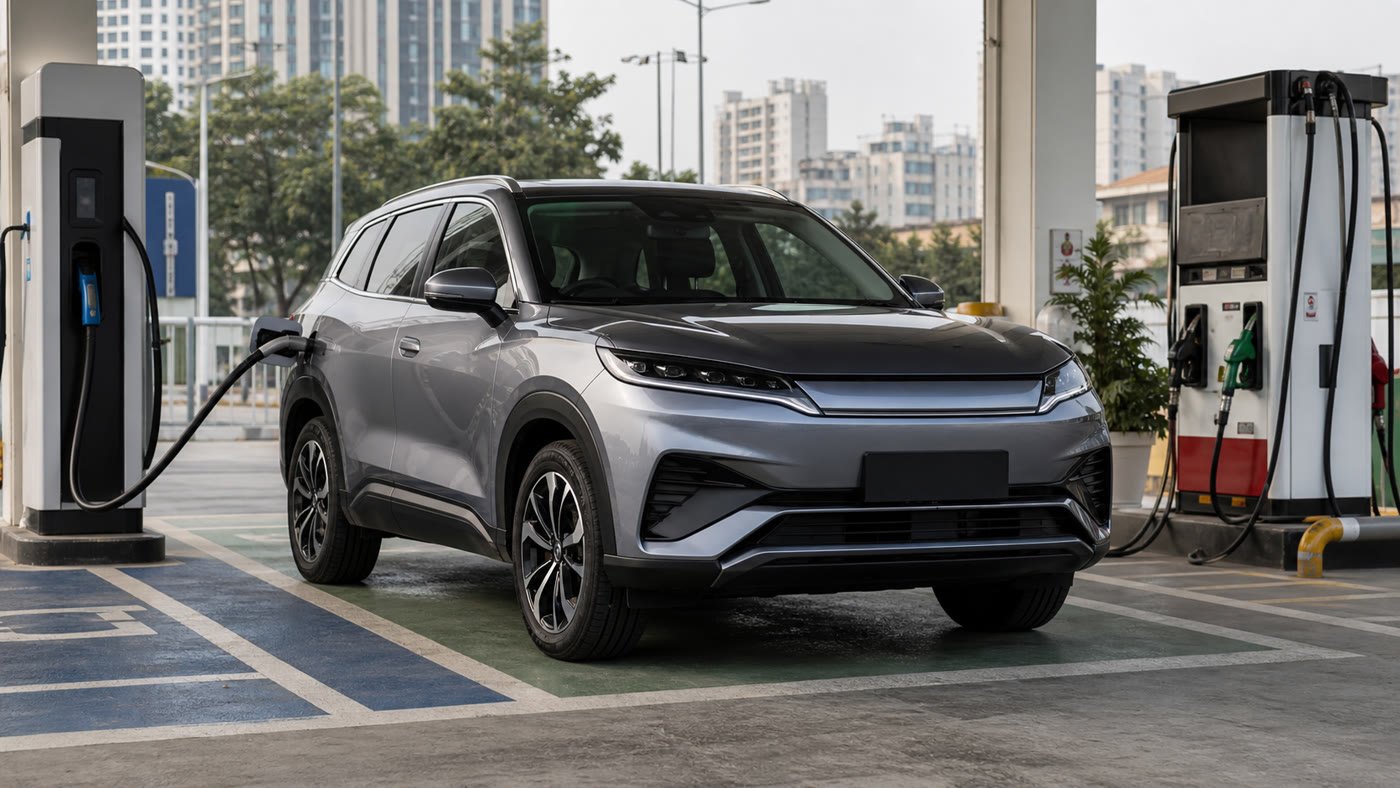
Representative editorial image: BYD's India PHEV debut points to a dual petrol-and-electric ownership model for premium SUV buyers.What has happened?
Multiple auto industry reports say BYD will introduce its first plug-in hybrid offering for India on 9 June. The company has so far sold only battery-electric passenger vehicles in the country, including models such as the Atto 3, Seal, eMAX 7 and Sealion 7. The upcoming model is expected to use BYD's DM-i Super Plug-In Hybrid EV technology, although the exact India nameplate, price, import route and variant line-up are still awaited.
That makes the launch more than another SUV debut. It is a strategic change in how BYD may address India, where a section of buyers wants electric driving in the city but still worries about highway charging coverage, charging time, apartment parking access and resale uncertainty. A plug-in hybrid can answer part of that concern by giving electric-only driving for shorter use and a petrol engine for longer trips.
Why this is important for Indian fuel users
A conventional strong hybrid reduces petrol consumption without needing external charging. A battery electric vehicle removes tailpipe fuel use but needs charging access. A plug-in hybrid sits between the two. If charged regularly, it can cover a large share of daily urban driving on electricity and use petrol mainly for longer journeys or when charging is unavailable.
For Indian premium SUV buyers, that creates a different cost equation. Daily commuting could become cheaper where home, office or destination charging is available. At the same time, the petrol engine reduces the anxiety of inter-city travel, especially on routes where fast chargers are still unevenly distributed. The actual saving will depend heavily on battery size, electric-only range, fuel efficiency in hybrid mode, charging tariffs and user discipline. A PHEV that is rarely plugged in can behave like a heavier petrol hybrid and lose much of its advantage.
What models are being discussed?
BYD has not officially confirmed the India model. Auto reports point to two likely candidates: the Atto 2 DM-i or the Sealion 6 DM-i. The Atto 2 would place BYD closer to India's high-volume midsize SUV zone, while the Sealion 6 would position the brand in a more premium SUV space above that segment.
International specifications indicate why the story has gained attention. Reports on the Atto 2 DM-i mention a 1.5-litre petrol engine paired with battery options and claimed combined WLTP ranges approaching 928 km to 998 km depending on battery size. Reports on the Sealion 6 DM-i mention 1.5-litre naturally aspirated and turbo-petrol options, battery packs up to 26.6 kWh in some markets, and claimed combined range figures of up to 1,092 km. These numbers should be treated as global-market references until BYD confirms India specifications, homologation details and test-cycle claims.
| Point to watch | Why it matters |
|---|---|
| India model name | Decides whether BYD targets the midsize SUV buyer or a more premium SUV customer. |
| Battery size and EV-only range | Determines how much daily driving can realistically happen without petrol. |
| Price and import route | CBU pricing would keep it premium; CKD/local assembly could make it more competitive. |
| Charging support | A plug-in hybrid works best when buyers can charge regularly and conveniently. |
Impact on buyers, competitors and the market
BYD's move also comes at a time when India's electrification path is no longer one-dimensional. Battery EVs are gaining share in city use and fleet segments, while hybrids continue to attract buyers who want fuel savings without changing refuelling habits. Plug-in hybrids add a third track: they reward charging behaviour but do not fully depend on public charging infrastructure.
For competitors, the pressure may be felt in two directions. Mainstream SUV makers with petrol-hybrid models will need to explain how their real-world fuel economy compares with a chargeable hybrid. Premium EV makers will need to defend the simplicity and lower maintenance promise of full electric vehicles against the long-range flexibility of PHEVs. Charging-network operators may also see PHEVs as incremental users, especially at homes, offices, hotels and highway stops where short charging sessions can extend electric running.
For FuelPrice readers, the practical question is simple: will this reduce petrol dependence in real use? The answer is yes only for buyers who plug in frequently. A well-used PHEV can cut fuel bills in city traffic, where electric motors are efficient and regenerative braking helps. But if the car is bought mainly for the badge and used without charging, fuel savings may disappoint.
What changes now?
The immediate change is buyer awareness. BYD is signalling that its India portfolio may no longer be EV-only. That gives urban premium buyers another option if they are not ready for a full EV but still want lower running costs and a cleaner daily-drive profile. The June 9 debut will clarify whether BYD is aiming for an accessible midsize PHEV, a premium long-range SUV, or a cautious imported technology showcase.
The bigger impact will depend on pricing. If the model lands at a steep premium, it may remain a niche technology statement. If BYD can position it close enough to premium petrol-hybrid SUVs and long-range EVs, the market conversation could shift quickly from "EV versus petrol" to "which electrified format fits my use case?"
Final takeaway
BYD's first India plug-in hybrid debut is important because it targets the gap between fuel-price sensitivity and charging anxiety. It will not replace EVs, and it will not automatically beat strong hybrids on simplicity. But if the India model gets useful electric range, sensible pricing and clear charging support, it could make plug-in hybrids a more serious part of India's premium SUV and fuel-saving conversation.