A Chandigarh District Consumer Commission has ordered the National Highways Authority of India (NHAI) and a FASTag issuer to refund a ₹100 penalty and pay ₹4,000 in compensation after a driver showed that his wallet had a positive balance. The order matters because it applies NHAI’s existing non-negative-balance rule to a real toll dispute, while also showing why drivers need to preserve transaction evidence.
The Indian Express reported on 31 Oct 2026 that the commission’s 22 Oct order found the penalty collection deficient in service. It did not create a new nationwide toll charge, but it gives FASTag users a useful reference when a tag is treated as low-balance despite money being available in the linked wallet.
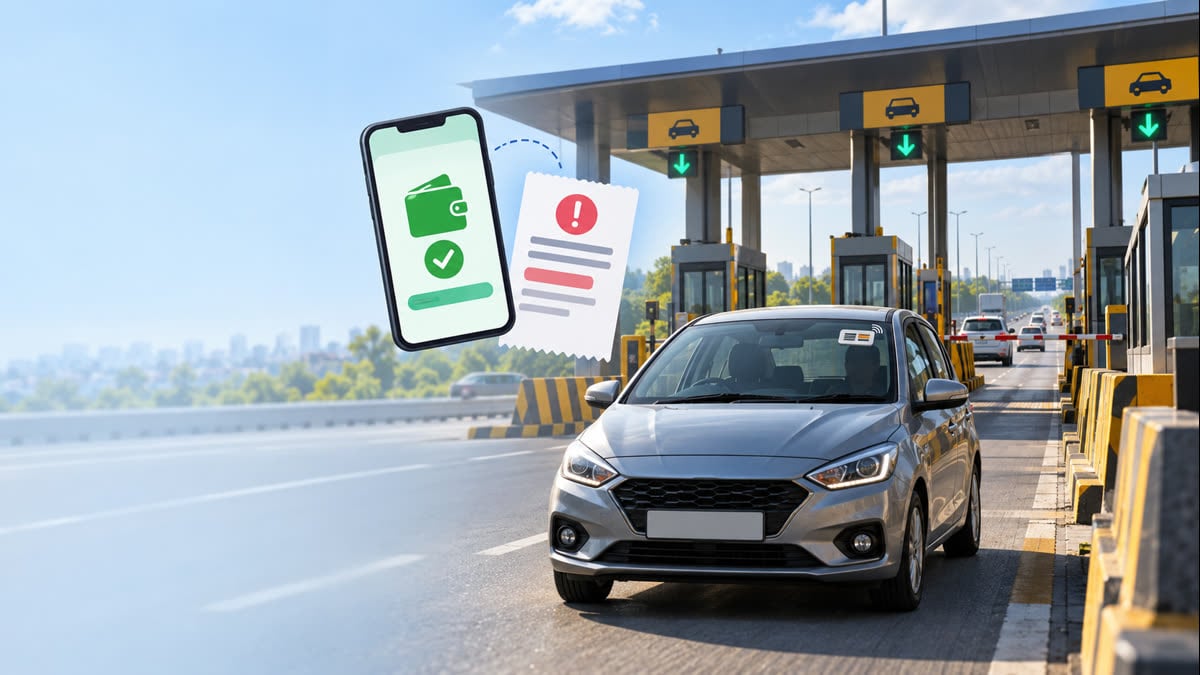
Illustration: FuelPrice; generated visual for context, not a photograph of the reported case.
Key takeaways
- The Chandigarh commission ordered a ₹100 penalty refund and ₹4,000 compensation in the reported case.
- The driver said the FASTag wallet showed ₹210 when the system treated it as insufficient and collected a toll plus penalty.
- NHAI’s official 10 Feb 2021 release says passenger vehicles should be allowed through when the FASTag account or wallet balance is non-negative.
- The order is case-specific. It does not mean every toll penalty is automatically invalid or that every driver will receive compensation.
What the Chandigarh FASTag order says
According to The Indian Express report, the dispute began during a Chandigarh-to-Jalandhar journey on 17 Jun 2022. At Behram Toll Plaza, the system flagged the vehicle’s FASTag balance as insufficient. The complainant said the wallet had a positive balance of ₹210, but the transaction included a ₹100 toll and a ₹100 penalty.
The issuing bank argued that ₹150 was being held as a minimum security balance and could not be used for the toll payment. The commission did not accept that explanation as a justification for the penalty. The report said the bank, as the service provider managing the FASTag account, was required to align its operation with the applicable NHAI rules and clearly communicate its usage conditions.
The commission also rejected the argument that the time limit for a chargeback had expired. Its finding, as reported, was that an expired dispute window could not remove liability after a service deficiency had been established. The commission ordered the ₹100 refund and awarded ₹4,000 compensation to the user.
NHAI was proceeded against ex parte because it did not appear before the commission, according to the report. That point is important: the order records the facts and evidence placed before the forum and should not be read as a fresh NHAI clarification issued after a hearing on all sides.
What NHAI’s balance rule actually says
NHAI’s official release dated 10 Feb 2021 removed the mandatory threshold amount that some issuer banks had required in addition to the security deposit for the passenger segment. It said users would be allowed to pass through a toll plaza if the FASTag account or wallet balance was non-negative. After the crossing, if the account became negative, the bank could recover the amount from the security deposit, which the user would then replenish during a recharge.
In practical terms, the rule separates a normal toll debit from an extra minimum-balance condition. A driver still has to pay the applicable toll. The commission’s finding was about the additional penalty in a situation where the reported wallet balance was positive, not about avoiding tolls altogether.
This distinction is also why drivers should not assume that every failed FASTag transaction has the same cause. An inactive tag, an incorrectly linked vehicle, a system mismatch or a genuinely negative balance may create a different dispute. The Chandigarh order is best understood as a reminder to compare the penalty reason with the wallet ledger and the rule that applied on the date of the journey.
What drivers can do after a disputed deduction
Keep the record trail together before raising a complaint. Save the FASTag statement showing the balance immediately before the toll, the debit SMS or app notification, the toll receipt, the date and time, the plaza name and any screenshot showing the tag status. If the issuer says a security balance was unavailable for use, ask it to state that policy and its basis in writing.
Raise the issue first through the issuing bank’s FASTag grievance channel and retain the complaint number. A clear request should identify the disputed transaction, separate the normal toll from the alleged penalty and attach the account statement. If the response is not satisfactory, the National Consumer Helpline number reported in the case coverage is 1915. Keep copies of every reply rather than relying only on a call.
For trip planning, the toll charges and trip-cost calculator can help establish the expected toll before departure. Drivers planning a longer journey can also use the road-trip planner to keep the route, stops and likely toll points in one place. These tools do not replace a bank or toll dispute, but a clear expected-cost record can make an unexpected deduction easier to identify.
What changes now
Nothing in the report indicates a new automatic refund process for all FASTag users. The immediate change is narrower: the Chandigarh commission has held the parties responsible in one documented dispute and has treated an internal minimum-balance explanation as insufficient to justify the penalty in those facts.
For drivers, the useful takeaway is to check the wallet ledger rather than relying only on a recharge confirmation, and to preserve proof when a penalty appears alongside a positive balance. The NHAI rule remains the reference point, while the consumer commission order shows that an issuer’s internal process cannot by itself settle whether a disputed charge was justified.