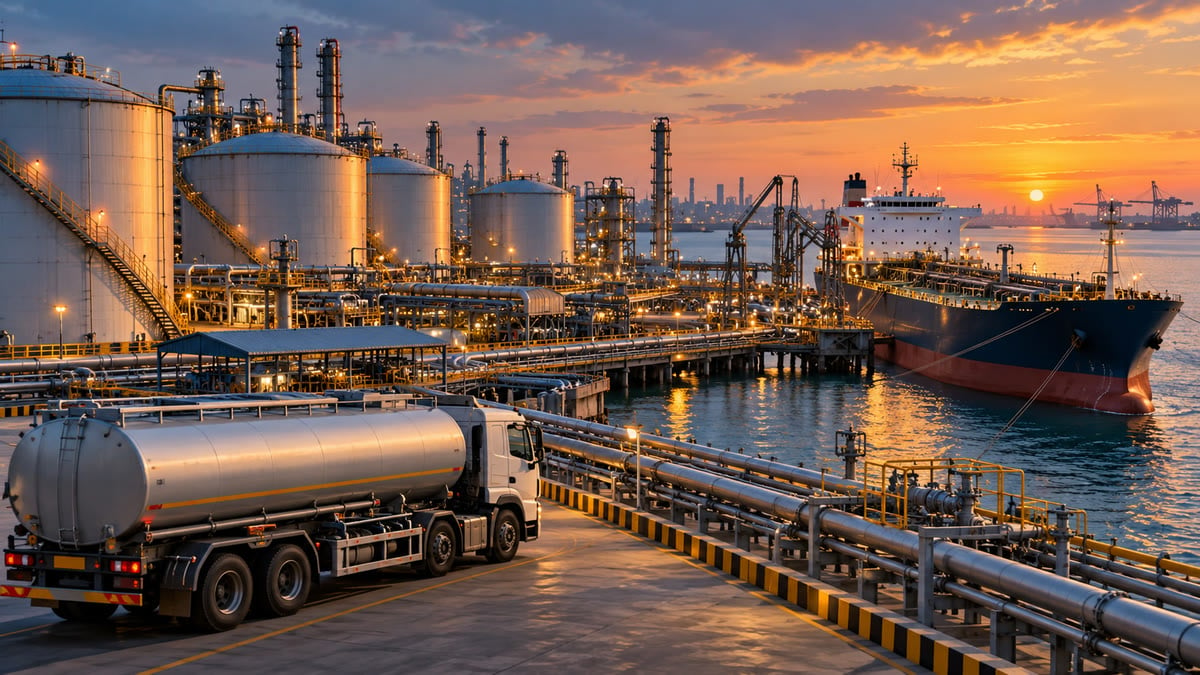
India has scrapped the special additional excise duty (SAED) on petrol exports and raised the levies on high-speed diesel and aviation turbine fuel (ATF) exports from 31 October 2026. For Indian drivers, the key point is that this is an export-duty change and does not automatically raise or cut the price shown at domestic petrol or diesel pumps.
Key takeaways
- The Ministry of Finance changed the export SAED rates through notifications dated 31 October 2026, effective on the date of publication.
- Petrol export SAED has moved from ₹2.50 per litre to nil.
- High-speed diesel export SAED has risen from ₹8.50 per litre to ₹11.50 per litre.
- ATF export SAED has risen from ₹10.50 per litre to ₹11 per litre.
- The immediate change applies to eligible export clearances; it is not a new domestic pump-price schedule.
What the government changed
The Department of Revenue issued Notification No. 55/2026-Central Excise (G.S.R. 963(E)) for petrol and high-speed diesel, alongside Notification No. 56/2026-Central Excise (G.S.R. 964(E)) for ATF. The official notifications say the revised rates come into force on the date they are published in the Gazette, 31 October 2026.
The change is mixed rather than a blanket cut or increase. Petrol exports no longer carry the ₹2.50-per-litre SAED rate that applied on 16 October 2026. At the same time, the high-speed diesel export rate has increased by ₹3 per litre, while the ATF export rate has increased by ₹0.50 per litre. Reuters, in a report carried by The Economic Times on 31 October 2026, reported the same revised rates and described the move as a response to continuing disruption in international energy markets.
Rate comparison: before and after 31 October
The table compares the rates listed in the Petroleum Planning and Analysis Cell's official table for 16 October 2026 with the rates in the 31 October 2026 Gazette notifications. All figures are export SAED and are stated per litre.
| Product | Rate on 16 Oct 2026 | Rate from 31 Oct 2026 | Change |
|---|---|---|---|
| Petrol exports | ₹2.50 per litre | Nil | Down ₹2.50 per litre |
| High-speed diesel exports | ₹8.50 per litre | ₹11.50 per litre | Up ₹3 per litre |
| ATF exports | ₹10.50 per litre | ₹11 per litre | Up ₹0.50 per litre |
PPAC's table, which was updated on 30 October 2026, records the earlier 16 October rates. The Gazette is the primary source for the new rates. That distinction matters because the change is effective from 31 October 2026, not from the date on which a news report or a price comparison is read.
Why the export levy matters
Export levies affect the economics of sending refined fuel outside India. A higher levy can reduce the margin on an eligible diesel or ATF export transaction, while removing the petrol levy can improve the relative economics of petrol shipments. The practical effect for a refinery or exporter will still depend on its contracts, international selling price, freight, currency and other applicable charges.
The levy framework was introduced in March 2026 as global energy markets were disrupted by the West Asia conflict. Reuters reported that the government had used the export charges to discourage refiners from favouring overseas sales when export realisations were stronger. The latest notification does not by itself establish how much product will be redirected to Indian buyers or whether any later retail price change will follow.
For that reason, a headline saying that petrol export duty has been scrapped should not be read as a domestic petrol-price cut. Likewise, the ₹3-per-litre increase on high-speed diesel exports is not a ₹3-per-litre increase at an Indian diesel pump. The notification amends the export-levy provisions; any domestic retail change would need to be reflected through separate pricing or tax action.
What it means for drivers and fleet operators
For a private driver, the immediate task is to check the price of fuel available in the city where the vehicle will be filled, rather than use an export-duty number. Fuel users can check current domestic rates on the live fuel prices page, with the date and location in mind.
For a road trip, the export levy is not an input into the vehicle's domestic fuel bill. The useful calculation remains expected litres multiplied by the applicable retail price, plus tolls and other trip costs. The fuel cost calculator can help turn the current pump price and planned distance into a trip estimate.
Fleet operators should separate three figures in their records: the domestic purchase price, the vehicle's consumption and any export-market information used for procurement or business planning. The latest notification changes the third item for eligible export clearances; it does not replace the retail diesel price used for Indian routes. State-wise diesel references are available through the diesel price by state hub.
What to watch next
The next useful signals will be separate from this notification: any further Ministry of Finance revision, official data on refined-fuel exports, and any retail price announcement by oil marketing companies. Those developments would need their own dates and sources before they could be used to explain a change in what drivers pay.
Until then, the clean reader takeaway is simple: the government has changed the tax treatment of specified fuel exports, while domestic motorists should continue to use the prevailing retail price for budgeting. The export move may matter to refiners, exporters and fuel-market watchers, but it is not evidence of an immediate pump-price hike or cut.
Questions readers may have
Will petrol become cheaper at Indian pumps?
Not automatically. The nil rate applies to the specified petrol export levy. It is not an announcement of a domestic retail price reduction.
Has domestic diesel tax gone up by ₹3 per litre?
No such domestic increase is stated in these export notifications. The ₹3-per-litre change is the difference between the earlier and revised high-speed diesel export SAED rates.
Should this change my trip-cost estimate?
Use the current domestic petrol or diesel retail price for the location and date of your trip. Do not substitute the export levy for the price charged to a domestic vehicle owner.
Sources
- Ministry of Finance, Notifications 55/2026-Central Excise and 56/2026-Central Excise — 31 October 2026
- The Economic Times/Reuters, Government scraps export duty on petrol, raises levies on diesel and ATF — 31 October 2026
- Petroleum Planning and Analysis Cell, Excise duty on Export of Petrol, Diesel & ATF — table updated 30 October 2026
This article is for general information only and is not financial, insurance or legal advice.