India's passenger-vehicle market is entering the festive buying window with strong recent volumes, but ICRA expects the pace to cool to 4–6% in FY2027. For Indian drivers considering a new car, the signal is mixed: showroom availability may be better than last year, yet higher vehicle prices and a high comparison base could make the next few months more about value than volume.
Key takeaways
- ICRA's 30 Oct 2026 monthly update expects passenger-vehicle wholesale volumes to expand 4–6% in FY2027. This is a forecast, not a confirmed sales outcome.
- Wholesale dispatches rose 22% year on year to 4.6 lakh units in September 2026, while retail registrations rose 43%, according to ICRA.
- In H1 FY2027, wholesale dispatches grew about 28% and retail registrations about 29% year on year.
- Dealer inventory reached 43–45 days at the end of September 2026, up from 38–40 days in August but below about 60 days a year earlier.
- Utility vehicles remained the main volume driver, while electric passenger-vehicle penetration rose to 7.5% in H1 FY2027 from 4.2% in FY2026.
What ICRA's latest update says
ICRA's 30 Oct 2026 passenger-vehicle update describes a market that is still expanding, but from an unusually strong base. Wholesale volumes rose 22% year on year to 4.6 lakh units in September 2026. Retail sales grew 43% in the same month, supported by replacement demand after GST rate changes, newly launched models, higher discounts and continued festive buying interest.
The rating agency said the first half of FY2027 also benefited from a relatively modest comparison base. Wholesale dispatches grew about 28% and retail registrations about 29% year on year in April–September 2026. Fortune India and Autocar Professional independently reported the same ICRA figures, including the 22% wholesale rise and the 4–6% full-year outlook.
Why the full-year forecast is lower
A 4–6% growth forecast does not mean that passenger-vehicle sales are expected to fall. It means ICRA expects the total number of vehicles dispatched to dealers to rise more slowly than the first-half rate. The difference matters because wholesale and retail measure different stages: wholesale is the movement of vehicles from manufacturers to dealers, while retail is the customer's registration or purchase.
ICRA identified several reasons for the expected moderation in the second half. The comparison base becomes higher after the strong second half of FY2026, some pent-up demand is likely to normalise, and higher vehicle costs can affect affordability. The agency also flagged a weak monsoon as a risk to rural sentiment and vehicle purchases. These are expectations and risks, not a statement that every manufacturer or segment will follow the same path.
What rising inventory means for buyers
ICRA put dealer inventory at 43–45 days at the end of September 2026, compared with 38–40 days in August and about 60 days in September 2025. The increase reflects pre-festive channel filling, while the lower year-on-year level suggests that dealers entered the season with less stock than last year. Fortune India reported the same inventory range and described it as festive readiness rather than evidence of a broad demand collapse.
For a buyer, the practical effect is a potentially wider choice of variants and colours during the festive period. It does not automatically mean that every car has a discount or that an older vehicle is a better deal. The useful checks are the manufacturing month, exact variant availability, delivery date and the complete on-road quote. A headline discount can also have different value depending on whether it applies to the ex-showroom price, accessories, insurance or registration charges.
Running cost remains a separate part of the decision. A buyer comparing petrol, diesel, CNG, hybrid and electric options can estimate a planned route or monthly use with the fuel cost calculator, using the current local fuel price and the vehicle's realistic efficiency. That comparison is more meaningful than comparing showroom prices alone because annual distance and city-versus-highway use change the result.
SUVs lead, while EV share is rising
Utility vehicles accounted for about 68% of passenger-vehicle volumes in H1 FY2027, according to ICRA figures reported by Motoring Trends. That keeps SUVs and other utility vehicles at the centre of the market, even as entry-level and compact-car volumes show some recovery after the GST changes. The segment mix matters for fuel use, insurance, tyres and the space available for family or commercial travel.
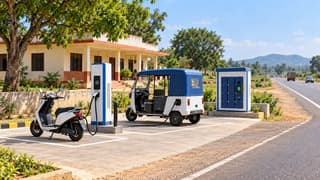
Electric passenger-vehicle penetration rose to around 7.5% in H1 FY2027 from 4.2% in FY2026, the same ICRA data shows. EV buyers need to consider charging access alongside purchase price and claimed range. The state-wise EV charging directory can help with a first check of public charging availability, but home charging, route frequency and local electricity costs still need separate consideration.
What to check before booking
- Ask for the full on-road price for the exact variant, including registration, insurance, accessories and any time-bound benefit.
- Check the vehicle's manufacturing month, delivery timeline and pre-delivery inspection process rather than relying only on a stock photograph or a verbal promise.
- Compare the estimated monthly running cost with the expected purchase price and financing cost, without assuming that a fuel-type change guarantees a saving.
- For an EV, check home parking, charging permission, public charging on regular routes and battery-warranty terms. The road-trip planner can help map longer journeys before comparing charging stops.
What to watch next
The next useful signal will be whether October and November retail registrations convert the festive stock into actual customer deliveries. A fall in dealer inventory after the season would indicate that demand absorbed much of the channel filling; persistent stock would put more focus on discounts and production discipline. Price increases, rural demand after the monsoon and the mix between SUVs, compact cars and EVs will also shape whether ICRA's 4–6% FY2027 expectation holds.
Reader takeaway
India's car market is not facing a simple boom-or-bust story. Strong H1 volumes and festive demand are real, but the latest ICRA view says the pace is likely to normalise as the base rises and prices remain a constraint. Buyers get the most useful signal by comparing the full on-road cost, stock age, running pattern and powertrain fit for their own use, rather than treating one month of sales or one discount headline as the whole market.