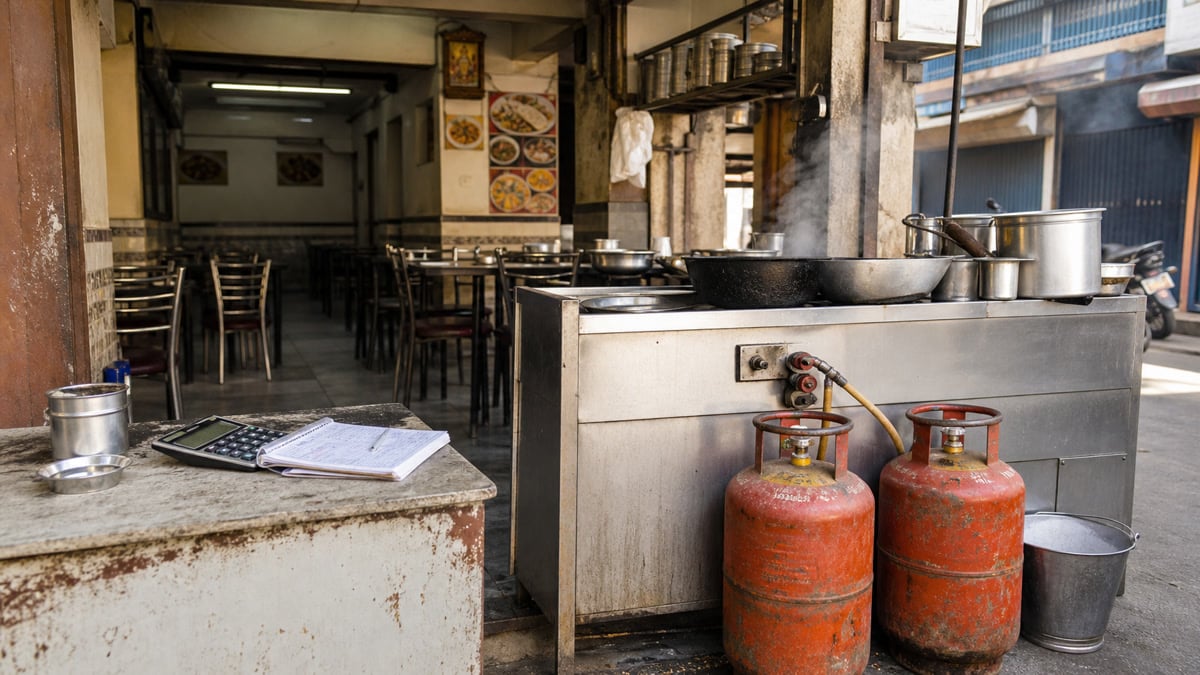
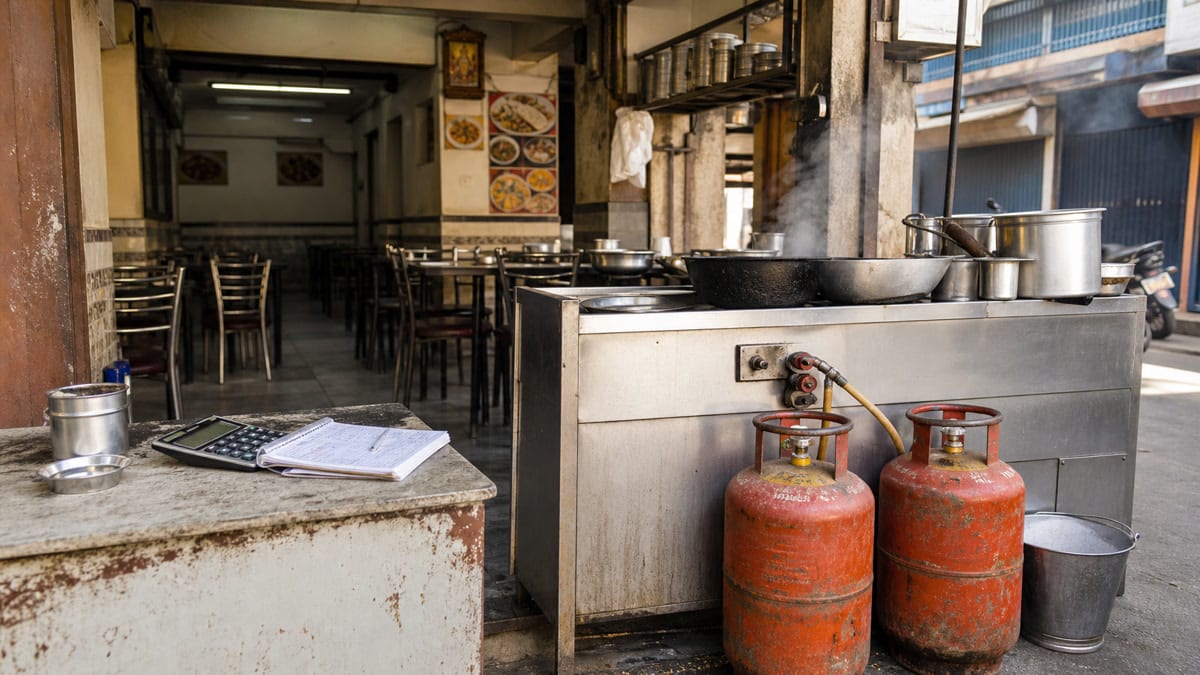
 Commercial LPG is a direct operating input for restaurants, dhabas, caterers, bakeries and cloud kitchens, making monthly cylinder revisions important for food-service costs.
Commercial LPG became costlier from June 1, 2026, adding another input-cost pressure point for India's food-service and hospitality businesses. IndianOil's official product-price page lists the 19-kg Indane commercial LPG cylinder at Rs 3,113.50 in Delhi, Rs 3,255.50 in Kolkata, Rs 3,067.50 in Mumbai and Rs 3,283.00 in Chennai, with the page updated on June 1.
The headline number looks like a monthly fuel-price revision, but the impact is wider than a single cylinder. Commercial LPG is used by restaurants, hotels, caterers, canteens, bakeries, sweet shops, tea stalls, quick-service restaurants and cloud kitchens. For small operators, every monthly increase gets multiplied across several cylinders, daily cooking hours, delivery demand and the ability to pass costs to customers.
What changed from June 1?
Oil marketing companies revise LPG prices periodically, and commercial cylinder rates usually move more frequently than household cooking-gas prices. Business-news reports said the latest revision raised Delhi's 19-kg commercial LPG cylinder by Rs 42 and Kolkata's by Rs 53.50 from June 1. IndianOil's live price page confirms the current metro rates for 19-kg Indane cylinders.
| Metro | 19-kg Indane commercial LPG price | Official update date |
|---|---|---|
| Delhi | Rs 3,113.50 | June 1, 2026 |
| Kolkata | Rs 3,255.50 | June 1, 2026 |
| Mumbai | Rs 3,067.50 | June 1, 2026 |
| Chennai | Rs 3,283.00 | June 1, 2026 |
Why restaurants and food businesses feel it first
Households may not immediately notice this revision because the domestic 14.2-kg LPG cylinder rate has not changed in the same way. The commercial market is different. A food business buys fuel as a production input, not as a household utility. One busy kitchen may consume several commercial cylinders in a month, while a caterer handling events or a cloud kitchen running long shifts can burn through cylinders faster during peak demand.
For a small restaurant, a Rs 42 to Rs 54 rise per cylinder is not automatically a menu-price shock. The pressure builds through repetition. If a business uses 20 cylinders in a month, even a modest monthly revision becomes a meaningful cost line. If the same operator is also dealing with higher rent, delivery commissions, wages, packaging and raw-material volatility, LPG becomes one more item compressing margins.
That is why the revision matters for FuelPrice readers. Commercial LPG is not petrol or diesel at the pump, but it still sits inside the broader fuel-cost chain. It affects the price of cooked food, catering, hotel kitchens, sweet shops, institutional canteens and food-delivery operations. When operators cannot absorb the increase, the cost may show up through smaller discounts, higher menu prices, minimum-order changes or tighter control over operating hours.
Domestic LPG is unchanged, but inflation risk still exists
IndianOil's product-price page lists non-subsidised 14.2-kg Indane domestic LPG rates at Rs 913 in Delhi, Rs 939 in Kolkata, Rs 912.50 in Mumbai and Rs 928.50 in Chennai, with that household-rate table last updated on March 7, 2026. This separation is important. Keeping domestic LPG stable shields household cooking budgets directly, but commercial LPG can still influence household spending indirectly through the food-service economy.
The practical impact is most visible in urban areas where eating out, office canteens, delivered meals and local food stalls are part of daily consumption. A family may not pay more for its home LPG cylinder in June, but it may see restaurants become more cautious with discounts or menu pricing if fuel, staff and ingredient costs stay elevated together.
What businesses can do now
For large hotel chains and organised quick-service restaurants, fuel-cost changes are usually tracked through procurement dashboards and monthly cost reviews. They may hedge through contracts, centralised purchasing or menu engineering. Small operators have fewer tools, so basic control becomes more important: tracking cylinder consumption per day, maintaining burner efficiency, preventing leakage and wastage, comparing LPG with piped gas availability where possible, and reviewing whether discounts are still sustainable.
Not every business will pass the increase to customers immediately. Competitive pressure often forces operators to absorb small changes for some time. However, repeated monthly increases can change that calculation, especially for kitchens with high cooking intensity and low average order values. For food delivery, where platforms, packaging and commissions already shape margins, commercial LPG revisions can add to the cost stack even if the customer only sees the final menu price.
What to watch next
The next key marker is the July 1 LPG revision cycle. If commercial LPG cools, food businesses may get some breathing room. If rates remain high or rise again, small restaurants and caterers will face a tougher choice between absorbing costs and adjusting prices. FuelPrice readers should also watch whether petrol, diesel, ATF and LPG revisions begin moving together, because that would signal broader energy-cost pressure across mobility, logistics and consumer services.
Final takeaway: the June 1 commercial LPG revision is not a household-cylinder hike, but it is still a fuel-price event with real consumer impact. It raises the operating cost of food businesses that depend on 19-kg cylinders and could quietly influence restaurant economics, catering charges and delivered-food pricing through June.