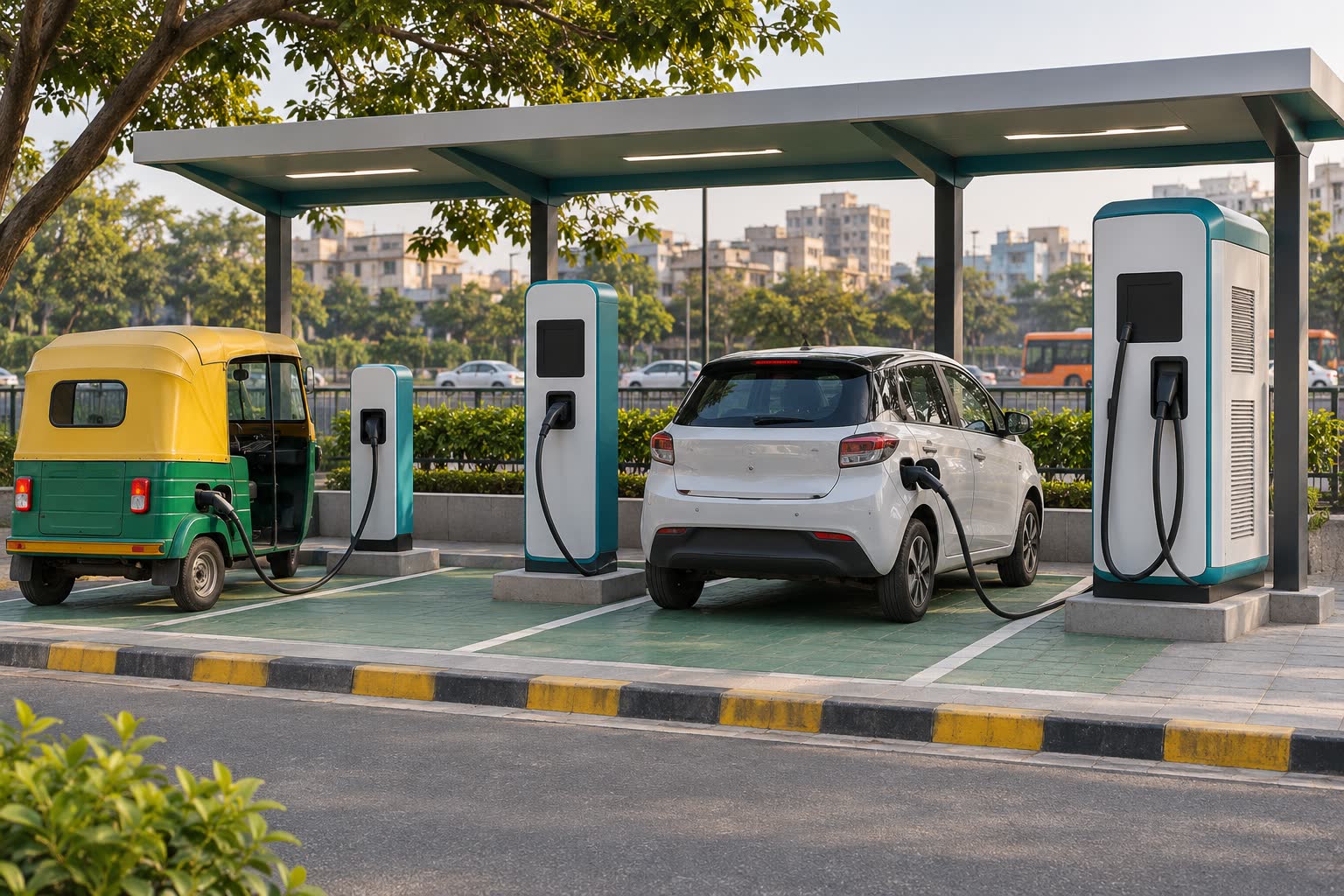
Delhi plans to add 540 public EV chargers at 180 locations, with Delhi Transco Limited (DTL) beginning the process of appointing operators under the PM E-DRIVE scheme, according to reports published on 25 Nov 2026. For EV owners, e-rickshaw and e-auto operators, fleet managers and N1 goods-carrier users, the planned network could make public charging easier to find, but it is not an operational launch announcement and no charger-wise tariff or go-live date has been reported.
Key takeaways
- The planned project covers 540 public chargers at 180 Delhi locations, with an estimated cost of about ₹62 crore.
- Each site is planned with 12 kW, 60 kW and 120 kW charger units, each described as having two charging guns.
- The reported mix is intended to serve electric two-wheelers, three-wheelers, N1 goods carriers and electric four-wheelers.
- DTL has started the operator-appointment process, but the reports do not give a public commissioning date or charger-wise tariff.
- The rollout is linked to Delhi's phased EV transition, so commercial operators and high-use EV owners are likely to be among the first users watching availability.
What Delhi has announced
Hindustan Times carried a Press Trust of India report on 25 Nov 2026, while India Today published a separate account the same day. Both reports cited officials and an official project document for the 540-charger, 180-location plan. The project is estimated to cost around ₹62 crore, and DTL has begun the process of appointing operators to install and run the chargers under PM E-DRIVE.
The 180 sites are divided into two packages of 90 locations each. The first package broadly covers western and northern Delhi, while the second covers southern, New Delhi and eastern parts of the capital. The reports also identify a Central Delhi cluster around Inderlok, Pratap Nagar, Shahi Idgah, Kamla Market and Lok Nayak Jai Prakash Hospital, along with two co-located sites at Rajghat.
What each planned site is expected to offer
The power ratings and intended users reported for each site are summarised below. This is the proposed configuration, not confirmation that every charger is live today.
| Planned charger | Reported target users | Practical check |
|---|---|---|
| 12 kW, two charging guns | Electric two-wheelers and three-wheelers | Confirm connector compatibility and the vehicle's maximum charging input. |
| 60 kW, two charging guns | N1 goods carriers and electric four-wheelers | Check whether the vehicle can accept the rated output and whether both guns share power. |
| 120 kW fast charger, two charging guns | Higher-throughput public charging for compatible EVs | A 120 kW rating does not mean every EV will charge at 120 kW; the vehicle and battery set the limit. |
For drivers, the kilowatt figure is only one part of the charging experience. Vehicle battery size, state of charge, thermal conditions, connector type, site power and queues can change the time spent at a charger. A two-gun setup also does not by itself guarantee that both vehicles will receive the full rated output at the same time.
Who is likely to benefit first
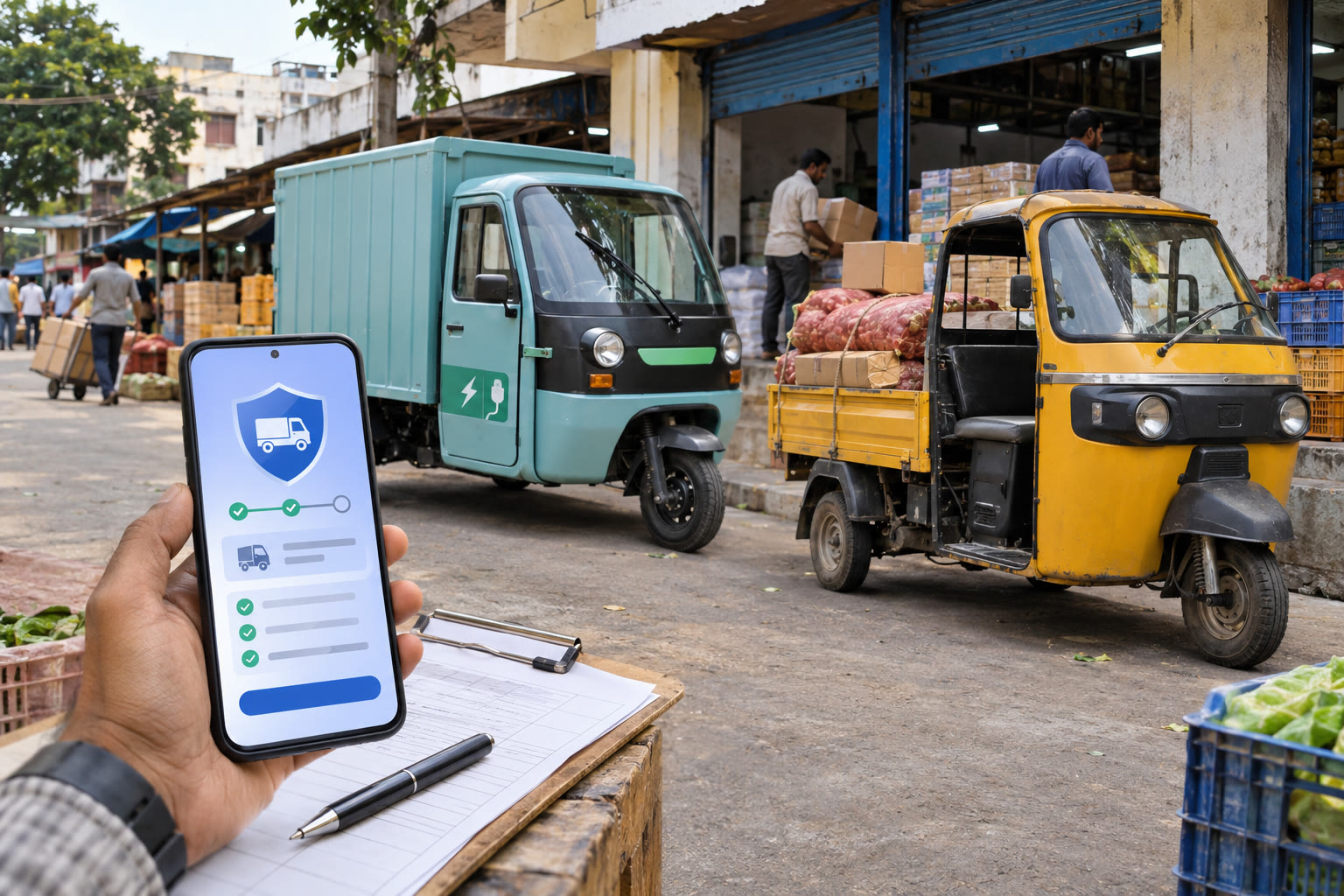
The planned mix is aimed at several groups rather than only private car owners. Electric two- and three-wheeler users need convenient urban charging, while N1 goods carriers and delivery fleets need predictable stops that fit a working day. Private electric cars could use the 60 kW or 120 kW equipment where the vehicle's connector and charging system support it.
The two reports also connect the rollout to the Delhi EV Policy 2026. They say only electric three-wheelers and electric N1 goods carriers will be eligible for new registration in Delhi from 1 Jan 2027, while the electric two-wheeler-only registration rule is scheduled from 1 Apr 2028. The charging announcement concerns new public infrastructure; it does not say that existing petrol, diesel or CNG vehicles must be removed from the road.
The Delhi Transport Department's operational guidelines identify DTL as the state nodal agency for charging infrastructure and require it to prepare an action plan with distribution companies and other stakeholders. That makes operator selection, grid readiness and service standards important next steps—not just the installation of charger hardware.
What the ₹62 crore estimate means for drivers
Dividing the reported ₹62 crore estimate by 180 planned locations gives a simple average of about ₹34.4 lakh per location. This is an editorial calculation, not an official site budget: land, civil work, transformer capacity, connection costs, parking arrangements and charger sizes will vary from one location to another.
It also means that the headline capacity should not be confused with immediate coverage. A useful public network depends on stations being energised, visible in a live directory, open when drivers need them, able to process payments and maintained when a connector or power system fails.
What changes now—and what does not
For now, DTL's operator-appointment process is the concrete next step. Until site-wise commissioning details are released, EV owners should treat the 540 figure as planned capacity rather than 540 additional working chargers. The reports do not announce a charging tariff, reservation system, parking fee or common payment method.
Drivers planning a Delhi trip can use the state-wise EV charging directory to check existing options rather than waiting for the new sites. Before a longer journey, the road-trip planner can help organise stops and a fallback route, especially for a commercial vehicle that cannot afford a long queue.
For households comparing an EV route with a petrol or diesel alternative, the fuel cost calculator can provide the conventional-fuel side of the trip-cost comparison. It does not replace a charger tariff or electricity-cost calculation, which will depend on the vehicle, operator and site.
What to watch next
- DTL's operator appointments and the release of the 180 site list.
- Site-by-site commissioning, grid connections and whether the planned charger mix is delivered as described.
- Published tariffs, payment methods, parking rules, operating hours and complaint channels.
- Reliability data: uptime, queue management and how quickly failed connectors are repaired.
These details will decide whether the project changes daily charging convenience or remains only a capacity target. They will also show whether the network is practical for high-mileage e-rickshaws, delivery vehicles and private EVs with different charging limits.
Reader takeaway
Delhi's 540-charger plan is a meaningful infrastructure signal, especially as the city prepares for tighter electrification requirements for new registrations. But the useful milestone for drivers will be a working, compatible charger with a clear price and reliable payment—not the announcement alone. Until DTL publishes commissioning and operator details, keep a backup charging option in every important trip plan.
FAQs
Are all 540 chargers already available?
No. The 25 Nov 2026 reports say DTL has started the process of appointing operators; they do not announce a public go-live date for the network.
Which vehicles are covered by the planned charger mix?
The reported configuration includes equipment for electric two-wheelers, three-wheelers, N1 goods carriers and electric four-wheelers. The correct connector, charging standard and vehicle input limit still need to be checked before a trip.
Has Delhi published the charging price?
Not in the reports used for this update. Drivers will need the operator and site-level tariff, payment and parking information before treating a planned location as a dependable stop.
Sources
- Hindustan Times — Delhi govt to set up 540 public EV chargers across 180 locations in city (25 Nov 2026)
- India Today — Delhi to install 540 EV chargers at 180 sites to boost electric vehicle adoption (25 Nov 2026)
- Transport Department, Government of NCT of Delhi — Operational Guidelines for Implementation of Incentive and Scrapping Provisions under Delhi Electric Vehicle Policy, 2026 (2 Jul 2026; posted 8 Jul 2026)