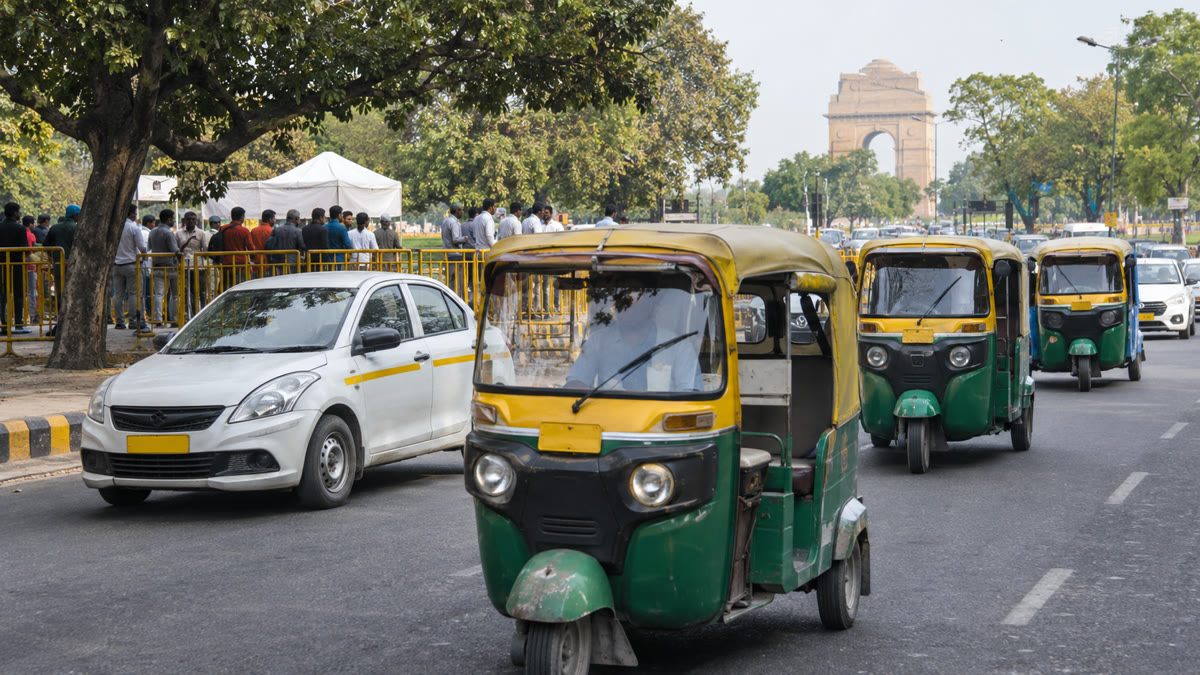
Delhi transport unions affiliated with the Bharatiya Mazdoor Sangh held a demonstration at Ramlila Maidan on 19 Nov 2026, seeking higher auto-taxi fares, curbs on private bike-taxi apps and changes to fitness-related rules. Reports from the protest also recorded localised increases in app-cab prices, but the available coverage does not show a government order approving a new citywide fare.
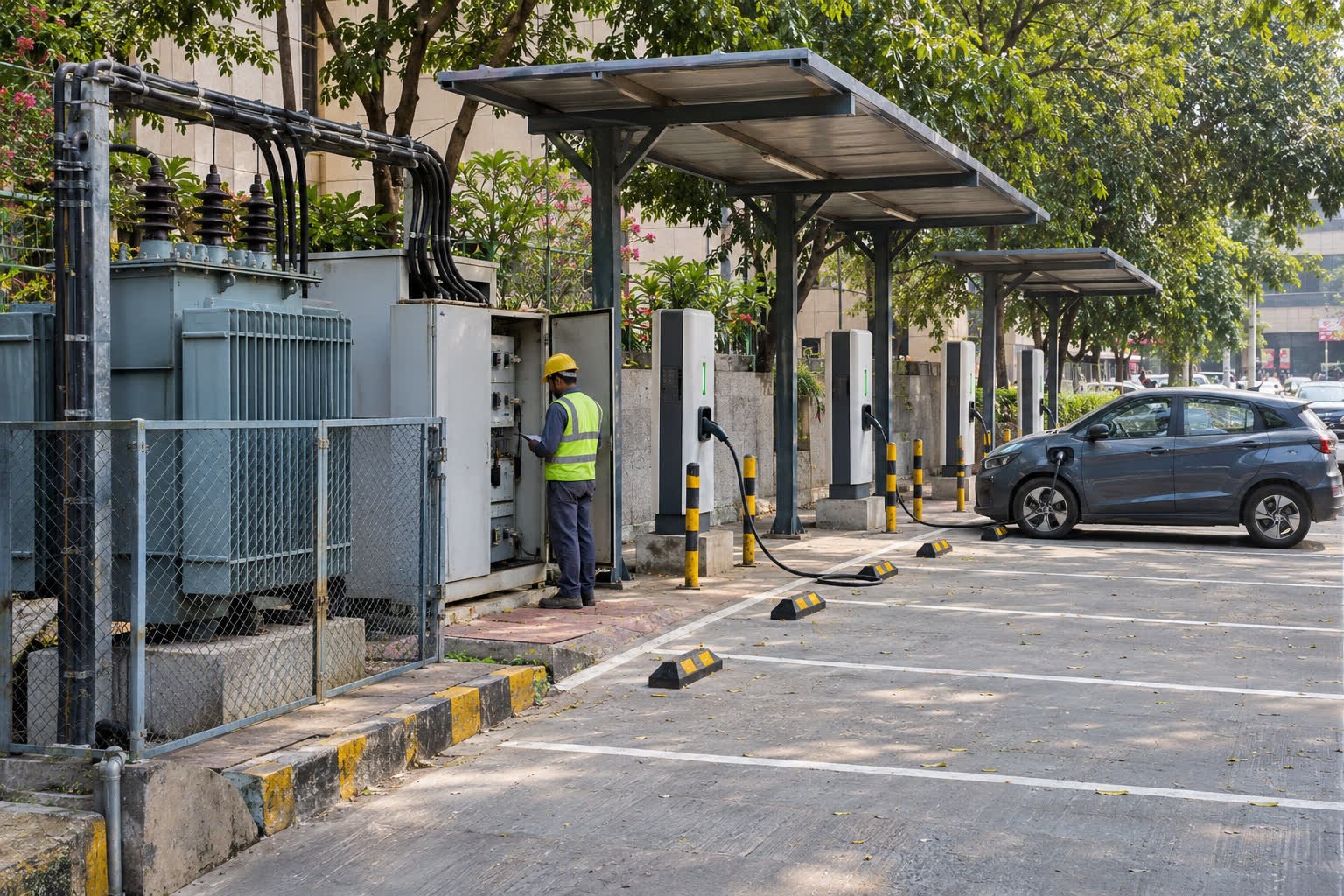
Illustration: FuelPrice; representative Delhi transport scene, not a photograph of the 19 Nov protest.
Key takeaways
- The demonstration was organised under the Bharatiya Private Transport Mazdoor Mahasangh banner and brought transport-worker concerns to the centre of Delhi’s mobility debate.
- Union demands included a fare revision, a ban on private bike-taxi app services and withdrawal of an auto-rickshaw fitness order.
- Unions also sought a driver welfare board, a review of Delhi’s electric-vehicle policy and faster handling of transport-department paperwork.
- India Today reported higher app-cab fares in parts of Delhi-NCR during the protest, but commuters should not treat that as a notified fare hike.
What happened at Ramlila Maidan
The protest followed a call by transport unions linked to the Bharatiya Mazdoor Sangh. The New Indian Express and Hindustan Times reported that the gathering was expected to include auto-rickshaw and taxi drivers as well as workers associated with buses, trucks, ambulances and e-rickshaws.
The unions said their concerns were not limited to one fare decision. They argued that operating costs, competition from app-based private bike-taxi services and changing compliance requirements were putting pressure on traditional transport operators. The organisers also said that policies affecting drivers were being framed without enough consultation.
The protest was a demand-led event, not an announcement that Delhi’s regulated meter fares had already changed. That distinction matters for both passengers and drivers: a union request can start a policy discussion, but the chargeable fare changes only after the competent transport authority issues and implements a notification.
What the transport unions are asking for
Fare revision
The principal demand was a revision of auto and taxi fares. Drivers say that a fare schedule needs to reflect the cost of keeping a commercial vehicle on the road, including fuel, maintenance, insurance, permits, testing and time lost in traffic. Passengers, however, need a transparent order and a clear meter rule before treating a higher amount as an authorised fare.
For operators, the running-cost question can be checked rather than guessed. Current city-level CNG prices are available through the CNG price directory, while the fuel-cost calculator can help separate fuel spend from other expenses when assessing a route.
Private bike-taxi services
The unions called for private bike-taxi app services to be stopped, saying they compete with conventional auto-rickshaws and taxis. This is a regulatory demand, not a confirmed ban. The reports reviewed did not cite a new Delhi government order ending such services after the demonstration.
Fitness, welfare and EV policy
Another demand was withdrawal of the fitness-related order applying to auto-rickshaws. The unions also sought a dedicated welfare board, faster processing of pending documents and a review of Delhi’s electric-vehicle policy. Their argument is that operators who have invested in CNG or other commercial vehicles need a clearer transition path if future registrations and compliance requirements move towards electric mobility.
That discussion also affects drivers considering an electric three-wheeler or taxi. Availability is only one part of the decision; route suitability, charging access, financing, maintenance and the rules for commercial operation matter as well. Delhi and NCR EV users can check nearby public charging options in FuelPrice’s state-wise EV charging directory.
What commuters should expect now
India Today’s post-protest report described fare spikes on some app-based rides during peak demand and said its sampling found higher prices on Ola and Rapido. Those observations show how a disruption can affect a particular route or time window; they do not establish a permanent fare change across Delhi.
The Economic Times reported before the demonstration that there was no confirmed announcement of a complete citywide auto or taxi strike. That is the safer assumption for commuters unless a union, operator or government department issues a fresh service advisory. Availability can still vary by locality, time of day and the number of drivers participating in the protest.
Passengers planning an airport, office or inter-city trip should check the quoted fare before confirming, keep a second route or public-transport option in mind and avoid assuming that an app quote is the same as the statutory meter fare. If a driver asks for an amount above the displayed or notified fare, the passenger can record the trip details and use the relevant platform or transport-authority complaint channel.
What to watch next
The next meaningful development would be a written response from the Delhi Transport Department or a formal meeting with the unions. Watch for three separate outcomes: whether a fare-revision proposal is submitted, whether the fitness requirement is clarified or amended, and whether the government responds to the request for a welfare board. A decision on private bike taxis would also need to be read alongside Delhi’s broader EV and aggregator rules.
Until then, the 19 Nov demonstration should be read as a pressure point in Delhi’s transport-policy debate, not as a confirmed fare hike or a blanket shutdown. Drivers are asking for better economics and a clearer policy transition; commuters need any eventual change to be notified, visible and consistently enforced.
Sources
- The New Indian Express — “Transport unions seek fare increase, to stage stir at Ramlila Maidan” (19 Nov 2026)
- Hindustan Times — “Auto, taxi drivers to protest at Delhi’s Ramlila Maidan today over fare revision, EV policy, bike-taxi services” (19 Nov 2026)
- India Today — “Rs 300 cab fare surges to Rs 800 as taxi, auto strike hits Delhi-NCR, Punjab, Haryana” (19 Nov 2026)
- The Economic Times — “Delhi Auto Taxi Protest Today, November 19: Auto and cab drivers to gather at Ramlila Maidan; check why they are protesting and what commuters should know” (19 Nov 2026)