Delhi Traffic Police checked 7,657 vehicles and turned back 609 non-compliant vehicles through 2 Nov 2026 in its Northern Range operation, according to police figures reported by The New Indian Express and NewsDrum. The follow-up matters for NCR drivers because checks under the winter pollution curbs have also produced long queues at several Delhi borders, adding time and possible fuel use to cross-city trips.
The count is new enforcement information, not a change to the underlying rule already explained in FuelPrice’s earlier Delhi-NCR GRAP Stage II driver checklist. Drivers should treat the figures as a snapshot of one operation and check the latest traffic and pollution-control instructions before leaving.
Key takeaways
- Delhi Traffic Police’s Northern Range checked 7,657 vehicles and sent 609 non-compliant vehicles back through 2 Nov 2026.
- Reports recorded congestion at Delhi-Gurugram, Delhi-Noida, Delhi-Ghaziabad, Delhi-Sonipat and Delhi-Najafgarh border points.
- The announced curb targets petrol and diesel vehicles registered outside Delhi that do not meet BS-VI, while CNG and electric vehicles are exempt from that specific restriction.
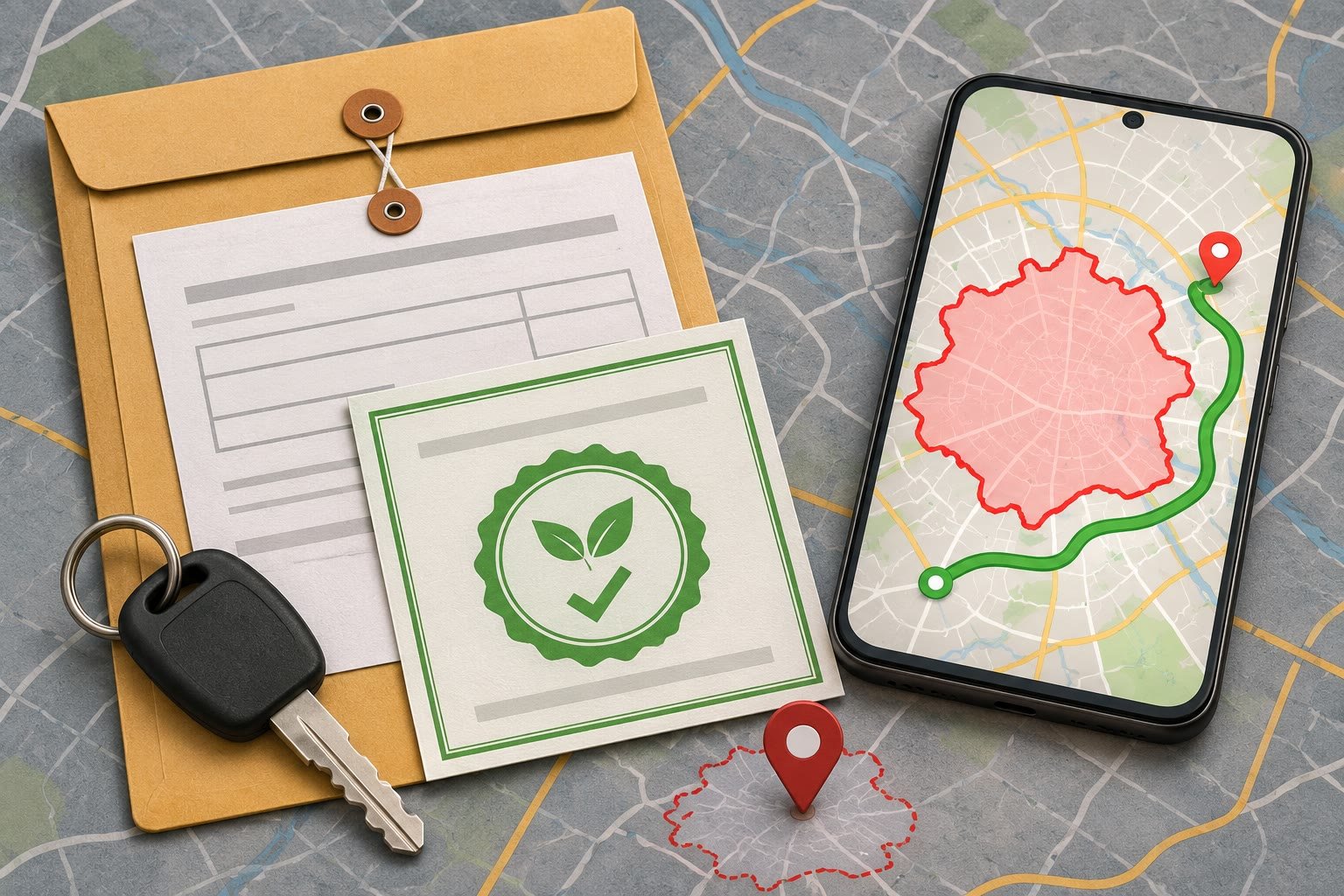
- A valid PUCC, the vehicle’s emission standard, registration details and the planned route should be checked before approaching a border.
What the latest police count shows
The New Indian Express reported on 3 Nov 2026 that the Northern Range traffic team checked 7,657 vehicles and sent 609 non-compliant vehicles back during the operation covering 1 Nov and part of 2 Nov 2026. NewsDrum reported the same police figures and separately described the wider enforcement drive, including checks at city borders and action against vehicles that did not meet the prescribed conditions.
That distinction matters: 7,657 is not a citywide total for every Delhi entry point, and 609 is not a forecast of how many vehicles will be turned back in the coming days. It is a reported count for a defined police range and time window. The New Indian Express also reported heavy congestion at multiple borders, with the Delhi-Gurugram approach near the Sirhaul toll plaza seeing traffic backed up for several kilometres.
The Indian Express’s ground report from 2 Nov 2026 found that checks were uneven across border points. Some teams checked vehicles for emission compliance, while other locations had limited or no visible screening at the time of the report. That does not cancel the rule; it means a driver should not treat one border crossing as a guarantee of what will happen at another.
Why the checks matter for time and fuel
For a commuter, the immediate risk is a U-turn or a longer wait at the border. For a fleet or delivery operator, the impact can include a missed time window, a rerouted vehicle and a different toll or fuel bill. NDTV’s 3 Nov 2026 ground report described kilometre-long queues and vehicles idling while officers checked BS-VI compliance at the Chilla and Ghazipur borders.
Extra idling and detours can increase fuel use, but there is no single rupee impact for every driver: it depends on the vehicle’s mileage, the waiting time, the route and the fuel price on the day. A driver can enter the distance and mileage in the fuel cost calculator before comparing an alternate trip. That is a planning estimate, not a claim about the pollution-control programme’s overall effect.
When the vehicle is eligible but the border is congested, leaving earlier may not solve the problem if the queue is caused by a checkpoint bottleneck. Compare the likely route, tolls and travel time in the road-trip planner, and check live traffic information separately before departure.
What NCR drivers should check before leaving
1. Emission standard and registration
The restriction reported as effective from 1 Nov 2026 applies to petrol and diesel vehicles registered outside Delhi that are below BS-VI. The Indian Express and Hindustan Times reported that the announced window runs through 31 Jan 2027. CNG and electric vehicles are exempt from this specific outside-Delhi BS-VI restriction, but that does not remove other documentation, permit or stage-wise requirements.
Check the emission standard recorded for the vehicle and confirm where it is registered. Do not infer BS-VI status from the vehicle’s age or appearance alone. If the vehicle is not eligible, decide on an alternate vehicle, public transport or route before reaching a checkpoint.
2. PUCC and vehicle papers
The official revised GRAP schedule assigns agencies strict enforcement of Pollution Under Control norms and asks them to manage traffic at congestion points. Keep the PUCC valid and accessible, along with registration and any permit papers relevant to the vehicle category. A compliant emission standard is not a substitute for a valid certificate.
3. Vehicle category and destination
Private cars, interstate buses, light goods vehicles and heavy trucks do not necessarily face identical conditions. The CAQM schedule has separate provisions for buses and goods vehicles, including restrictions on some non-compliant buses and diversion of non-destined truck traffic through peripheral expressways. Fleet operators should confirm the category-specific position instead of applying the private-car rule to every vehicle.
4. Route and departure plan
Check the latest Delhi Traffic Police and CAQM updates shortly before travel, then allow for a possible border delay. If an alternate route adds kilometres, compare its expected fuel and toll cost with the risk of reaching a restricted entry point. Planning the change before departure is safer and more predictable than turning around in a crowded approach lane.
What to watch next
The current enforcement numbers should be read as a dated snapshot through 2 Nov 2026. Border staffing, traffic conditions, pollution-control stages and exemptions can change through later Delhi government, CAQM or traffic-police directions. The practical question for an NCR driver is therefore not only whether the vehicle is technically eligible, but whether the intended entry point and route remain workable that day.
For now, verify the vehicle’s BS standard, registration status and PUCC before setting out. If the vehicle is below the applicable standard, arrange the alternate journey in advance; if it is compliant, still allow time for checks and use current traffic information rather than assuming a clear crossing.
Sources
- The New Indian Express — 609 vehicles sent back under GRAP — 3 Nov 2026
- NewsDrum — Which vehicles are allowed or banned in Delhi under GRAP-II? Police clarify BS-VI restrictions — 3 Nov 2026
- The Indian Express — Delhi’s BS-VI curbs, Day 2: Checks at some borders, free passage at others — 2 Nov 2026
- NDTV — Ground Report: Long Queues, Traffic At Delhi Borders Amid BS-VI Curbs — 3 Nov 2026
- Hindustan Times — Delhi tightens border checks as winter pollution curbs kick in — 2 Nov 2026
- Commission for Air Quality Management / Department of Environment, Government of NCT of Delhi — Direction 104: Revised GRAP schedule — 29 Sep 2026